Thursday, August 20, 2015

Census Bloodbath: Valley Of The Dolls

Year: 1988
Director: Tom Holland
Cast: Catherine Hicks, Alex Vincent, Brad Dourif
Run Time: 1 hour 27 minutes
MPAA Rating: R

In what is shaping up to be a summer’s end tradition (thanks to the close proximity of my birthday), I am once again finding myself exploring a horror franchise that’s totally new to me. Last year, it was Saw, an agreeably unpleasant marathon that led to some of my most hilariously sardonic reviews, if I do say so myself. This year is much more enjoyable for me, though the jury’s still out for you guys: the Child’s Play franchise.

Chucky the serial-killing doll isn’t quite as iconic a presence in the horror market as your Freddys or your Jasons (hence his not unrespectable 6 films as opposed to the Big League numbers like 9, 10, and –shudder – 12), but considering the context, he’s lucky to be alive at all, let alone a considerably well-respected member of the second-tier horror pantheon. Tom Holland’s Child’s Play came out in 1988, long after the slasher dynasty had begun to flake and crumble. The subgenre still had some juice during that year (in fact, its most profitable film – A Nightmare on Elm Street 4: The Dream Master – came out in ’88), but that well quickly dried up by 1989, long before Chucky could even squeeze out a measly sequel. 

He was abandoned to the cinematic wasteland of the early 90’s after just one entry, an entry that came out in a year by which the MPAA had already picked every scrap of meat clean off the carcass of the slasher, leaving it a clean, toothless version of what it once as. Without the genre staples of boobs and gore, filmmakers had to get creative, and by nothing short of a miracle, that’s exactly what Child’s Play did.

The secret is that literally nobody in the world likes dolls.

Child’s Play is set in an alternate universe where large talking plasticine dolls known as “Good Guys are incredibly popular. I know it’s an alternate universe, because in the one I live in, any sane person who happened upon one of these dolls in the Target toy aisle would immediately call the cops and try to light it on fire. Young Andy Barclay (Alex Vincent) reeeally wants one of these dolls for his birthday because maybe he’s a sociopath, but his mother Karen (Catherine Hicks) can’t afford it. In an effort to appease him, she buys a doll from a vagrant in an alley, not realizing that just last night the notorious serial killer Charles Lee Ray (Brad Dourif) used a voodoo curse to pass his soul into the doll after being gunned down at a toy store by Detective Mike Norris (Chris Sarandon).

After a few select murders (including his ex-partner, who abandoned him), Chucky learns that in order to regain human form, he must possess the body of the first person he revealed his secret to – Andy. Of course, by this point Andy has been blamed for the killings because nobody believes his story that “the creepy doll did it.” Alternate universe, remember? Karen and Detective Norris must team up to stop Chucky from reaching Andy in his room at the psych ward… before it’s too late.

And because this is 1988, they don’t get to bang. Disappointing.

The reason Child’s Play was such a relatively resounding success was that it worked around its limitations to bring something new to the table. Not allowed to show boobs? Bam! Set it in a family. MPAA is cracking down on gore? Kazaam! Creative kills don’t have to be bloody. World getting tired of an endless rigmarole of silent, masked killers? Kalamazoo! Killer dolls had been seen before (Talking Tina anyone? If you know what I’m referring to, I’ll give you a moment to unclench your buttocks), but effects had advanced to a point that Chucky was able to gain an autonomy that couldn’t have been dreamt of a decade before.

Mind you, these are the reasons why Child’s Play is a successful and clever slasher film. The question of whether it’s a particularly good slasher film is another story. There’s a reason that the name “Chucky” has gained pop culture longevity, but the title itself has faded into the four winds. You’re not exactly hearing people go, “Now who was that short ginger from the Child’s Play movie?” While I’m legally obligated as a horror fan not to speak ill against any Tom Holland project, Child’s Play is good more in terms of how it was created and the legacy it inspired than its actual content.

In the manner of nearly all slashers with a heavy urban crime element, Child’s Play is somewhat of a letdown when it comes to the scare department. If I wanted to see hardnosed criminals hanging around police substations and wasting guys named Eddie, I’d rent a Scorsese movie. Or My Cousin Vinny. And while, yes, creepy dolls are creepy, Chucky hadn’t quite come into his own yet.

With so many of the early intrigue scenes committed to prolonging the mystery of whether or not he’s a real doll, they forget to provide a genuine sense of danger and he ends up looking rather silly as he toddles around in his chubby little booties. A moment where he threatens the Detective in his car with a knife is terrifically menacing, but there’s so many moving parts at work in that scene, it’s hard to give him full credit. There are scraps of tension scattered throughout the film, but they’re mostly thanks to Holland’s reliable atmosphere rather than (save one instance) Chucky himself.

Frankly, he’s scarier when he’s not moving at all.

When the film finally does slam full tilt into things, it’s a healthy helping of late 80’s fun. And the effects extravaganza of the final 20 minutes is pretty much beyond compare, though they never do figure out how to fit Dourif’s dialogue into Chucky’s stiff little mouth, bless their hearts. The kills (sparse as they are, this being a “story slasher” – gag me with a spoon, right?) are so unique that it’s hard to notice they’re completely ungory – hammers, ovens, electroshock machines… It’s like the Fisher Price playset from Hell. Chucky’s doll identity is only incorporated into one of the kills, which is a real missed opportunity, but the wicked gusto with which he dispatches his victims is captivating enough.

I could do without the vicious underacting from Sarandon and human Brad Dourif (“Oh God… I’m dying.”), both of whom are outpaced by even Alex Vincent, who’s a pretty credible kid lead but does have that child actor habit of sounding like he’s on sedatives half the times. However, once Dourif is wrested from his corporeal form, he Emerils it up a notch and effortlessly reaches his pernicious peak.

At the end of the day, you’ll never waste your time or money by sitting down for a screening of Child’s Play. Just don’t be surprised if you don’t find it to be everything you dreamed it would be, especially if you didn’t grow up with Chucky. Nostalgia is an important factor with this one. In fact, if possible, get in a time machine and show this movie to yourself at six years old, then get back to me. I’ll wait.

Killer: Chucky (Brad Dourif)
Final Girl: Andy Barclay (Alex Vincent) feat. Karen Barclay (Catherine Hicks)
Best Kill: A doctor’s brain is fried with an electroshock helmet. This effect can also be achieved by marathoning both seasons of Twin Peaks back to back.
Sign of the Times: Nobody bats an eye wen a six-year-old rides the train alone.
Scariest Moment: A six-year-old rides the train alone.
Weirdest Moment: The fact that anybody could possibly think Chucky is cute, even before he tries to stab them.
Champion Dialogue: “I gotta go. I have a date with a six-year-old boy.”
Body Count: 5; including Chucky, because why the hell not – they didn’t know there’d be sequels yet.
  1. Maggie is hit in the face with a toy hammer and falls out a window.
  2. Eddie perishes in a gas explosion.
  3. John is stabbed in the heart via a voodoo doll.
  4. Doctor is electrocuted via an electroshock therapy helmet.
  5. Chucky is shot in the heart.
TL;DR: Child's Play is an underwhelming beginning to a semi-classic franchise.
Rating: 6/10
Word Count: 1396
Reviews In This Series
Child's Play (Holland, 1988)
Child's Play 2 (Lafia, 1990)
Child's Play 3 (Bender, 1991)
Bride of Chucky (Yu, 1998)
Seed of Chucky (Mancini, 2004)
Curse of Chucky (Mancini, 2013)

Wednesday, August 19, 2015

When Phoenixes Cry

Year: 2009
Director: David Yates
Cast: Daniel Radcliffe, Emma Watson, Rupert Grint
Run Time: 2 hours 33 minutes
MPAA Rating: PG

The Harry Potter film franchise is a lot like a series of Craigslist missed connections: “I caught a glimpse of a decent subplot but it vanished when I turned back.” I was excited to spend time with a good director, but I hardly saw you at all.” “You farted on my hand and I loved it.”

Even with Order of the Phoenix, a movie I truly admired, there was always something incomplete about the Potter films, as opposed to the thrumming, fleshed-out universe of J. K. Rowling’s novels. But Half-Blood Prince, the sixth film in the series, is something special. It’s the second longest flick in the flock, which doesn’t do it any favors, but it’s also the second film to have a director return to the world of Potter, allowing him to settle into and expand upon his original vision. The first time this happened, that director was Chris Columbus, and his reaction was to further embalm his mummified and dissected material so it would stay safe and dry forever and ever.

But this time we have David Yates, a man who isn’t exactly Orson Welles, but who is just as far from Ed Wood. His Phoenix is a perfectly adept, streamlined narrative with a keen creative eye and, allowed time to explore, his Potter explodes with distinctive vision. Whether that’s entirely his doing or the ministrations of cinematographer Bruno Delbonnel (the man behind Amélie) is anybody’s guess, but the fact remains that Half-Blood Prince is aesthetically stunning, narratively secure, and emotionally vibrant like no Harry Potter film before or since.

This may have been rectified if they hadn’t cut Pigwidgeon out of Goblet of Fire.

Harry Potter and the Half-Blood Prince, in case you have Eternal Sunshine of the Spotless Minded yourself and a portion of the relationship memories you erased included reading the Harry Potter books, is about the sixteen-year-old wizard Harry Potter (Daniel Radcliffe). After the events of Phoenix, the entire wizarding world knows that the Dark Lord Voldemort has risen again and his followers the Death Eaters are bent on destroying wizards and witches of impure blood and enslaving or killing the nonmagic folk known as Muggles. People are dying and disappearing, yet Harry – despite possibly being the only one who can stop Voldemort according to a prophecy – s only a boy and as such must return to Hogwarts School of Witchcraft and Wizardy with his friends Ron (Rupert Grint) and Hermione (Emma Watson) and at least attempt to lead a normal life.

Over the course of the year, the Headmaster Albus Dumbledore (Michael Gambon) gives him a series of lessons on the history of Voldemort’s youth, mostly centering on a pivotal memory that he must collect from the sycophantic Potions professor Horace Slughorn (Jim Broadbent). This memory may be key to destroying Voldemort and, luckily, a secondhand Potions book – property of the Half-Blood Prince – has scribbled hints in the margins that help Harry ace his class and get into Slughorn’s good graces.

Oh, and dare I mention… Hormones have cast their spell over Hogwarts. Cormac (Freddie Stroma) wants to get with Hermione, except she has unrequited feelings for Ron, who spends all his time snogging Lavender (Jessie Cave), who gets upset when a misapplied love potion causes him to fall for Romilda (Anna Shaffer), who desperately wants to get it in with Harry, who has to surgically reattach his lower jaw ever time he sees Ginny (Bonnie Wright), and I have a crush on Neville (Matthew Lewis), but not until his Attitude photo spread.

It’s like American Pie but with an easier entry point for wand puns.

I’m gonna cut right to the chase. Half-Blood Prince is the only Harry Potter flick to be a truly great movie. As it deftly splits its attention between comic teenybopper romp and an out-and-out siege movie, it actually becomes the only film to actively improve upon the source material in any respect. The less constricted perspective of the cinema frees it to more effortlessly juggle those wildly disparate tones, allowing the bright glow of youth to contrast sharply with the constant, imminent cloud of danger outside threatening to snuff it out.

Every aspect of the film is in service to this oh so delicate balance. It’s a good thing too, considering the gargantuan tonal lurches the script asks the film to make, sometimes in the space of a single cut. Without Delbonnel’s master class sharp-shooting, the entire performing arts sector of the British Isles pulling out all the stops (and pushing in a couple gos for good measure), and David Yates allowing his taps-running Britishisms to fill in the cracks with a sly sense of humor, Half-Blood Prince could very easily have collapsed under its own weight like a house of cards that dedicates its third season to nuts and bolts policy-making instead of sexy Kevin Spacey murder.

But we’ll get into that in a second. What I’m really dying to bring up is the screenplay, the fifth to e written by Potter squatter Steve Kloves. I suppose that after four tries, you’re bound to get in a good one eventually. If an infinite number of Steve Kloveses hacked randomly at an infinite number of J. K. Rowling novels, eventually one would produce a coherent, self-contained script. But boy is it a good’un, an entirely legible narrative with hardly a kink. Voldemort’s backstory is the only cut bit that suffers in any way, rendering a key scene in the third act a little logically muddy, but third acts were hardly Rowling’s strong suit to begin with. As an act of adaptation, Half-Blood Prince is a pristine piece of work chock full of logical character progressions, recognizable story arcs, and a more purposeful forward momentum than even the novel can boast.

Enjoy the book as I do, it’s mostly just Harry reading in bed and trying to hide his boners.

Perhaps the most striking element of Half-Blood Prince is its aesthetic, which relies heavily on an autumnal scheme, all earth tones and scattered leave, to really drive home the point that the lives Harry and his friends used to lead are drawing to a close, one way or another. The end of school is drawing near, and the big bad world (which is now more than ever trafficking in horror imagery) is waiting to swallow them up. It’s a fantasy nightmare vision of senior year, really, and when it’s not being meaningful it’s content to be just plumb breathtaking. There are no single shots in the entire franchise more staggeringly beautiful than Aragog’s funeral, the confrontation on the hill, or Dumbledore’s whirling inferno of flames (also a fabulous integration of CGI), which combine wide framing and dazzling bursts of color to pants-soiling effect.

The cinematography is endlessly adaptable, ranging from the minutely playful (Dumbledore’s winking entrance) to the operatically grandiose and gorgeous [SPOILERS One of the final shots of the film – in tribute after Dumbledore’s death, the students and staff raises their wands into the air, blasting apart Voldemort’s Dark mark with beacons of light. It is the dawn of a new era of Harry Potter, both in terms of visceral emotion and visual abandon]. If I could elope to Vegas with any movie’s mise-en-scene and have a brief but fiery love affair, it would definitely be Half-Blood Prince.

Our registry can be found at AMC.com.

Second in command is the acting. Of course, by this point, you already know that the massive stable of adult actors that frequently waste their talent on fifteen-second scenes of eating dinner while wearing funny hats are pretty much unimpeachable, so I shall only highlight one key performer: Michael Gambon. The role of Dumbledore has been quite a journey for him, having taken over following the untimely death of Richard Harris after Chamber of Secrets. After three years of worrying at the part like a dog with a bone, he is finally in command, following his own inscrutable, tweaky path as the immeasurably harming, incredibly baffling headmaster.

And after a veritable Black Diamond slope of peaks and valleys, our three child performers (by this point all full-grown adults) have all finally outdone themselves, turning in their absolute best work. Their chemistry is warm and lived-in (as well it should be, after eight years of this nonsense), their lines readings are reeled back from the heady brinks of shrilldom, and their eyebrows are safely locked away where they can’t cause any more harm. Just like the human body, a film with a strong core helps everything else grow stronger, and Half-Blood Prince is an all-around beefcake.

With the franchise’s two characteristically weak elements (child acting and storytelling) finally firmly in place, this allows the film to go places none of its predecessors have before. When it’s funny, it’s laugh out loud hilarious, and when it’s serious, it bludgeons you with the force of a troll’s cudgel. This is the first Harry Potter that can outright be called a comedy without a whiff of fine print, but it also has the power to get you cowering behind your couch cushions in terror. 

It’s that good.

Now obviously, it ain’t perfection on a stick. The next movies are gonna have to do some real legwork to make up for lost narrative ground (we’re talking large scale here, the movie is still perfectly self-contained as hell), and a couple late reveals are about as tense as announcing what restaurant will be catering your bar mitzvah. Oh, and there’s one truly egregious editing trick that tries to drive in the horror of a situation by making sure you can only see it in millisecond chunks. 

But what the hey, this is the movie business. If you want perfect product, just rewatch Airplane!. Half-Blood Prince is an impeccable Harry Potter movie, it is my favorite Harry Potter movie, and if you had to pick out only a single DVD from the towering HP stack, do yourself a favor and grab this one. Thank me later.

TL;DR: Harry Potter and the Half-Blood Prince is a wonderfully crafted teen fantasy, delicately combining teen hijinks and tense siege drama.
Rating: 8/10
Word Count: 1714
Reviews In This Series
Harry Potter and the Half-Blood Prince (Yates, 2009)

Monday, August 17, 2015

How Do We Know She Is Alive?

Year: 2009
Director: Stewart Hendler
Cast: Briana Evigan, Rumer Willis, Carrie Fisher
Run Time: 1 hour 41 minutes
MPAA Rating: R

Slasher remakes are a much maligned bunch. When you earn the disrespect of fans of a genre as notoriously disreputable as the slasher movie, there's pretty much nowhere left to turn, artistically speaking. But still the wheels of the remake machine kept spinning, chewing up and spitting out properties like A Nightmare on Elm Street, Halloween, The Hitcher, and even poor April Fool's Day, polluting cinemas with its noxious cloud. Notable exceptions like Friday the 13th and The Texas Chainsaw Massacre would crop up time and again, mostly to be ignored by genre purists, but for the most part it's an anemic crop.

Then there’s Sorority Row. It’s not the best of the late 2000’s remakes (for my money that would be The Wizard of Gore, which converts H. G. Lewis’ unwatchable smear of a film into a twisted splatterpunk fairy tale), but it takes after its source material in the best possible way. You see, its forebear, 1983s The House on Sorority Row, is also a true gem among a diseased crop – the ebbing dregs of the first wave of slasher films. While the remake can hardly reach its giddy heights, it certainly manages to do it proud by at least being a successful conveyor of popcorn thrills, which is more than can be said for the bulk of its contemptible contemporaries.

I still have stress dreams about the fact that I spent money n Rob Zombie’s Halloween II.

Sorority Row hews closer to the original’s plot than most in-name–only remakes, but it makes sure to leave plenty of room for the classic reboot standbys: actresses so sexy there’s a team of airbrushers listed in the credits, a script populated exclusively with outrageously privileged douchebags, and a half-dozen lines that name drop Facebook or whatever it is the kids are using to send nudes to each other these days. 

When the Theta Pi sorority sisters, led by Queen Bee Jessica (Leah Pipes) – play a prank on a man wut done them wrong, convincing him that the “roofies” he gave to Megan (Audrina Patridge of the seminal drama The Hills) have killed her, the last thing they expect is for him to actually attempt to dismember her totally just kidding body. Now that they’ve actually got a corpse on their hands, the girls dump the body at the bottom of a mine shaft, against the protestations of goody goody Cassidy (Briana Evigan) and to the gentle whimperings of Ellie (Rumer Willis, who is an anthropomorphic spaghetti noodle.

At their end of the year graduation party, the girls find themselves being menaced and killed by somebody using Megan’s phone (which had kept its charge all this time – evidently she hadn’t switched to Apple yet). Is it their friend, back from the grave and ready to part? Is it the boy who killed her, finally having snapped? Or is it somebody else entirely, who found out about the cover-up and want these girls dead? Also Carrie Fisher plays the house mother, so that’s happening.

Help me, Xanax Extra Strength, you’re my only hope.

Perhaps the single best decision made during the production of Sorority Row was to keep it R-rated, especially considering that it meant pushing against the tide of the unforgivably successful PG-13 dribble of cinematic santorum masquerading as a remake of Prom Night. That rush of producer bravery gave the film a lot of freedom, and though it mostly restrains itself to typical slick, slack remake shenanigans, there are moments where it throws caution to the wind and embraces its exploitation pedigree.

There’s an almost shocking (for the time) amount of nudity in the film, rivaled only by Friday the 13th 2009’s gleeful excess, and while it can hardly be considered “edgy,” it at least comes close to considering attempting to be. There’s more nipples than a dinner rush at Applebee’s. less than a Grateful Dead concert, I’ll leave it at that. And while the gore is largely content to putter around offscreen, the kills themselves are creative and brutal. The quick flashes of implied violence have been done better (I mean, obviously), but the setpieces are clever, the results are messy, and the weapon of choice (a wickedly modified tire iron, - the tool used to kill Megan) is – in a word - radical.

Sometimes a movie reviewer must toe the line between objective observer and twelve-year-old. “Knifey tire iron” is, evidently, my line.

I daresay I doubt that anybody will fall out of their chair in shock if I say that, in spite of its very real successes as a remake, Sorority Row is not in the least bit scary. If I did shock you, please accept my humblest apologies, send me the dry-cleaning bill for your soiled PJ pants, and feel free to follow this link to the index of my blog. I suggest you start at the A’s and work your way down. By the time you get to The Gallows at least, I think we’ll understand each other a bit better.

For the rest of you, suffice it to say that Sorority Row favors quippiness over frights and portentous whooshing transitions over legible cinematic style. The spasmodic seizings of the camera are a little too close to found footage for comfort, but I’ll be damned if that quipping doesn’t pass the time with flying colors. Sorority Row is blessed with a surprisingly credible cast for a film of its caliber, and Leah Pipes especially delivers her lines with a held-back cattiness that’s so wildly out of proportion with the horrific circumstances that surround her, you can’t help but feel a chuckle soldier its way out of your windpipe.

Its irreverent humor is perhaps its most prominent attribute, but an enthusiastically bonkers (if mildly misogynistic) third act is the savory whipped cream on top of a surprisingly tasty vanilla shake.

You know, one of those that looks uniform and bland but has flecks of sprinkles of something providing enticing bursts of colorful flavor in your straw… I’ve eaten nothing but quesadillas and boxed cereal for three days, does it show?

All in all, Sorority Row is a keeper. It pales in comparison to the original material, but it’s probably the most fun I’ve ever had revisiting an iconic horror property. And any remake that doesn’t make me want to tear my hair out then light that hair on fire is a plus in my book.

Body Count: 10
  1. Megan is stabbed in the throat with a tire iron.
  2. Dr. Rosenburg has a tire iron thrown through his face.
  3. Chugs has a bottle shoved into her throat, which is slit.
  4. Shower Girl is stabbed through the bottom of the chin.
  5. Mickey is impaled in the gut.
  6. Garrett is run over with a car.
  7. Claire has a flare shoved in her mouth.
  8. Mrs. Crenshaw is impaled through the back.
  9. Lyle is slashed in the back of the head.
  10. Jessica is stabbed through the mouth.

TL;DR: Sorority Row is a totally acceptable remake of a bona fide slasher classic.
Rating: 7/10
Word Count: 1193
Reviews In This Series
Sorority Row (Hendler, 2009)

Wednesday, August 12, 2015

Census Bloodbath: Mad Macks

Year: 1981
Director: Richard Franklin
Cast: Stacy Keach, Jamie Lee Curtis, Marion Edward
Run Time: 1 hour 41 minutes
MPAA Rating: PG

It’s a darn-tootin’ shame when I pop on one of my scheduled slasher flicks and it turns out to be a less-than exemplary purveyor of the form. No masked killer, no gore, no body count – it’s enough to make me worry whether or not I made a misstep in my research and accidentally spliced a romantic comedy into my calendar or something.

Road Games is one of those films. It’s about as far from a slasher as you can get while still maintaining the general formula and without, say, starring Meg Ryan. But it compounds the problem by being one of the most genuinely interesting flicks of the flock, much like the worrisomely categorized Motel Hell from way back yonder in 1980. Why oh why do the best movies in this project have to be the ones that turn themselves away from slasherdom?

I mean, we all know the answer to that but I’m electing to ignore it.

Road Games tells the story of the lonesome trucker Patrick Quid (Stacy Keach), who drives he highways of Australia (oh yeah, did I mention that this flick is Australian? They had a surprising wealth of slasher output in the early 80’s) delivering meat, entertaining himself by playing the harmonica along with the radio, playing word games, imagining stories for the other drivers along the road, and engaging in comic banter with his dog, Boswell the Dingo. However, his games begin to go sour when he picks up a hitchhiker who spots a man digging a hole on the side of the road during a game of 20 Questions. The very same man who he happened to see at a motel last night with a beautiful young woman who has since gone missing. In the very same town where a maniac is on the loose cutting up beautiful young women.

Forget 20 Questions. Now Quid only has two: Is this man in the green van a murderer, and will he strike again? On the road he picks up a girl who he calls Hitch (Jamie Lee Curtis) and together they speculate on the identity of the man, chasing the van from truck stop to truck stop along the desolate outback en route to Perth. When Hitch herself is captured, Quid becomes the prime suspect and he finds himself on the run to catch the culprit, save Hitch’s life, and clear his name before the meat in the back thaws.

The meat delivery business is a very high steaks industry.

As you can probably surmise from my description, Road Games is a goofy road movie that slowly boils into a pulse-pounding crime thriller though it’s hardly a dyed-in-the-wool slasher. It’s terrifically strange, strangely terrific, and uniquely Australian, but it’s slasher elements don’t so much occur within the narrative as they do around it. The way that these elements are integrated into Quid’s restless jokes and games is superbly piano wire thrilling, but it’s a through-the-looking-glass entry in the genre to say the least.

The quickest description that comes to mind is that Road Games is like National Lampoon’s take on Duel. Its loony outback sense of humor seeps in through every pore, from the Mont Python-esque names given to its roadside ensemble (who Quid sees time and time again in different combinations at various rest stops along his journey – a clever, realistic touch) like Captain Careful or Sneezy Rider to the casual banter between Curtis and Keach regarding the murderer’s methods. It dances a little too close to the keen knife edge of wackiness in some slapstick scenes, but for the most part the atmosphere of effortless comedy propels the thriller elements straight to the core when they do arrive.

If any single person is responsible for the success of this highly unusual thematic pairing, it’s Stacy Keach. A large portion of Road Games is what can only be described as a one man show, and he has the ability to tune into the needs of each scene with the ease of a skilled chef knowing exactly how much spice to add without overpowering the soup. And naturally Jamie Lee Curtis is great too, but her hardly-a-cameo fifteen minute role is almost more thankless than her appearance as a headshot in Halloween 4. No, this is Keach’s vehicle and he drives it like a well-oiled machine. I’m genuinely dismayed that he didn’t’ work ore outside of the realm of comedy, because his Robin Williams meets Dennis Weaver mien is really working for me.

I’m glad I write about slashers. There’s no way a romantic comedy project would provide this many startling combinations of adjectives.

Of course, if Road Games were the glistening slice of pure cinema perfection that I’ve thus far made it out to be, we’d be talking about it in terms of awards buzz or in conversation with the rest of the crime thriller classics, instead of here in my lowly backlog of slasher reviews. Because no, it ain’t perfect. It’s ramshackle, rough around the edges, and unmistakably Less Than. Whatever it has, there’s never enough. There’s not enough gore, not enough Jamie Lee, not enough incident… It’s terrific at what it does, but it’s low budget and low key, content to stay in the slow lane and ruminate while chomping its cud. This is certainly not a detraction, but it prevents it from entering the upper echelon of true classic films.

That said, for what he had to work with, director Richard Franklin makes his film sing. Although the first two acts are aesthetically competent (smashing lonely wide shots and Duel-esque glimpses at the speedometer), in the third all hell breaks loose. Franklin opens Pandora’s box, unleashing every ounce of directorial talent at his disposal all at once in a glorious visual crescendo. Highway imagery (concrete, glass, and rushing metal) collides with organic matter in a sickeningly beautiful manner, most memorably in a shot where Quid’s eyes are drowned out by the glow of the van’s taillights, giving him demonically mechanical red eyes. His descent into madness is captured by the frenetic, magnetic imagery on display in hat is one of the most visually inventive sequences of the whole year

I liked it a lot, can you tell?

Really, all of these things merely endeavor to make Road Games a more confusing film. The more I fall in love with it, the stranger and more alienating it gets. And while I can admit that it’s far from a masterpiece, it holds an iron grip over my heart. Really, all I can say is that you won’t regret checking this one out for yourself. Don’t expect a slasher, don’t expect to be scared, don’t expect, well… anything. Just get ready for a wild and dusty ride.

Killer: Smith or Jones (Grant Page)
Final Girl: Hitch (Jamie Lee Curtis), sort of
Sign of the Times: People still hitchhiker instead of just using Uber.
Best Kill: Not really applicable, but the girl who died was playing guitar naked, if that’s of particular interest to you.
Scariest Moment: Quid keeps watch on who he thinks is the killer in the restroom while Hitch sneaks into his van.
Weirdest Moment: There’s a mural on a rest stop wall depicting soldiers massacring aborigines. Nobody seems to care.
Champion Dialogue: “No, it’s 'Q-U-I-D'. 'D' as in 'death to young girls'."
Body Count: 2
  1. Naked Guitar Chick is garroted.
  2. Some Girl is decapitated and split in half offscreen.

TL;DR: Road Games is a surreally strange, goofy thriller yet an utterly effective one.
Rating: 7/10
Word Count: 1279

Tuesday, August 11, 2015

Simon Says


Year: 2015
Director: Joel Edgerton
Cast: Jason Bateman, Rebecca Hall, Joel Edgerton
Run Time: 1 hour 48 minutes
MPAA Rating: R

Overhype is a very dangerous thing. It has led to generations of Citizen Kane haters and more incensed comments on Kubrick message boards than there are frames in his films. Overhype can poison the mind and disillusion the soul, and I urge you not to let its sickly sway take hold of you. I would also like to politely point out that, per the Rotten Tomatoes algorithm, 100 reviewers giving a movie three stars out of five is enough to earn it a 93 percent rating. Sometimes a number is only math.

Apropos of nothing, I assure you, I have recently screened The Gift, the new stalker thriller out of the Blumhouse stable. The fewer trailers you’ve seen for it, the better. The fewer Blumhouse movies you’ve seen going into it, the better. The less you expect from it, the more it has to offer.

Like a Secret Santa exchange. Who knows, a $5 TJ Maxx gift card might be useful in an emergency.

The story of The Gift is a relatively simple one. Chicago couple Robyn (Rebecca Hall) and Simon (Jason Bateman) have recently moved to California, close to Simon’s hometown, because he got a new job at a big Corporation doing Business. If he does enough Meetings, he can win enough Handshakes to advance to the next level and earn a Promotion. Meanwhile Robyn is left at home with the frustratingly fruitless and intangible job of trying to start a family. When they run into Gordo (director Joel Edgerton), an old classmate of Simon’s, she invites him over despite her husband’s protestations, thus beginning a brief and uncomfortable friendship.

Over the course of several weeks, Gordo bestows the couple with increasingly expensive gifts, perturbing Simon to the point that he politely suggests that they maybe never see each other again. Afterward, they begin to experience strange phenomena that might be unrelated but may just be Gordo exacting his revenge. During the course of this stress, Robyn discovers that there may be more to her husband than meets the eyes and her entire life is cast into doubt as she delves into the murky past between Gordo and Simon.

It’s more than just embarrassing yearbook photos.

Really, The Gift is typical Blumhouse fare through and through, no matter how much they try to demurely hide behind their “BH” label. There’s not a lot to differentiate the film from the nuts and bots of films like The Purge or Mockingbird, stripped of their horror trappings and sold for scrap. The only true break from the formula is that – aside from two dastardly tawdry bargain bin jump scares – the film focuses exclusively on interpersonal drama rather than thrills and spills.

This is where the film truly garners its reputation of “really not as bad as I thought it was going to be.” Jason Bateman has made a habit of playing barely concealed douchebags, and that sharply honed skill comes in handy when it comes time to cast doubt on his intentions. And he’s flanked by a pair of equally committed performers who provide an emotional human core beneath the slickly impersonal online real estate tour cinematography (which only once arranges a truly striking image – Bateman bathed in the glow of his car’s brake light). And as the plot unspools, a shocking surfeit of character details surface on both sides of the table, giving the audience quite a bit to chew on thematically. It’s a good thing, too, because the thriller elements of The Gift are about as dry and malnutrituous as a mouthful of sawdust.

It’s perhaps not a resounding success, considering that The Gift is first and foremost geared toward psycho thriller fanatics. Bu the sad fact is that the film’s most slack and ill-used elements are also its raison-d'être. Gordo’s stalking is maddeningly ill-paced, hardly escalating above a whisper before it’s cut off at the knees in favor of an abortive subplot that the movie pursues with cheery abandon, before chucking all its plot threads in a blender and wrapping up using the precise wrong device as its emotional lynchpin. Words can’t express how ineffably miscalculated this film’s third act is, and how resolutely it bungles the pristinely entertaining dramatic beats that drive the story up to that point.

It’s like a high school hookup: An hour of intense anticipation followed by a sloppy flurry of motion, a sudden unexpected mess, and embarrassed disappointment. And suddenly you’re out ten bucks on a date you’ll never get back.

The Gift has enough going on in its surprisingly humanistic screenplay to overcome its more egregious flaws and it’s a suitably effective debut for Edgerton, but let’s hope that his next film is all drama, no thrills. On purpose, I mean. If you go into The Gift with an open heart and mind there’s certainly plenty to enjoy, but don’t expect the second coming of Edward Cullen (cinema’s most accomplished stalker). It’s an easy breezy popcorn drama with the best Jason Bateman performance in several years, and that’s not necessarily a bad thing.

TL;DR: The Gift is a half-decent drama but an abortive thriller.
Rating: 7/10
Should I Spend Money On This? Don't feel obligated. They already made more than their budget back.
Word Count: 894

Thursday, August 6, 2015

Census Bloodbath: Happy Birthday To Me

To listen to our podcast episode about this very film, please click here.

Year: 1983
Director: Jim Sotos
Cast: Dana Kimmell, Bo Hopkins, Susan Strasberg
Run Time: 1 hour 30 minutes
MPAA Rating: R

Today is the day that I turn 21 years old. Considering that I don’t drink, I decided that the next best thing to get me into that emotionally battered, physically nauseated state was a slasher movie from 1983. So here we are at Sweet 16, a flick filmed in the subgenre’s Golden Age year of 1981 but shelved as audience interest started to wane in the hopes that a resurgence was right around the corner.

It wasn’t. Sweet 16 was unceremoniously dumped into the world two years later, during perhaps the single worst year for slasher cinema until the genre well and truly keeled over and died in 1989.

At least its lack of success spared us Sweet 17: B.Y.O.Body.

Sweet 16, for what it’s worth, at least has a unique premise for a meat and potatoes slasher. When pretty city girl Melissa (Aleisa Shirley)- and by pretty I mean literally caked in make-up every second of every day whether she’s sleeping, taking a shower, or even putting on make-up – moves into a small Texas town with her parents [the famed archaeologist Dr. John Morgan (Patrick Macnee) and Joanne (Susan Strasberg AKA the deliciously named Miss Viola Davis from another notable birthday slasher, 1981’s Bloody Birthday), who was born and bred in this town with her sister], all the boys are dying to go out with her. Or rather, they’re dying in general, because every boy she hooks up with ends up at the receiving end of a mad killer’s flashing blade before the night is through.

The local hicks blame the citizens of the nearby Indian reservation, namely the ancient Greyfeather (Henry Wilcoxon) and his grandson Jason longshadow (Don Shanks, who has the slashing distinction of portraying Michael Myers in Halloween 5 as well as appearing in Silent Night, Deadly Night and the Native American shaman slasher The Ghost Dance), leading to ugly racial tension about town that comes bubbling to a boil on the evening of Melissa’s sixteenth birthday party.

But what’s a birthday bash without a little lynching among friends?

Sweet 16 does not put its best foot forward. As a slasher, it is a daft, crummy mess and for the first twenty minutes or so it shows no indication that it might change its ways. Its muddy cinematography and cheap sets give way to even muddier night exteriors and even cheaper gore, which is invariably of the lazy Psycho-esque, “knife raise – scream – cut away” variety without a teaspoon of Hitchcock’s flair or talent. Or ability to see anything in the frame. 

The truly upsetting thing is that early on, while reading a mystery novel, a character inquires how one might murder somebody with a rake, and then the film has the sheer foolhardy audacity to go ahead and kill exactly zero people with zero rakes. There’s not even a gardening scene. It just carries on with its dishwater knife twaddle like it didn’t clearly have an ace up its sleeve.

It’s a testament to my perseverance that I haven’t yet set my hair on fire during this project.

Luckily, Sweet 16 does have an ace up its sleeve, though it’s completely unrelated to the woebegone slasher twiddling its thumbs in the wings. That ace is Marci Burke (Dana Kimmell of Friday the 13th Part 3: 3D), the daughter of the local Sheriff (Bo Hopkins of Uncle Sam). She’s the reader of the aforementioned mystery novel and a Nancy Drew-ish curiosity-seeker who would much rather accompany her father on visits to murder sites than go to the mall or play with dolls. She’s spunky, funny, and the amount of rouge blast-sanded onto her cheeks to de-agify her is frankly riveting.

Unfortunately, as happens more often than not with the film, Sweet 16 fails to follow through on the promise of a fun slasher whodunit about a young woman solving the mystery of the murders in her town. But at the very least, Marci’s presence elevates it from crappy slasher to mildly diverting crappy slasher, and that’s a distinction I do not make lightly. And as it turns out, the mystery does have a half decent reveal, even though it’s completely obvious to anyone with a veteran’s ear for clunky dialogue.

Marci and that reveal are the only genuinely good things about the movie however, save a comic relief records clerk and a shot of a moonlit lake so beautifully composed, it makes up every scrap of publicity material for the film. Beyond that it’s just a jumble of half-digested ideas that fail to come to fruition: not enough boys die by Melissa’s seductions to give the mystery any juice, the racial undercurrent is only valuable as a red herring rather than any sort of cultural statement, and nobody gets killed with a freaking rake.

I’d even be happy with a Stooge-esque face smashing. Cut me some slack here.

I think one of the most essential rules of thumb when telling apart bad movies from the good ones (it’s harder than you think – they’re still making Transformers sequels) is to listen to the incidental music. That’s the music that plays in the non-monumental moments which aren’t as high profile as the main theme (which, incidentally, is a deliciously syrupy lyrical ballad entitled “Melissa” that calls to mind a caramelized Air Supply B-side). Let me give you an example – in a steamy love scene between Melissa and her new beau, Johnny, (Glenn Withrow), listen closely: What you hear is nothing. Complete, staticky silence.

That’s a telltale sign of a bad movie. You know, that and its dull plodding pacing, the outrageously uncharismatic kills, and utter lack of atmosphere. Sweet 16 couldn’t scare the pee out of a baby and that’s pretty much all those cherubic little bastards know how to do. It slightly attempts to make up for it deficiencies with a thin sheen of camp (especially a staccato shuttering zoom effect during its horror sequences that dates it more accurately than a calendar printed in the corner of the screen would), but it’s too little too late.

Sweet 16 isn’t the worst slasher one could find themselves chancing upon on a lonely video shelf, but it’s a film I can’t imagine ever revisiting of my own volition. If you’re a sick freak like me looking for some classic slicing and dicing action to gift yourself with on your birthday, you’re better off sticking with tried-and-true titles like Happy Birthday to Me or even the killer kid flick Bloody Birthday.

Killer: [Joanne/Trisha Morgan (Susan Strasberg)]
Final Girl: Marci Burke (Dana Kimmell)
Best Kill: Not applicable. I’m still fuming about the rake thing.
Sign of the Times: Nearly every item of clothing is a precise shade of Violet Beauregarde blue.
Scariest Moment: Melissa’s mother screams in fear that her dead father is coming to get her.
Weirdest Moment: The sheriff attempts to research on the microfiche while the lonely records clerk lavishly describes the steak dinner they could be eating right about now.
Champion Dialogue: “Why does he always laugh when I propose?”
Body Count: 6 [uniquely, all men, except for the killer.]
  1. Johnny is stabbed to death.
  2. Tommy is stabbed to death.
  3. Greyfeather is hung.
  4. Billy is stabbed in the back.
  5. Billy’s Friend is stabbed to death.
  6. [Joanne/Trisha stabs herself in the gut.]

TL;DR: Sweet 16 is a dull slasher redeemed only by a unique teen character.
Rating: 4/10
Word Count: 1258

Monday, August 3, 2015

Amazing Amy

Year: 2015
Director: Judd Apatow
Cast: Amy Schumer, Bill Hader, LeBron James
Run Time: 2 hours 5 minutes
MPAA Rating: R

Fall to your trembling knees, peasants! The great Judd Apatow has returned to the director’s chair at long last, after a long period of cinematic drought, in which hardly any overgrown manchildren were foisted upon an unsuspecting public! Perhaps you detect a hint of irreverence here. It might interest you to know that I feel the man peaked as a director with The 40-Year-Old Virgin. It’s all downhill from here, folks.

Now, Trainwreck is certainly the most intriguing recent film of his directorial oeuvre for two reasons: 1) The script was not written by himself, and 2) the script was written by and stars a woman, Amy Schumer, 2015’s red-hot comedian. Both of these things are a first for Apatow and I respect his branching out.

Probably as a reaction to the heavy-duty misogynist accusations I leveled against him naught but last Monday. He works fast.

In Trainwreck, Amy (Amy Schumer) is a commitment-phobic purveyor of harlotry. While she sleeps her way through the Manhattan phone book, her job at a bro-y magazine sends her to interview Aaron (Bill Hader), a well-to-do sports physician. Despite her congenital hatred of sports and monogamy, they begin to fall in love of all things. How will these two crazy kids ever make it work?

Trainwreck pretty closely adheres to the Apatow ill-adjusted manchild formula, just copy-pasting a vagina where applicable. It’s well-worn territory and it falls prey to the exact same pitfalls as every other of his films, but with a new voice at the wheel of the script, at least the jokes feel fresh.

Though it must have taken years to clear out the odor of stale pot fumes.

“Yes, that’s all fine and dandy,” you say, tapping your well-manicured fingernails on your desk, “But here’s the important thing: Is Trainwreck funny?”

If you’re really in a hurry, I’ll give it to you straight: Yes. And your cuticles look great.

Alright, now that we’ve got those pushy, well-groomed bastards taken care of, let’s dive into things in a little more detail, shall we? There are a lot of laugh-out-loud funny moments in Trainwreck, some irreverent, some ribald, some just plain surreal, but the two funniest people in the film –Schumer and Hader – are woefully underserved by the script, Hader especially. His considerable talents are poured into what must be the Guinness world record holder for most skim milk, white bread, boring ass straight man role ever conceived, and Schumer keeps on forcing herself into prototypical rom-com scenarios, only occasionally managing to convince us that she isn’t enjoying herself.

The real standouts of the film are a variety of Apatowian fringe regulars (including my BFF Randall Park) and three utterly shocking, bewildering, and unrestrainedly hilarious, left-field performances from (in ascending order) John Cena, LeBron James, and Tilda “Motherf***ing Space Queen” Swinton. Cena pulls out all the stops in a fearless turn as Amy’s clueless musclehead boyfriend, James effortlessly switches between intimidating mountain lion and doe-eyed screwball as Aaron’s best friend, an Swinton is sharp as a tack and unrecognizable with laceratingly perfect comic timing as Amy’s acid-tongued boss.

Thus, in typical Judd fashion, does the comedy seep in from around the edges of the film instead of naturally flowing from the center. It’s a flawed, herky-jerky delivery system but it gets results.

Kind of like when I go bowling.

So, yes, Trainwreck is funny, which is pretty essential for any comedy (It’s nuggets of cinematic wisdom like this that keep my avid readers coming back). But when the film lunges toward treacly emotion, it stumbles. Much like Katherine Heigl in Knocked Up before her, Schumer proves beyond a shadow of a doubt that she has the acting chops to pull off the dramatic scenes that are handed to her on a silver platter, but fails to satisfactorily answer the question of why they’re there in the first place. Their sheer profusion bites into Trainwreck like a rabid dog, tearing its pacing to shreds and rendering its tight, generic plot periodically aimless, hopelessly unspooling past the two-hour mark.

Brevity is the soul of wit, and 125 minutes is the soul of making my damn bladder implode. If nobody gets on Apatow about his grotesquely overlong comedy run times soon, I’m going to have to go vigilante and sneak into his editing bay with a giant electromagnet to cull what I possibly can. But hey, Trainwreck is an alright time at the movies, even if it’s a longer one than you may have bargained for.

TL;DR: Trainwreck is overlong and generic, but features some terrific, out-of-left-field performances from unexpected actors.
Rating: 6/10
Should I Spend Money On This? Sure, grab a matinee. Movie theaters have free air conditioning.
Word Count: 806

Saturday, August 1, 2015

It's Hard Out Here For A Pimp

Sharp-eyed readers may have noticed some of the movie posters schizophrenically flickering along the "Coming Soon" section of my blog's sidebar. Rest assured, everything truly is coming soon. "Soon" is an exquisitely relative term chosen for its very nebulousness. But over this summer, between work, the Scream 101 podcast (which I am very proud of), and the inordinate amount of movies that I have been watching, it's just been a struggle to prioritize which reviews to get out first according to the system of extremely complex algorithms I have set in place for myself.

My accountants are hard at work figuring things out and you can prepare for an onslaught of reviews like you've never witnessed before, but in the meantime, please enjoy these two mini-reviews for films that I watched recently, but about which I had only relatively minor thoughts to share.

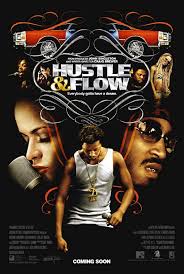
Hustle & Flow

Year: 2005
Director: Craig Brewer
Cast: Terrence Howard, Taryn Manning, Taraji P. Henson
Run Time: 1 hour 56 minutes 
MPAA Rating: R

A small-town pimp thinks he has what it takes to make it in the hip hop business.

Some movies with that exact plot line are inspiring. Some are treacly and shrill. Most are painfully generic. But a very special few anchor themselves around a protagonist so vehemently, ho-slappingly unlikeable that you actively root against him. Perhaps this isn’t what Hustle & Flow was going for, but that’s at least what makes it interesting.

“Interesting” does not always mean “good,” but Hustle & Flow flirts with the combination when it’s not being nauseatingly misogynistic. Which is most of the time. You see, Mr. Pimp, played by the terrifyingly good Terrence Howard, lives with three of his hos, one of whom is pregnant, one of whom he kicks out on the street with her baby, and all of whom he menaces with precise regularity like the world’s most evil cuckoo clock. And then he turns around and records songs like “It’s Hard Out Here for a Pimp” or “Whoop That Trick” about how these skanks need to understand that he’s actually a super sensitive guy who’s beating them for their own good. As he performs a job that they could easily do themselves. If they even wanted to. Which they don’t.

It’s tough to process the urge to strangle your protagonist with 8-track tape when you’re not watching a horror movie or some other genre actively meant to shock or horrify you. The really disheartening thing about Hustle & Flow is that it doesn’t seem to notice any of this. There’s an awe-inspiring level of cognitive dissonance going on between the Take the Lead/Freedom Writers story that it imagines it’s telling and the GTA XXI: Harlem Shake amorality that actually plays out onscreen. In the film’s most triumphant, romantic moment, a kiss between Howard and Taraji P. Henson, it’s hard not to think, “What, she suddenly forgot that the only reason he’s not forcing her to sleep with a stranger is that because she’s carrying another stranger’s baby so she’s damaged goods?” It’s not exactly Sleepless in Seattle.

As a character study, there is a mild degree of nuance, but the film is far more interested in exploring how the man’s ambitions and talent have led him to believe that he deserves instant success and the consequences of his realization that that’s not exactly how it works. The film’s acknowledgement of reality – that just being a good rapper is only a start to getting big, that there’s a lot of hard, thankless work involved, is its biggest strength.

Its second biggest strength is its setting, which effortlessly evokes the town’s poverty in simple, sad, beautiful details: a splash of garish neon in a rain puddle, water slowly dripping into buckets through the leaky roof of a strip club, and the ever-present, grotesquely un-Hollywood sheen of sweat that glistens on every performer, a la The Fighter or Do the Right Thing. And Howard is admittedly terrific, bolstered by strong, committed performances by his side-hos, Taryn Manning and Taraji P. Henson. But damn, is this film unpleasant to watch.

Rating: 6/10


Knocked Up

Year: 2007
Director: Judd Apatow
Cast: Seth Rogen, Katherine Heigl, Paul Rudd
Run Time: 2 hours, 9 minutes
MPAA Rating: R

An entertainment news presenter accidentally finds herself impregnated by an unemployed pothead.

Speaking of movies by noted misogynist filmmakers starring a pregnant woman and a less than credible romantic lead…

OK, obviously I took a lot of creative license with that description, but surely it hasn’t escaped the notice that in Judd Apatow’s parables of schlubby man-children learning about the splendors of adulthood and heteronormative pair-bonding, the women are vehicles for this transition more often than they are thinking, breathing, flesh-and-blood human beings. That said, Knocked Up is one of his better efforts, thought I believe I can be forgiven for slightly preferring Forgetting Sarah Marshall.

First and foremost, Knocked Up is funny. That’s the important thing, I suppose. However, much like Trainwreck (review pending) and many other flicks in his filmography, he film is funniest when Apatow throws open the floodgates on his massive stable of comic actors, allowing thrilling fringe performances from Jason Segel, Kristen Wiig, Ken Jeong, Adam Scott, Bill Hader, Charlyne Yi, Craig Robinson, and Alan Tudyk to wring laughs from the sidelines. In the midst of such a squall, Heigl and Rogen hardly make any impression at all, finding themselves likewise outshone by co-leads Leslie Mann and Paul Rudd, as the squabbling married couple providing a benchmark for how our unhappy pair shouldn’t strive to be.

In fact, the strongest scenes with any of the leads are when they buddy off into same-sex pairs: Mann with Heigl and Rudd with Rogen. It hobbles this romantic comedy somewhat that its romantic pair is by leaps and bounds its weakest link, also stunting the flow of several of its major story arcs, but there is enough genuinely good material at work here to buoy the movie past any obstacle.

At the end of the day, it’s quippy, poppy, and a lot of fun, and I can’t begrudge it of that. It doesn’t leave me with a strong sense that I truly understand the mechanics of this couple or the reason they decided to keep this baby and raise it together, but damn it, it’s a good enough time that it’s hard to care too much. Nothing a nice, even slicing of fifteen minutes couldn’t fix. Even in the early years, Apatow never knew how to edit himself.

Rating: 7/10
Word Count: 1093