Showing posts with label Shannon. Show all posts

Friday, August 12, 2016

Q2 Review Purge: Volume 3

You saw this coming, didn’t you? Underestimate my backlog once, shame on me. Underestimate my backlog twice, shame on YOU. Here’s the third and final (?) set of mini-mini reviews as I reboot my system and get back on track.

All About My Mother
Year: 1999
Director: Pedro Almodóvar
Cast: Cecilia Roth, Marisa Paredes, Candela Peña
Run Time: 1 hour 41 minutes
MPAA Rating: R

After her son dies, Manuela travels to Barcelona to tell his father, helping an aging actress, a transgender hooker, and a pregnant nun along the way.

You might not be able to tell from that synopsis, but All About My Mother is pure Oscarbait through and through. There was a period in Almodóvar’s career where he was on his hands and knees begging for the Academy to take him seriously, and this film is smack dab in the middle of it. Naturally, it won the Oscar for Best Foreign Language Film.

Always the staunch Oscar contrarian, I must contest that All About My Mother is far from the director’s best work (winners are rarely as good as their competitors, as evidenced by the fact that his masterpiece Women on the Verge of a Nervous Breakdown lost to Pelle the Conqueror). Although there is some delightful comic relief from the talented transgender actress Antonia San Juan, the movie takes itself way too seriously.

While Almodóvar admittedly crafts some stunning imagers and weaves in a tapestry of parallels between the film’s wide variety of mothers, trying to find the line between reality and fiction, All About My Mother is one of Almodóvar’s few films that feels typical. It might push the envelope with its depiction of gender and sexuality, but it’s just an Oscar tearjerker, yanking its characters through sad sad situations so they can spout elegant monologues at the drop of a hat. Obviously it’s far from a bad movie (I don’t think Almodóvar has made one of those), but it just doesn’t make an impression, which is usually what he’s best at.

Rating: 6/10


Talk to Her
Year: 2002
Director: Pedro Almodóvar
Cast: Rosario Flores, Javier Cámara, Darío Grandinetti
Run Time: 1 hour 52 minutes
MPAA Rating: R

Two men become friends at a hospital while caring for their loved ones, who are both in comas.

If you thought All About My Mother was Oscarbaity, wait till you get a load of Talk to Her! A movie so wildly overbearing that even the Oscars were a little put off, shuffling it into the Best Original Screenplay category, it’s by far the least funny Almodóvar movie I’ve ever seen. And I’ve seen a lot at this point. What I admire most about the director is his ability to draw comedy from even the most dire of situations, but here he sets all that aside and doubles down on the sincerity, to muted effect.

It lacks the serene beauty of All About My Mother, though if anything its intricate web of metaphor is even more complex. The film is about transition and metamorphosis, two disparate halves coming together to form a whole. It maybe goes without saying that this theme results in the most f**ked-up Almodóvar relationship yet: the friendship between the lover of a female bullfighter and the lonely stalker of a beautiful young dancer. The queer overtones prevalent in his filmography are almost entirely absent, stripping away all veneer to showcase a story about two people bonding.

Unfortunately, Talk to Her trips over itself in the third act, pointlessly extending the plot for some melodramatic waffling. This isn’t an uncommon occurrence in Almodóvar’s work, but when it lacks so much of his signature style, it also lacks the charm that allows you to cling to the bull’s back. Talk to Her bucks and you go flying, which is an extremely disappointing outcome.

Rating: 6/10


The Lives of Others
Year: 2006
Director: Florian Henckel von Donnersmarck
Cast: Ulrich Mühe, Martina Gedeck, Sebastian Koch
Run Time: 2 hour 17 minutes
MPAA Rating: R

An East Berlin secret police agent tasked to bug the apartment of a suspected dissident finds himself wrapped up in the man’s life as he listens from the attic.

Those who don’t learn from history are doomed to repeat it, and those who make historical movies are almost always talking about the present. It’s no mistake that The Lives of Others came out during the time of the Patriot Act and America’s surveillance controversy. And it’s certainly no mistake that the film is set in 1984.

The Lives of Others is a thriller about sitting down, about the sociopolitical intrigue that can change lives and enact deaths without stepping out from behind a desk. It’s a terrifying snapshot of a bleak reality that has existed, does exist, and will exist. In essence, it’s a very German film.

However, despite its dour setting and even more dour production design, dripping with greys and mottled greens, The Lives of Others is a story of hope. About the flowers that can grow in the cracks of the concrete. This is thanks in large part to Ulrich Mühe, whose stony visage captures every last chink in his armor as he learns that the people he has been victimizing are actual human beings. The Lives of Others is a terrifying film about bureaucracy and a reassuring one about humankind. It’s not often that something like that comes from a film set in historic Germany (unless Spielberg is involved), and The Lives of Others is a powerful break from the mold.

Rating: 8/10


Star Trek
Year: 2009
Director: J. J. Abrams
Cast: Chris Pine, Zachary Quinto, Simon Pegg
Run Time: 2 hours 7 minutes
MPAA Rating: PG-13

The Star Fleet rebel James T. Kirk finds himself on a stranded student vessel facing the alien threat that killed his father.

I know it’s a popular joke to make fun of J. J. Abrams’ use of lens flares, but I’d never until now experienced them for myself. The legends were true. Star Trek 2009 is an ocular freak show. People have counted, there’s literally a lens flare every 12 seconds on average. It’s like standing on the red carpet at the Oscars for two hours. Every single heroic shot is marred by these hideous distractions. They even go off in quiet, indoor scenes with no discernible light source. The lens flares will make your eyes water far more than any of the drama.

But there’s a movie beneath all that digital tampering, so let’s talk about it. As an origin story for a franchise I have not one shred of nostalgia for, it does a decent job of telling its own story. This could be a movie about James T. Bumblefart overcoming great odds as a cadet, and it would still be a coherent, engaging yarn. And there would be even less reason for Zoe Saldana to be there, because Uhura’s extremely discomfiting romance with Commander Spock happens entirely backstage.

As an exercise in J. J. Abrams crashing his CGI action figures into each other, Star Trek is a fun popcorn adventure, if a little beholden to the Star Wars standby of having important battles take place over yawning chasms. There’s only one scene that reaches the dizzy heights of summer fun I was hoping for (Bones follows Kirk, injecting him with a variety of wacky vaccinations to stabilize him as he attempts to deliver an important message) as the film tends toward the over-serious, but it’s never dull.

And Chris Pine is honestly a terrific choice, giving young Kirk a frat boy braggadocio that puts his flaws on his sleeve while retaining his natural charm. Star Trek’s a swing and a hit, even if it’s not a home run. Those lens flares can rot in Hell.

Rating: 6/10


Mamma Mia!
Year: 2008
Director: Phyllida Lloyd
Cast: Meryl Streep, Pierce Brosnan, Amanda Seyfried
Run Time: 1 hour 48 minutes
MPAA Rating: PG-13

A young woman wants to invite her dad to her wedding on a Greek Isle. Only she doesn’t know which of three men it is, so she invites them all. Then they sing a bunch of ABBA songs.

The Mamma Mia! title card appears as a young girl runs screaming through a cloud of sparkles. That should pretty much tell you all you need to know about it. Mamma Mia! is loud, stupid, deranged, and I love it from the bottom of my heart.

While Mamma Mia! attempts to harness the glittery camp of attending a Broadway musical or a disco show, it frequently swings over the top into wholly unintentional bad-good delight, then back around the horn again into genuine fun. It spins around and around again between these two registers like a gymnast on the horizontal bars, afraid to let go and stick the landing. And stick the landing Mamma Mia! doesn’t, backloading about 90 ballads that suck the energy out of the third act, leaving it so ravaged that not even “Take a Chance On Me” (the most perfect pop song of the 70’s) can resuscitate it.

But despite its sputtering denouement, I love both angles from which Mamma Mia! approaches its content. For all the too-bright lighting that makes every location look like a sitcom set and the herky jerky variance in quality between the celebrity singers (Meryl Streep is at the top with a shockingly good belt, and Pierce Brosnan flounders at the bottom, sounding like Fozzie Bear in the middle of getting his tonsils removed) there’s a genuinely good vin running through it all, like the Greek chorus that resurrects an ancient form of theater to great effect, the bubblegum disco magic of “Super Trouper,” or the beach party sizzle that underscores “Lay All Your Love On Me.”

At the end of the day, Mamma Mia! is a movie that makes me sublimely happy. It is great and it is terrible, frequently at the same time, but it never stops being tremendous fun to watch.

Rating: Please don't make me do this. 7/10? 9/10? 5/10? 9/10. Don't hold me to that.

Last Night
Year: 2010
Director: Massy Tadjedin
Cast: Keira Knightley, Sam Worthington, Eva Mendes
Run Time: 1 hour 33 minutes
MPAA Rating: R

A wife and husband both find themselves faced with the opportunity to cheat while he’s away on a business trip.

Last Night is one of those ponderous indie dramas that’s so excessively low key it would easily have been a TV movie. Or a commercial. With minimal sets, a tiny cast, and an abundance of agonizing close-ups, there’s nothing that screams “feature film.” To be frank there’s nothing to look at whatsoever.

Much like Looking: The Movie, Last Night is mostly composed of a string of conversations rather than any real incident. This is fine, especially when the conversation is as thought-provoking as it is. But the inhuman frankness and eloquence of these conversations make it screamingly apparent that the dialogue is Written. Luckily the actors that perform this series of treatises are well suited to the job.

Keira Knightley and Guillame Canet are a better match than Sam Worthington and Eva Mendes (though Mendes shades a surprising amount of depth onto a thankless sex symbol role), but for the most part Last Night is well-delivered, if coldly intellectual drama.

Rating: 6/10
Word Count: 1882
Reviews In This Series
Star Trek (Abrams, 2009)
Star Trek Beyond (Lin, 2016)

Mamma Mia! (Lloyd, 2008)
Mamma Mia! Here We Go Again (Parker, 2018)

Wednesday, August 10, 2016

Q2 Review Purge: Volume 2

You thought I’d finished clearly out my backlog with just five measly reviews? Ha! You underestimate my movie-watching prowess. We’ve got another set of hot ‘n ready reviews coming atcha.

Night of the Comet (For the Scream 101 episode about this film, click here. For the Scream 101 interview with Kelli Maroney, click here.)


Year: 1984
Director: Thom Eberhardt
Cast: Catherine Mary Stewart, Kelli Maroney, Robert Beltran
Run Time: 1 hour 35 minutes
MPAA Rating: PG-13

After a deadly comet reduces the world’s population to ash, two valley girls must fight their way through a silent LA filled with radiation zombies, crooked scientists, and shopping montages.

Night of the Comet is one of those great 80’s movies that has not only a towering high concept, but an intimate, human story to tell within it. While the idea of “valley girls vs. the apocalypse” is like bread and butter for trashy horror fans, NotC is much more than meets the eye. Its valley girl veneer is certainly mined for comedy, but there’s something intensely thoughtful pulsing beneath the surface of the film. These are two girls with a severely narrow worldview (“This happened everywhere? Like, even in Burbank?”) that are stripped of everything they took for granted and forced to face a cold, dead world.

The shallow creature comforts they pursue pale in comparison to survival and connecting with the few humans that still remain. It’s hilarious because it’s so bleak, but the emotions that well up from time to time, especially in Kelli Maroney’s striking performance and Mary Woronov’s world-weary acceptance of destruction, are completely earned for that very same reason.

But Night of the Comet, despite its surprising heft, isn’t a tearjerker. It’s a cotton candy blast lit with bright, sci-fi comic slashes of neon color. While I do wish it had the budget to take its perfect concept even further, it’s an intelligent, fun movie with well-drawn characters, masterful production design, and a hellishly witty script jam packed with instantly memorable one-liners.

Rating: 8/10


The Changeling (For the Scream 101 episode about this film, click here.)

Year: 1980
Director: Peter Medak
Cast: George C. Scott, Trish Van Devere, Melvyn Douglas
Run Time: 1 hour 47 minutes
MPAA Rating: R

A bereaved composer takes up residence in a historical house that turns out to be haunted.

The Changeling is a very classical ghost story almost to a fault. Although the drawn-out, methodical scares pack a punch, sometimes the story lingers a little too much on the past. As our hero investigates the history of the house, the third act slowly unravels until it’s a feeble drama about two old men screeching at one another. Until, of course, it isn’t. The finale is the best kind of grandiose, plunging its low-key atmosphere into a shrieking inferno of special effects and frenzied, unpredictable editing.

While the third act swings from dull to gonzo, the first two are firmly set in traditional haunted house mode á là The Haunting. Though modern viewers may be numb to the effects of these scenes after decades of rip-offs and copycats, they’re expertly executed, with lurking camerawork suggesting an uninvited presence, sharp editing linking the protagonist’s tragic past to the history of the house, and an echoing, sinister sound design that will drives spikes of fear directly into your spine.

The two most startling sequences are birthed from this atmosphere: one the best séance I’ve ever seen, using performance and rhythm to scare rather than special effects, the other a subtle, lingering reaction shot that milks every last heebie jeebie out of something appearing somewhere it patently shouldn’t be.

Without talented filmmakers at the helm, The Changeling would be dry and predictable, but its perfectly crafted scares make it an indelible classic of the genre, even if the plot is a little been-there, done-that.

Rating: 7/10


Brokeback Mountain
Year: 2005
Director: Ang Lee
Cast: Jake Gyllenhaal, Heath Ledger, Michelle Williams
Run Time: 2 hours 14 minutes
MPAA Rating: R

Two gay cowboys fall in gay love with each other and it’s very gay but mostly sad.

As a gay gentleman myself, it’s basically sacrilege that I waited this long to watch Brokeback Mountain. But you know what I almost never want to watch on an average day? A tearjerker about how super duper hard and sad it is to be gay. At least nobody gets AIDS, like in every other gay movie ever made.

So no, Brokeback Mountain is not in my wheelhouse, though it’s a terrific film. A sweeping romance that spans decades (as evidenced by Anne Hathaway’s chain of increasingly preposterous wigs), it highlights two fantastic performers working at the peak of their abilities. Gyllenhaal and Ledger are so credible and grounded in real emotion that this “gay cowboy” movie becomes a universal love story about passion, loss, and disappointing your parents.

Opening with what’s essentially a silent film about two men thrown together slowly developing respect for one another and culminating in a violently lustful act, Brokeback Mountain uses its epic sprawl to detail the impact that one encounter can have on an entire life. Two entire lives. Its scope is set as wide as the Wyoming sky, covering topics of class disparity, marriage compromise, gender warfare, and dozens more without breaking a sweat. Do I ever want to watch it again? No. But I know I will.

Rating: 8/10


Lust, Caution
Year: 2007
Director: Ang Lee
Cast: Tony Chiu Wai Leung, Wei Tang, Joan Chen
Run Time: 2 hours 37 minutes
MPAA Rating: NC-17

A Chinese actress working for the rebellion poses as the mistress of a cruel government official to draw him into an assassination, but falls in love with him in the process.

Ang Lee needs to hire a better editor. After converting the short story Brokeback Mountain into a sprawling epic, he has taken Eileen Chang’s novella Sè Jiè and stretched it on the rack until it’s over two and a half hours long. It does not serve the material well.

Sure, the opening hour is great. While Lust, Caution is an espionage picture about rank amateurs playacting rebellion until it gets too real, it’s a piano wire thriller with a soaring sense of danger and fun. But then it turns into – gag me with a spoon – a love story, and things quickly spiral out of control. Despite the best efforts of its talented leads, Lust, Caution fails miserably to make a case for these two actually falling in love. Their cold, S&M style liaisons might be rendered romantic with a Pedro Almodóvar or, hell, even a Clive Barker at the helm, but Ang Lee suffocates the film. He draws out the relationship far longer than it can be sustained and his relentless formalism keeps us at a constant remove from his characters’ humanity.

What I do admire about Lee’s work here is that the man knows how to craft a visual metaphor. The endless rounds of mahjong underscore our heroine’s constant awareness that she’s playing a high stakes game, and the latter half is sprinkled with shots that indicate how she’s feeling, even if the movie is too chilly to actually explicitly express it. Lust, Caution isn’t a bad movie, it’s just needlessly prolonged. It’s well crafted but empty, like a Ming vase.

Rating: 6/10


X-Men: The Last Stand
Year: 2006
Director: Brett Ratner
Cast: Patrick Stewart, Hugh Jackman, Halle Berry
Run Time: 1 hour 44 minutes
MPAA Rating: PG-13

The mutant community is dived over a cure for the mutant gene, leading to an all-out war with humanity caught in the middle.

X-Men: The Last Stand, the third and final movie in the original cinematic X-Men chronology, has somewhat of a reputation for sucking hard. While I wouldn’t argue against the fact that it’s a tremendously silly potboiler, it’s hardly the worst movie ever made. It’s not even close to the worst X-Men movie ever made.

Yes, it has deep, fundamental flaws. The final battle is a rickety, one-liner-ridden disaster, and its secondary villain, Jean Grey’s dark alter ego The Phoenix, is both a botched pull from the comics and an egregious anticlimax. But people forget that silly movies can be fun.

I love me an unpredictable piece of cinema, and The Last Stand’s almost psychotic willingness to kill off its own characters is captivating. And the CGI is unforgivably crummy, but it provides a flavor blast of summer movie fun by upping the number of effects sequences to a delirious degree. Little comic touches in the script actually work, and two performers pull the beast back from the brink of destruction: Hugh Jackman and Ian McKellen. Jackman is a charismatic badass that provides Wolverine with gruff sympathy so well that he spackles most of the holes in his mothbitten plot. And McKellen is once again a crackerjack villain with a wounded human soul, relishing in his own dastardly ego while drawing from his Holocaust background to provide an actually powerful, compelling turn as Magneto once again.

There’s not a ton to praise about X-Men: The Last Stand, but it’s a sugar rush that only hurt your stomach a teensy bit.

Rating: 6/10
Word Count: 1528
Reviews In This Series
X-Men (Singer, 2000)
X2: X-Men United (Singer, 2003)
X-Men: The Last Stand (Ratner, 2006)
X-Men: First Class (Vaughn, 2011)
X-Men: Days of Future Past (Singer, 2014)
X-Men: Apocalypse (Singer, 2016)

Tuesday, June 28, 2016

Help, I've Fallen In Love And I Can't Get Up!

Year: 2016
Director: Michael Showalter
Cast: Sally Field, Max Greenfield, Tyne Daly 
Run Time: 1 hour 35 minutes
MPAA Rating: R

I’m pretty familiar with the work of Michael Showalter in the context of his partnership with David Wain, which produced the cult classic, all-over-the-place, summer camp comedy Wet Hot American Summer, the grotesquely underrated rom-com parody They Came Together, and the dull, overstuffed Netflix series Wet Hot American Summer: First Day of Camp. While I mostly adore their work, it has always been plagued by unsightly flaws and a certain lack of focus. So I was intrigued by Hello, My Name is Doris, which was directed and co-written by Showalter without Wain’s influence. When he’s separated from the herd, what comic qualities does Showalter possess?

Well, the focus seems to be his at the very least.

In Hello, My Name is Doris, Doris (Sally Field) is a quirky older woman working at an anonymous cubicle job. After her mother passes away, she is forced to face her hoarding habits by her brother and his money-grubbing wife, who wants to sell the house Doris and her mother lived in. Things start to look up hen she meets the new guy at work: John (Max Greenfield), a pretty young thang who she fantasizes about constantly.

After some light Internet fraud and Facebook stalking with the help of her BFF Roz’s (Tyne Daly) granddaughter Vivian (Isabella Acres), she befriends John and hits it off with his hipster friends, who dig her weird outfits and quirky worldview. These experiences give her a new lease on life, but is she a fool for pursuing John, or is there something there?

Will he see the heart of gold beneath the visor?

The thing about Hello, My Name is Doris is that it’s a dismayingly generic paint-by-numbers romantic comedy. As much as I adore the fact that this is a movie that admits that people over 60 have romantic struggles, human emotions, and – most importantly – sex drives, the alternative protagonist here doesn’t prevent the movie from plugging her into a been-there done-that formula. Apparently David Wain is the out-there goofball of the team, because the film is as steadfastly mundane as it’s possible to be.

I swear, this film hits so many romantic comedy tropes, you could black out a chick flick cliché bingo card in 20 minutes flat. We get the sassy best friend who exists to cause a brief pit stop of drama at the end of the second act, the precocious teen helper monkey, a Manic Pixie Dream Guy who unwittingly helps the lead work out her personal issues with romance and her lifestyle… Doris is not a comedy pioneer, just a sad woman in a situation we’ve seen a billion times, even if the film fudges the specifics to be a little more kooky.

The reason this boring plot works on any level is unequivocally Sally Field. Not only does she bring her substantial acting chops to the film’s handful of dramatic scenes (which would be unjustified and melodramatic if she weren’t there to ground them in something authentic and human), she’s clearly having a good time in the role. Her obvious enthusiasm for this stereotypical part that she’ll probably never be given another opportunity to play makes Hello, My Name is Doris a sparkling soap bubble, a fun romp down a well-trod path.

And, truth be told, I probably own this outfit.

Probably, the part of Hello, My Name is Doris that brings the most to the table (other than Sally Field) is its skewering of hipster culture. Perfectly personified by fun. and bleachers’ Jack Antonoff (who’s dating Lena Dunham, which might be the most hipster thing you can do) as the ingeniously pretentious electro musician Baby Goya, the hyper-trendy modern subculture is depicted as a terrifying horde of über-progressive fashionaistas who speak like they just stepped out of a Lewis Carroll poem. The film doesn’t find too much to say about the group, but it utilizes some of their arch ridiculousness to provide a modern edge to the comedy that blends well with Doris’ search for something new, vibrant, and maybe a little bit scary.

And then there’s Natasha Lyonne, Kumail Nanjiani, and Rich Sommer as Doris’ self-involved, venal Greek chorus of coworkers, who combine their comic talents into a whirling vortex of yuppie nonsense. They’re not in the movie nearly as frequently as they should be, but they help ump the comedy along when the plot flags, which happens altogether too frequently.

You see, despite a solid cast and some decently funny observational humor, Hello, My Name is Doris can barely justify its existence. The thin plot gets exhausted by the hour mark, and though the film leaves a good impression by closing on a dynamic high note, there are large portions that are – quite frankly – deeply uninteresting. So far, I’m not on Team Showalter on this one, though I dig the work his casting director is doing.

TL;DR: Hello, My Name is Doris is a sweet, well-acted, but deeply unoriginal romance.
Rating: 6/10
Word Count: 849

Monday, June 27, 2016

Popcorn Kernels: Who You Gonna Call?

When the remake of Ghostbusters is nigh, what else is there to do than catch up on a zeitgeist franchise of the sort we just don't seem to have anymore?

Ghostbusters (For our Scream 101 episode about this very film, click here.)


Year: 1984
Director: Ivan Reitman
Cast: Bill Murray, Dan Aykroyd, Sigourney Weaver 
Run Time: 1 hour 45 minutes
MPAA Rating: PG

A trio of out-of-work paranormal scientists open a business busting ghosts, only to stumble upon an ancient demon bent on ending the world inside from of their client’s fridges.

It’s impossible to approach a review of Ghostbusters without a great deal of baggage. You can try to check as much of it as possible, but you’re at the very least still stuck with your carry-on. The obscenely popular horror comedy was so ingrained into the hearts and minds of those who were growing up or even alive in the 80’s, the remnants of Ghostbusters have drifted down from generation to generation like a Jungian cultural memory. 

I could make “don’t cross the streams” jokes long before I was old enough for my parents to even consider renting me Ghostbusters. And if you can show me any American alive today who does have at least a rudimentary working knowledge of the Stay-Puft Marshmallow Man, I will show you an amnesiac. My spell check even knows that "Ghostbusters" is a word. Ghostbusters is an innate, primordial piece of cinema, and that’s the reason that the backlash against the remake has reached such shrieking, ludicrous heights.

That is to say, Ghostbusters adopts such a revered position in the pop culture idiom, it’s difficult to walk up to that hallowed door and nail your Theses there for all to see. But what can a lowly blogger do but try to say true to himself? Here goes: Ghostbusters has flaws. Deep-seated, crippling flaws that loudly announce themselves while the world plugs its ears. Does that mean it’s not a good comedy film? Hell no! In fact, it’s a great comedy film. But as a holistic narrative piece, it can occasionally be a bit of a shambles.

Born as it is from the minds of extremely talented sketch comedians, the deliciously high concept of Ghostbusters (underemployed scientists become a modern, macabre twist on New York exterminators) is populated by a handful of wacky, paper-thin characters not suited for the long-term scrutiny of a feature film. More a collection of (admittedly funny) tics and mannerisms than fully rounded personalities, it’s extremely challenging to get a sense of what makes them tick and how the dynamics of their relationships operate. 

Comedy is a genre uniquely suited to contain these types of characters (and Bill Murray, Harold Ramis, and Rick Moranis especially have the chops to pull it off), but there’s just no excuse for a character like Winston Zeddmore (played by Ernie Hudson), who shows up halfway through the film, integrates himself into the group offscreen, says and does next to nothing that can be perceived as funny on the visual or aural spectrum, and then is arbitrarily handed the climax’s closing line. This guy is a non-entity, there’s no discernible reason for his presence in the film (other than the fact that the casting director probably looked around at lunch and realized there was not a single black person on set), and he doesn’t even have the decency to make us laugh. The producers really should send Mr. Hudson a fruit basket or something, because he is well and truly f**ked by this film.

Similarly vexing is Sigourney Weaver’s Dana, who gets plenty to do when she’s possessed by the demonic Zool, but it hardly more than set decoration in human form. Ghostbusters is haunted by this kind of half-finished feeling (and in fact there are some effects shots that literally weren’t completed by the deadline), with a heavy sprinkling of sedate hang-out scenes, a ghost BJ scene clearly shoehorned in for… personal reasons, and an altogether too easy climax.

But even a half-finished Ghostbusters is an incredible one. The state-of-the-art effects are designed with the gleeful creativity of a fairy tale yet are just dangerous enough to earn the horror half of that horror-comedy hyphenate. And there’s no denying that this cast assembled some of the brightest comic minds of the 1980’s, delivering an endless conveyor belt of quotable dialogue with some of the keenest, most off-kilter readings in the business. Ghostbusters is a tremendously funny movie and yes, that really is the only thing that matters.

Rating: 7/10

Ghostbusters II


Year: 1989
Director: Ivan Reitman
Cast: Bill Murray, Dan Aykroyd, Sigourney Weaver
Run Time: 1 hour 48 minutes
MPAA Rating: PG

The now defunct Ghostbusters must reunite when an underground river of ectoplasm and an ancient Sumerian spirit threaten to destroy New York.

Ghostbusters II is kind of a miracle sequel, if only for the fact that it managed to reteam the director, writers, and entire cast (down to the bit parts) five years down the road after the original became a massive hit, spawning an empire of merchandise, imitators, and a cartoon series. For that fact alone, we must thank Ghostbusters II, but bringing back that crew brought back their particular set of problems, with a handful of new ones for flavor.

For starters, despite expanded screentime for both, Ernie Hudson and Sigourney Weaver are still treated like tagalong little siblings that the movie just doesn’t have time to deal with right now. We see Hudson in the opening, where we’re shown what the former Ghostbusters are up to, but in the climactic first act trial scene that predicates their reformation, he vanishes in a puff of ectoplasm. He continues this Houdini act throughout Ghostbusters II, reappearing only when it would look cool for there to be four beams of light instead of three. 

And Sigourney Weaver is yoked to a particularly unforgiving role: divorced single mother/damsel in distress. All she’s asked to do is coo at a baby, waltz about in a towel, and be just strong enough that she can resist Venkman’s advances until she is broken in like a horse. It sucks to be an actress in an 80’s comedy, don’t it? She is trapped in this insipid part, which commits the egregious sequel sin of breaking her up with Bill Murray just so we can see their inexplicable romance blossom yet again in the exact same pattern. Whee…

And then there’s Rick Moranis. His performance in Ghostbusters is perhaps my favorite of the bunch, and he continues to excel here. But his character is shoehorned in so poorly that he hangs from the film like a throbbing goiter, a constant reminder that what you’re watching is entirely pointless, a ramshackle artifice created only to capitalize on the brand of a lifetime.

Naturally, the third act also has the same problems, depicting a generic evil threat with no discernible stakes that’s defeated in about 2.5 seconds flat. And the film has the audacity to tack on a nauseating “power of positive thinking” vibe to the whole thing. At least the desperate Stay-Puft substitute (an animated Statue of Liberty stomping its way through the street of New York) is achieved with some tremendously convincing special effects.

In fact, all the effects here are particularly well-rendered. Five years of technological development and time to actually complete the work does wonders for Ghostbusters II. Although the ghosts are much safer and more Henson-esque this time around (thanks to the overwhelming popularity of the Ghostbusters cartoon), there are actually multiple ghosts busted in this movie, wreaking convincing havoc about town with lavish detail. In this respect and this respect only, Ghostbusters II is a vast improvement over the original.

But, like I said before, the whole point of Ghostbusters is to make us laugh, and this sequel doesn’t quite cut mustard. Although Murray and Ramis still punch up their material with effortlessly kooky line readings and franchise newcomer Peter MacNicol is delightfully camp as an improbably accented museum curator, the script just isn’t up to snuff. It falls back on too much weak slapstick (especially where the river of slime is involved), awkward improv, and ill-thought-out plotting. It’s a very messy film that has little reason to exist, and while there’s still a spark of what the original has to offer, it’s not really worth your time.

Rating: 5/10
Word Count: 1397
Reviews In This Series
Ghostbusters (Reitman, 1984)
Ghostbusters II (Reitman, 1989)
Ghostbusters (Feig, 2016)

Thursday, June 16, 2016

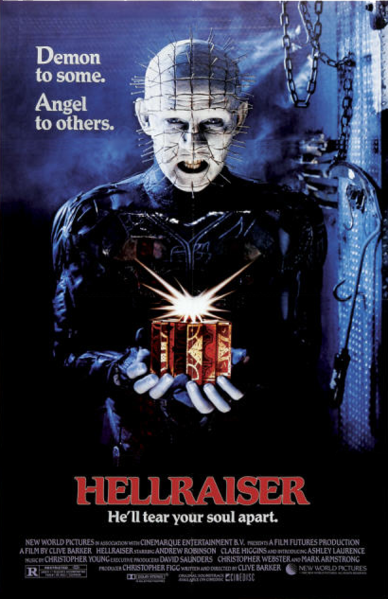
Women Are From Venus, Men Are From Hell

For our Scream 101 episode about this film, click here.


Year: 1987
Director: Clive Barker
Cast: Andrew Robinson, Clare Higgins, Ashley Laurence
Run Time: 1 hour 34 minutes
MPAA Rating: R

Of the horror franchises birthed in the back half of the 80’s, most withered and died on the vine (The Stepfather, Pumpkinhead, etc.. Very few survived into the modern era save the likes of Child’s Play (which got 5 increasingly batty sequels) and Puppetmaster (which people have long since stopped paying attention to, though it has propagated some 10 sequels). One of the more prevalent of these (in terms of size and cultural prominence) is the Hellraiser franchise, which sits at a robust eight sequels with Hellraiser 10 on the way.

I’m hardly able to begin yet another marathon at the moment, but consider this a prologue to an inevitable retrospective of the delirious B-list franchise that exists solely because of a staunchly A-list villain. So let’s introduce ourselves to that genre icon right now. Ladies and gentlemen: Please welcome… Lead Cenobite!

That’s right, the name Pinhead wasn’t used until the sequels. We’re learning already!

In Hellraiser, Frank (Sean Chapman) purchases a mystical puzzle box that, when opened, will take him to a dimension of unbearable pain and unbelievable pleasure (did I mention that Clive Barker is basically the crown prince of S&M?). He does this in the attic of his ancestral home in England (no, I don’t know what that means either), and shortly afterward his brother Larry (Andrew Robinson) moves in with his wife Julia (Clare Higgins).

Julia, who had been party to an extremely sordid affair with said Frank, is disgusted when he emerges from the attic floor as a skinless goo monster. But a good lay is hard to find, and she gets sucked into his sinister plot to murder unsuspecting men, using their blood to give him a corporeal form before the Cenobites – the monstrous demons who rule the S&M dimension led by the monster known colloquially as Pinhead (Doug Bradley) – find out that he has escaped. Bu will she draw the line at murdering her husband?

Also, Larry’s teen daughter Kirsty (Ashley Laurence) is there, because god damn it, this is 1987 after all.

We’re dealing with a 1987 movie that features at least five murders, a spunky teen survivor chick, and an iconic horror franchise villain, so you may wonder to yourself why Hellraiser isn’t an entry in my Census Bloodbath slasher feature. The answer is quite simple: Clive F**king Barker. The man behind Nightbreed couldn’t possibly stop to such a human level, following a formula that dictates anything like plot, character, or normalcy. He carves his own path, and he carves it in his skin with the dull end of a butter knife.

Much like Nightbreed, Hellraiser isn’t so much a story as it is a collection of disturbing images and situations that only cohere into a satisfying whole when you step back and unfocus your eyes. It’s a much more structured piece than Nightbreed, which was already baffling before it was savaged by producers, but it still operates on a level of pure, gut-wrenching horror rather than constructing a traditional narrative.

You mean the guy who invented this chick isn’t traditional? What a shock.

It might not be totally comprehensible at first bite, but Barker is above all else an artiste, and his brutally beautiful imagery is enough to sustain Hellraiser in its monstrous entirety. In fact, if it weren’t for the web of mythology he spins around his Cenobites, you could strip every last line of dialogue out of the film and still fundamentally grasp exactly what’s going on, which is a hallmark of pure cinema. Barker constructs his frames with utmost precision. Utilizing every element at his disposal to rub your nose in a tone or a feeling.

Whether it’s the cramped bed that signals an uncomfortable marriage, the expert juxtaposition between an adulterous flashback and a mattress-moving mishap, or the hellish splashes of light over a bloody love affair, Hellraiser is a sickly erotic masterwork Barker’s stunning imagery is bolstered by dripping, ghastly effects from Cliff Wallace that hold up marvelously well. Frank’s grotesque, malformed stages of resurrection are perpetually stunning work and the Cenobite design is sublime. The only shoddy work in the whole piece is a bizarre dragon monster that feels like a Harryhausen reject, but the scene in which it appears already reeks of rushed reshoots, so it can be forgiven for not living up to the proper standard.

Hellraiser is birthed from a feverishly creative intelligence on all sides of the board. It’s a rubber reality showcase of the best effects the 80’s had to offer, supporting one of horror fiction’s sickest, most original minds. It may read more like a gallery piece than a traditional narrative, but horror has the ability to transcend formula. As long as it can knock the break out of you, it has done its job. And Hellraiser does that and then some in its own inexplicable, screeching, blunt manner. This is some of the best of what horror has to offer (if you don’t mind a bit of camp acting): a glimpse into a world that looks like our won and yet is something wholly, nightmarishly different.

TL;DR: Hellraiser is a visceral, tonal masterpiece that doesn't bother itself too much with a plot.
Rating: 8/10
Word Count: 900

Tuesday, June 14, 2016

Popcorn Kernels: Teamsters

In which we release mini-reviews of two films that pit two teams who have a lot in common against one another.

X-Men


Year: 2000
Director: Bryan Singer
Cast: Patrick Stewart, Hugh Jackman, Ian McKellen 
Run Time: 1 hour 44 minutes
MPAA Rating: PG-13

Metal-clawed Wolverine and life-sucking Rogue discover the X-Men, a team of mutants who want to stop the metal-controlling Magneto from carrying out an evil plot against the government, which is considering implementing a Mutant Registration Act.

You know the fiery hellscape of superhero movies that Hollywood has become? For better or for worse, our current boom of caped crusaders can be traced directly back to X-Men, director Bryan Singer’s first foray into comic books. X-Men was hardly the first Marvel movie, but it was the film that resurrected the brand, leading to the dizzying heights of Spider-Man and Iron Man and the crushing lows of Zack Snyder’s parade of half-cocked abortions.

But let’s scrub all that history and all those feelings away to come face to face with X-Men. The comic movie landscape has been quiet as of late. Hugh Jackman is not yet a megastar. Bryan Singer barely knew that Superman existed. It’s the turn of the millennium and the U.S. has survived the potential horror of Y2K, yet is about to be plunged into a long national nightmare the following September. But for now, the world looks fresh and full of potential. Nobody seems to have noticed yet that George W. Bush is a wee bit kooky. The Backstreet Boys are still a thing. For the time, the world seems pretty OK.

Enter X-Men. For a time of such (relative) peace, this film is starkly political, which was pretty much unheard of for comic adaptations. You see, although America was coasting along alright, there were plenty of minority groups that weren’t getting the TLC they deserved, one of which Bryan Singer had personal attachments to: the LGBT community. A group that was despised for something they were born with and couldn’t control, feared following the AIDS epidemic in the 80’s, they mapped almost perfectly onto the X-Men’s own persecution, updating the series’ original subtext, relating to the Civil Rights movement of the 60’s.

It’s a bleak, gray film with a sharp political edge, which makes it great. But it’s also a fun action film with engaging characters and the birth of Hugh Jackman’s meteoric rise to stardom, which made it massively successful. Mind you, it’s no masterpiece. As fun as the characters are to watch, there are plenty of X-Men who are choked out by the Big Guns (Wolverine, Rogue, Professor X, Magneto…) so they don’t get the development they sorely need, and everything about Halle Berry’s Storm is a head-to-toe misstep from her eviscerated South African accent to her battering ram dialogue (Do you know what happens to a blogger when he has to listen to that line about a toad being struck by lightning? The same perplexed disgust as everyone else.).

With a relatively low budget and certain pieces in place that wouldn’t fully begin to pay off until later entries in the series (*cough cough* Sabretooth), X-Men is better as a pilot for the franchise than it is as a work of cinema, but it’s still tremendous fun. From a mind-numbingly on-the-nose battle atop the Statue of Liberty to Ian McKellen’s James Bondian over-the-top gravity (including a massive mutation machine and a decked out Evil Lair), X-Men is a lurid comic book movie on top of its substantial political agenda, and I greatly enjoy both of those things.

Rating: 7/10

Bring It On
Year: 2000
Director: Peyton Reed
Cast: Kirsten Dunst, Eliza Dushku, Jesse Bradford 
Run Time: 1 hour 38 minutes
MPAA Rating: PG-13

When a high school senior becomes cheerleading captain, she discovers that her predecessor had been stealing routines from an underprivileged school. As she makes peace with an edgy newcomer, will she lead the team to a literal victory at the National Cheerleading Competition or a moral victory?

You know those zeitgeist movies that all your friends were quoting in middle school but you just never got around to watching? Bring It On is one of mine, and while I’m glad to have finally seen it, being immune to the nostalgia factor is like peeping behind the Wizard of Oz’s curtain. It’s not really as great as everyone would have you believe, though it’s hardly an awful movie. It’s just that, rather than being a gut-splitting, generation-defining work, it’s a decent wisp of teen fluff.

If you’ve seen any high school movie from the 90’s, you pretty much know what to expect here: Lots of emphatic teen acting that’s more Disney Channel than Uta Hagen and a heaping helping of fabricated slang that visibly begs for entry into the popular lexicon: “We can’t mack in front of the parentals.” “She puts the whore in horrifying.” This stuff practically carbon dates he film, as if the mix tape that’s actually on a cassette and the teen girl begging for a private phone line haven’t already done it well enough. It works as a cheesy glimpse into times gone by, but it’s a pretty routine film.

The story isn’t so much an organic arc as a 90-minute long montage of haphazardly-placed teen movie scene, but I would like to give it credit for having a surprising amount off grace when handling the topic of race relations and white privilege in the public school system. I can’t say I expected that in my cheerleading movie, but for the most part, bring it on is a little too concerned with the trivialities of cheerleading competitions to be of particular interest (although, amusingly, Glee would cop this movie’s exact formula for nearly every season finale).

Weighed down by too many tropes (the edgy girl who learns to embrace her femininity, the gay BFF who has almost zero interaction with dudes), Bring It On limps across the finish line in vaguely amusing but generally unimpressive style. The one scene that really did stand out to me is an awkward slumber party flirtation between Kirsten Dunst and her character’s best friend’s brother while brushing their teeth. It’s a perfect little microcosm of awkward teen romance. Their oddly competitive dental hygiene is effortlessly cute and terrifically acted, but it’s also romantically charged in a way that the rest of their interaction is patently not.

If I had to sit through the rest of this OK film in order to earn one sterling scene, it’s not a half-bad tradeoff. It’s just not an all-good one, which is disappointing.

Rating: 6/10
Word Count: 1102
Reviews In This Series
X-Men (Singer, 2000)
X2: X-Men United (Singer, 2003)
X-Men: The Last Stand (Ratner, 2006)
X-Men: First Class (Vaughn, 2011)
X-Men: Days of Future Past (Singer, 2014)
X-Men: Apocalypse (Singer, 2016)

Tuesday, June 7, 2016

Census Bloodbath: Cheers For Fears

For our Scream 101 episode about this very film, click here.

Year: 1988
Director: John Quinn
Cast: Betsy Russell, Leif Garrett, Lucinda Dickey
Run Time: 1 hour 29 minutes
MPAA Rating: R

After intense examination, I have concluded that the period between about 1986 and 1988 is when the cheesiest, most vomitously unfashionable concentration of campiness hit the slasher genre. Unfortunately, right around this period is when the subgenre was in its most severe decline. The glut of slashers had been flooding the market since 1980, only increasing in strength following the home video boom of the mid-80’s. Of course, when a high pressure perm front meets a low pressure quality snap, you get a maelstrom of memorable bad-good delights.

Take Cheerleader Camp. A woods-based slasher flick that was exactly too late to meet its prime market, it’s still a memorably entertaining crapfest. Co-produced, by – of all companies – the Japanese Daiei Films (progenitors of the Gamera franchise), Cheerleader Camp is deliriously out of touch with anything resembling reality.

Starting with the campers’ ages, which bottom out at about, oh, 32.

Camp Hurrah. Where dreams come true. Where men can be men and women can be topless. The particular cheerleading group we will be following is from Lindo Valley, composed of the cooing nymphette Pam (Teri Weigel, who you might recognize from Lesbian Babysitters 5), the blonde bubblehead Bonnie (Lorie Griffin), the Ethnic One Theresa (Rebecca Ferratti), the requisite fat prankster Timmy (Travis McKenna), the sweet, doting mascot Cory (Lucinda Dickey), the lascivious team captain with a gravity-defying hairline Brent (Leif Garrett), and his girlfriend Alison (Betsy Russell, who would later marry another onscreen psycho – Jigsaw. She appeared as his wife Jill in Saw IV-VII). Alison has been plagued by bad dreams, because you saw how much money that Freddy movie made, right?

When people who defy Alison start dying under mysterious circumstances, Alison worries that not all might be right in her mind. Is she killing these people? Or is it somebody else? The snobby camp owner Deedee Tipton (Vickie Benson)? Pop (Buck Flower of Maniac Cop, Pumpkinhead, and a million other things), the leering handyman with the Southern drawl who feels transplanted from some other movie entirely? When the killer turns their sights on the Lindo Valley team, their cheerleading getaway quickly becomes a bloody fiasco.

They did NOT stick the landing.

You’d think from that setup that Cheerleader Camp would be more or less a boob showcase, highlighting the best and bustiest of today’s youth. But take a look at that calendar, sucker. This is 1988, and the MPAA had long since choked out the genre’s capacity for sleaze like a pernicious weed. Although there IS a highly amusing sequence that could only be classified as a Bikini Removal contest, this is largely an exploitation-free zone. Shirts are practically super glued on, and the gore is shooed offscreen (though, in the few kills that do have blood, the effects are shockingly solid).

What Cheerleader Camp does have in spades to make up for its deficiencies is pure, unadulterated lunacy. Three characters in particular have tapped into a rich vein of incredulity. While Alison, Brent, and Pam stumble their way through a musty, run-of-the-mill slasher pic, Timmy, Miss Tipton, and pop the handyman are quietly constructing a Looney Tunes cartoon on the sidelines.

While Timmy spies on bathing women using a periscope and decked out in full Mrs. Doubtfire regalia, Miss Tipton (who could totally be played by Judy Greer in the remake) gets blasted on cocktails and has nudity-free cheerleading themed sex with the local sheriff. You’d think that description would be enough to sufficiently explain the nature of that scene, but you would be dead wrong. Deedee Tipton is a shining paragon of inexplicable slasher sexuality, and this convoluted, needlessly detailed scene is so crazy go nuts that it’s worth the price of admission alone. I mean, you can catch Cheerleader Camp for free on YouTube, but it’s such a sterling scene it’s legitimately worth paying actual human money for.

And then there’s Pop. Actor Buck Flower knows exactly where this movie stands in the pantheon of cinema (he was in Back to the Future and Escape from New York, so I’m pretty sure he knows that Cheerleader Camp is not his career peak), so he goes hog wild, ad-libbing all his lines and not giving half a hoot if his character makes sense. He is an endless repository of folksy, down-South sayings and lecherous, sweaty hyperbole that will stun your mind into submission. He’s the only genuinely good actor here, and his screen presence is like a giant electromagnet.

He’s a true role model.

While most of Cheerleader Camp’s fun falls into the unintentional bad-good category, there is a primitive but surprisingly effective sense of humor at work here. A scene of the mascots attempting to eat lunch while still in costume is as funny and well-shot as any contemporaneous ten comedy. And there are a handful of clever cuts that provide punchlines through the film’s editing itself, which is a level of comedic foresight almost unknown in the genre.

So as much as I want to hate Cheerleader Camp for its plot (which is as dense as a sponge, skipping through a loosely linked series of vignettes) its dreadful third act (which hinges on a red herring the screenwriter couldn’t be bothered to call out attention to and is basically a perpetual motion machine of teens running through underlit woods), or its total lack of scares (save for two nightmare scenes which are appropriately surreal), Cheerleader Camp is still a bucket of bloody fun. It’s not as recommendable a bad movie as, say, Killer Party, but it certainly has more focused, solid material than a Girls Nite Out. Don’t rush out to see it, but if you stumble across Cheerleader Camp in a dusty bargain bin, at least give it a second thought.

Killer: Cory (Lucinda Dickey)
Final Girl: Alison (Betsy Russell)
Best Kill: Pam’s “hedge clippers through the back of the skull” demise is shear ecstasy.


Sign of the Times: Every time the camera cuts back to Theresa, her hair is teased about a foot taller.
Scariest Moment: In a nightmare, Alison’s pom poms slice her arms open like razors.
Weirdest Moment: While being chased through the woods, Timmy decides to take a break to film a monologue – and then decides to take a piss, all while still filming.
Champion Dialogue: “That judge in the orange skirt… Make yer peepee harder than a ten pound bag of nickel jawbreakers.”
Body Count: 9; 7 perpetrated by the killer, 1 by a gaggle of scared cheerleaders, and the last by the Final Girl herself.
  1. Suzy’s wrists are slit.
  2. Pam is stabbed through the skull with shears.
  3. Theresa is hit with a van.
  4. Deedee is cleavered in the back.
  5. Timmy is axed in the tummy.
  6. Sheriff has his head crushed with a bear trap.
  7. Pop is shot to death.
  8. Bonnie is strangled with a phone cord.
  9. Brent is shot.

TL;DR: Cheerleader Camp is a weak, late entry in the slasher genre, but it's silly enough to be diverting.
Rating: 6/10
Word Count: 1197

Thursday, June 2, 2016

Popcorn Kernels: The Fairer Sexploitation

In which we present mini reviews of two female-directed entries in stereotypically male-directed genres.

American Psycho (For our Scream 101 episode about this very film, click here.)

Year: 2000
Director: Mary Harron
Cast: Christian Bale, Jared Leto, Reese Witherspoon
Run Time:1 hour 42 minutes
MPAA Rating: R

A pent-up Wall Street VP lashes out in a variety of homicidal ways.

American Psycho is a crazy film. One of the few generally accepted horror classics that I hadn’t seen, it defied my expectations at every turn. Based on the controversial Bret Easton Ellis novel that divided critics between viewing it as a dressed-up misogynist tract or a razor-sharp satire, the film was directed by – of all species – a woman. In case you’ve never read this blog before, let me make it very clear that this puts me firmly in the movie’s camp pretty much from the get-go. As far as I can figure it, this is the only popularly regarded staple horror film to have a woman behind the camera (I’m not counting The Babadook, which is far too new to qualify as a classic, as much as I may love it. And I’m certainly not counting Freddy’s Dead: The Final Nightmare).

And how does having a female director affect the horror and humor of American Psycho? Not one whit. Well, maybe we linger a little longer on a showering Christian Bale, but you ain’t catching me complaining there. Other than that, it’s a perfectly sharp yuppie satire for people who liked Fight Club a little too much.

Perfectly skewering the venal, acquisitive nature of Reaganomics-fueled Wall Streeters who are all shallow, greedy, and interchangeable, American Psycho depicts the meltdown of a single individual: Christian Bale’s Patrick Bateman – in this massive horde. As he strains to rein in his homicidal outburst, his peers ignore him entirely, even when he publicly confesses to his many sins. This is best encapsulated in a key scene where Bateman trundles a body into the trunk of a cab and a passing coworker coos over the trendy duffel bag he’s using to perform the deed. This is a world where you can be a murderer or, in fact, be murdered yourself, and you won’t make the slightest dent in the indestructibly grinding clockwork of capitalism.

It sounds intense, and it is. But it’s also pitch-black hilarious humor so grim that even the folks on the gallows might find it distasteful. Patrick Bateman is a man who murders people who can nab reservations at better restaurants than he can, discussing the finer points of Huey Lewis and the News while zipping up a plastic poncho to protect his designer suit from stains. Patrick Bateman is a man who trembles at the mere sight of  trendy business card, who has a stroke of panic when an opponent’s apartment is nicer than his. His viewpoints and motivations are so pointlessly inane that you can’t help but laugh, even as you cringe at the thought that the world around him allows him to get away with his crimes.

The only thing stopping American Psycho from being a flat-out black comedy masterpiece is a tendency toward repetition in the second act. Every scene follows a very precise structure, hobbling its ability to shock. A glorious ATM scene that simultaneously implies that Money is God and kicks the film’s craziest sequence into gear provides the jolt that the system needs, but the film enters a holding pattern for a little too long to preserve my patience. But we can’t all be perfect. American Psycho is a clever, superb little lick that’s just as keen to reference The Texas Chain Saw Massacre as Ivana Trump. I love that, even if it houses a half hour that falls short of being a masterpiece.

Rating: 7/10

Fast Times at Ridgemont High
Year: 1982
Director: Amy Heckerling
Cast: Sean Penn, Jennifer Jason Leigh, Judge Reinhold
Run Time: 1 hour 30 minutes
MPAA Rating: R

The teens at Ridgemont High really love bangin’.

Another entry in an exploitation genre secretly helmed by a woman, Fast Times at Ridgemont High definitely wears its gender on its sleeve, at least a teensy bit more. Despite its unfair proportion of bare breasts (a male full frontal scene was excised by the ever-progressive MPAA), Ridgemont High is first and foremost a story of a young woman discovering her sexuality and learning what she wants from men. Of course, this is a rote toss-up between a smooth talking stud and a namby pamby Nice Guy, but this was 1982. Let’s not expect too much.

This young woman, played by Jennifer Jason Leigh in the role that made her a star (though she showed great promise in the previous year’s Eyes of a Stranger), is a sexually active teenager treated with a tremendous amount of respect. Her sexual misadventures are never presented as shameful, and an abortion scene late in the film is presented as a natural – if difficult – part of life, used to further Ridgemont High’s sweetest relationship, between Leigh and her ne’er do-well brother Judge Reinhold.

Of course, she’s the only character given anything even remotely resembling a story arc. The movie around her is a haphazard explosion of random, occasionally comic vignettes following stoners, football players, cool guts, and nerds through their daily lives. Each fragmented piece is part of a vast mosaic, depicting nothing in particular. It’s vexing, and the tendency to showcase overlong, almost actively unfunny sequences (an imaginary surfing championship interview, an enraged football player winning a game) is damning. To be fair, I have the personal bias that Sean Penn’s stoner drawl and Robert Romanus’ droning deadpan rub me exactly the wrong way, like a sandpaper suit.

This total disconnection from the concept of “story” or “character” is intensely frustrating and the movie’s habit of poor continuity editing only highlights how scraped-together the overarching plot feels. Even Phoebe Cates’ iconic bikini scene suffers from – frankly – a dreadful botch-job on the part of the splicer. This is less like cutting a movie and more like cutting the cheese (Hey! Rimshot!).

Of course, the “time in a bottle” aspect of Ridgemont High does much to soothe any wounds it may have caused. With a pitch perfect soundtrack of 80’s hits that have actually aged terrifically (Jackson Browne, The Go-Go’s, The Cars… This is a synthcrap-free zone) and a horde of future stars (joining Penn and Leigh are Forest Whitaker, Nicolas Cage, and horror icons Amanda Wyss – Freddy Krueger’s first victim in A Nightmare on Elm Street – and Kelli Maroney, who would eventually return to the Sherman Oaks Galleria where this film was shot four years later in Chopping Mall), Fast Times at Ridgemont High is a dreamy time capsule of days gone by.

It might not be a perfect high school sex romp, but it’s decently funny and occasionally sweet. I can make do with that while jamming to “We Got the Beat.”

Rating: 6/10
Word Count: 1155
Reviews In This Series
American Psycho (Harron, 2000)
American Psycho 2: All-American Girl (Freeman, 2002)