Showing posts with label Amanda Seyfried. Show all posts

Sunday, July 22, 2018

How Could I Resist Ya?

Year: 2018
Director: Ol Parker
Cast: Lily James, Amanda Seyfried, Cher
Run Time: 1 hour 54 minutes
MPAA Rating: PG-13

I don't wanna talk about things we've gone through, but as a reviewer it's kind of my obligation. The 2008 Mamma Mia! is a frankly disastrous film adaptation of a shallow but fun stage musical based on the songs of Swedish disco supergroup ABBA. Nevertheless I love it, for reasons almost entirely separate from the movie itself. And I couldn't help but be excited for its ten-years-later sequel, for the twin reasons that it's a movie that should never have existed (the type of thing I'm unduly fascinated by) and that I love the ABBA discography, and going deeper into it is far more rewarding than just skimming off the top of ABBA Gold like the last film did (for more of my thoughts on that, check out my first contribution to one of my favorite film sites: Alternate Ending). Also Cher. But I could have never predicted what I actually got, and I'm all the more dazzled by that. Let's jump in.

Because if there's one thing that's incredibly safe and comfortable to do in those outfits, it's jumping.

That history book on the shelf is always repeating itself, which is how we got this belated sequel in the first place, but the notes of Here We Go Again's plot are still somewhat unfamiliar for this particular glittery universe. We meet up again with Sophie Sheridan (Amanda Seyfried) on the eve of the grand re-opening of her mother's hotel on the Greek island of Kalokairi. It has been a year since Donna Sheridan (Meryl Streep) has passed, of causes unknown (though the random screengrab of her white-knuckling a glass of wine that's hanging on the wall might offer some clues), and she and one of her three dads Sam (Pierce Brosnan) are still heartbroken over it.

Those happy days, they seemed so hard to find, but never fear! Our old pals are back to play, including Sophie's beau Sky (Dominic Cooper), her other two dads Harry (Colin Firth) and Bill (Stellan Skarsgård), and her mother's glee team Rosie (Julie Walters) and Tanya (Christine Baranski). Joining them are Andy Garcia as the hotel manager Fernando (gee, I wonder when that'll turn out to be important) and Cher as Sophie's absentee grandmother Ruby. As Sophie tries to navigate into the newest stage of her life, she finds that her story is mirroring that of her mother's way back when in 1979, as played out by Lily James alongside younger versions of Rosie (Alexa Davies) and Tanya (Jessica Keenan Wynn) as she flirts with and beds future dads Bill (Josh Dylan), Sam (Jeremy Irvine), and Harry (Hugh Skinner).

Although it's possible she didn't know they were three separate people, because they all look more or less exactly the same.

It was like shooting a sitting duck to make a Mamma Mia! movie that I'd actually enjoy, whether it was incredible, terrible, or anything in between. But the absolutely terrific thing about Here We Go Again is that it edges up against incredible, at least on the admittedly very adjusted scale that comes from being in continuity with Mamma Mia!

Having the time of your life is obviously the movie's biggest priority, and there are certain aspects in which the movie fails as a whole in its efforts to achieve this. For one thing, the narrative is completely inert. Sure it has more thrust and structure than the previous entry, but that's like saying you have more character drama than a Transformers movie. It's not exactly an achievement. Most of the movie, at least in the present day scenes, is just about people sitting around waiting for a party (which I could relate to, having gotten to the theater an hour early). And the flashback sequences are slavish retreads of the exact material implied by dialogue and lyrics from the original (the "walk along the Seine" line from "Our Last Summer" even gets a totally superfluous nod). And yet, the way the film connects Sophie's experience with her mother's miraculously achieves a sort of tenderness and genuine emotion of which I would have previously thought this franchise completely incapable.

But I won't feel blue like I always do, because this movie has so much more to offer than a mere story. For one thing, it has a director who actually seems to know how movies are made. The first time the camera moved in a scene, I almost jolted out of my seat, because that never happens in the original. Mamma Mia! just plunks down on a tripod and lets its cast of high wattage stars do their karaoke. In Here We Go Again, Ol Parker's camera roves around the set, snatching glamorous and sometimes even glorious images from the tumult of turquoise and glitter. It's entirely refreshing and allows the manic energy of the material to be captured in a way that actually highlights and accentuates its key components rather than sitting back from the material and letting its gaudiness shine through.

The picture clear, everything seems so easy to Parker, who crafts a musical theatre spectacle like his life depends on it. It helps that he doesn't have to rely on the A-listers who wander in and out of the present day portion like they're in one of the Netflix seasons of Arrested Development. He has the freedom to keep them around as their schedules allow, toss them a few bones here and there (thankfully, not too many are caught by Pierce Brosnan, who has not taken singing lessons in the intervening decade), and focus his best on the young, relatively unknown cast in the 1979 sequences. Because their characters are attached to the famous people, he knows audiences will still care, and his casting could focus on actual talent and not star wattage. And they sure are (mostly) talented! Some of the boys sing a little too emphatically, like they're worried they'll be fired if you miss a single syllable, but the production numbers (especially "Waterloo" and "Why Did It Have to be Me?") are lovely little trifles with grand choreography that utilize every little element of the setting and create imaginative dreamscapes that remind one of the best of classic movie musicals.

Although, as much as I love the song "When I Kissed the Teacher," what compelled them to include such a track in 2018 is still a mystery to me.

Would you laugh at me if I said I cared for Lily James' outfits more than most human beings? Costume designer Michele Clapton knows how to make the human body look cinematic, and Lily James is the perfect canvas for some of the best movie costumes of the decade, perfectly flowy and retro yet effortlessly modern and stylish at the same time. But I digress. This is a musical, let's talk about some more music! Here We Go Again resists temptation to repeat too much of the original soundtrack (of the canonical songs that appear in the actual film and not the credits, we just get "Mamma Mia," "Dancing Queen," an expanded "I Have a Dream," and a blissfully brief reprise of "S.O.S." with the rest of the songs being relegated to the instrumental score during dialogue scenes), and pulls some truly special, unexpected tracks like "Andante, Andante" and "Angel Eyes," two songs I love so much I could't help but thrill with delight.

All my sense had gone away, but I can still admit that there are certain... flaws in more than just the plot. There's still a bit of abrupt song introductions and flat singing (Brosnan and Cooper being the worst perpetrators), Seyfried is sleepwalking so hard you can practically see the drool, and Cher is a lot of things but she's not particularly convincing, as much as I love the fact that she's here at all. And it's a little hard to ignore the fact that they seem to have forgotten that Colin Firth's character is gay (the biggest mention of his character's sexuality is secreted away in an end credits stinger), and that the glitz and glamor of this musical about rich tourists ignores the economic plight of the Greek people they use as props (the film has one scene about fishermen being out of work, and it's used as an excuse to get a character a boat). I'm not saying they're bad for not mentioning it, I'm saying they shouldn't have introduced the concept in the first place if they were going for full musical theater fantasia, because it introduces a bit of a rankling cognitive dissonance.

But the destination makes it worth the while, because - especially in the second half - Here We Go Again is actually genuinely funny as well as entertaining spectacle. The script is much stronger this time around, building gags and character dynamics out of the thin air that was the original characters. Plus, Baranski and Walters (and their younger counterparts) are given some material that's actually quite dirty instead of innuendo so subtle that Christian Grey would even be scratching his head. So, let's add this all together. Terrific, non-obvious ABBA songs, actually talented cast members, solid humor, a director with a head on his shoulders, colors that pop, and a heartfelt emotional throughline? Are you sure this is a Mamma Mia! movie?

Knowing me, knowing you, it's the best they can do.

TL;DR: Mamma Mia! Here We Go Again is surprisingly tender and terrific.
Rating: 8/10
Word Count: 1591
Reviews In This Series
Mamma Mia! (Lloyd, 2008)
Mamma Mia! Here We Go Again (Parker, 2018)

Tuesday, September 27, 2016

Popcorn Kernels: Family Movie Night

In which we explore mini-reviews of movies my parents chose for me to watch.

Casablanca


Year: 1942
Director: Michael Curtiz
Cast: Humphrey Bogart, Ingrid Bergman, Paul Henreid
Run Time: 1 hour 42 minutes
MPAA Rating: PG

A tavern owner in Morocco discovers that his ex-love has arrived in town with her husband and he has the means to help them escape, should he choose to let her go.

Man, I don’t even wanna touch this one. Casablanca is such a minted classic, even by regular people who think Citizen Kane is boring, that I was nervous about how I would receive it when I finally buckled down and watched it for the first time. And I have a notoriously cold heart when it comes to romance films. It might just be the fact that there tends to be a gulf between me and onscreen couples in terms of both sexuality and approach (if you stand outside my window in the middle of the night with a boom box, I will throw things at you until you go away because I need my sleep, dammit), but love movies need to clear a high bar before they even have a chance of touching my icy heart.

Casablanca almost gets there. The romance thrums and thrives in the chemistry between Humphrey Bogart and Ingrid Bergman, but it’s far more present in the performance than its actualization. In their interplay, you get a perfect sense of a past Great love gone dark, but when they actually show flashback scenes of this supposed Great Love, frankly I’m not convinced. Perhaps it’s the toothless, Code-neutered interaction that dampens their physical attraction or the rather bland staging of their France apartment, but this romance only flourishes wen it’s dead.

But beyond that, Casablanca is, obviously, fantastic. Boasting a surprisingly funny script for a film – especially a drama – of its vintage, it’s a very layered piece that combines a patriotic wartime morality play with one man’s romantic struggles, played out over the various dives and skeevy locales of the border town Casablanca. It drops iconic lines like Liza Minnelli sheds boa feathers, which is even more remarkable considering that it was just a cookie cutter studio picture with a script being constantly rewritten as they shot it.

It’s incessantly remarkable how well this film works, and especially how well it still holds up today. Its dynamic lighting scheme forgives even its most ludicrously stagey setpieces, and the actors imbue their characters with personalities that stretch far beyond the scope of the screen. I’m going to leave it at that, because nobody needs another film blogger yammering about Casablanca, but I’m definitely glad I watched it.

Rating: 8/10

Unfaithfully Yours
Year: 1984
Director: Howard Zieff
Cast: Dudley Moore, Nastassja Kinski, Armand Assante 
Run Time: 1 hour 36 minutes
MPAA Rating: PG

When a famous conductor suspects his much-younger wife of cheating, he hatches a plot to murder her and her supposed lover that goes wackily awry.

The 80’s were a weird time for comedy movies. Despite an abundance of classic teen movies and high concept comic gems, there was also a massive vein of throwaway flicks to beef up video store shelves. One of these is Unfaithfully Yours, which takes a sheaf of fairly well-respected actors and applies them to a sitcom premise stretched to an unfathomable length. While Unfaithfully Yours could have been a good Halloween episode of Three’s Company, the endless padding it requires to reach feature length makes the tone of the dark comedy go haywire.

This is a movie that couldn’t be made today, at least to its exact dimensions. It leans so heavily on chauvinism and misogyny to drive its main character’s motivations that hopefully anybody in 2016 would see right through Dudley Moore like they have X-ray eyes to find the spiteful goblin he really is. It is massively unpleasant to spend time with this character, who is willing to straight-up exterminate his wife over a series of misunderstandings. This type of storyline could be played for laughs if the tone was managed properly, as it is in the opening monologue of the film, but the script seems unwilling to admit that its protagonist is a genuinely awful person.

Instead of harnessing It’s Always Sunny in Philadelphia’s type of misanthropic comedy, Unfaithfully Yours takes a stab at Two and a Half Men by way of Alfred Hitchcock. Dudley Moore does a fine job of drawing physical humor from his character’s incompetence, but there’s only so much time I can spend with him before the film’s cheery attitude drives me to madness.

This scenario that has already run long endlessly unspools with an extended dream sequences that is then slavishly repeated in “reality.” It’s a tiresome tactic, but the really frustrating thing is that Unfaithfully Yours could have been truly great if it was a little less hammy and tipped more toward the darker, Death Becomes Her side of things.

Rating: 5/10

While We're Young

Year: 2014
Director: Noah Baumbach
Cast: Ben Stiller, Naomi Watts, Adam Driver 
Run Time: 1 hour 37 minutes
MPAA Rating: R

A bored middle-aged couple befriends a young hipster couple who give them a new lease on life, but not everything is as happy as it seems.

Don’t you just love comedy movies that don’t really have any jokes? Aren’t they just the best? Noah Baumbach certainly seems to think so. I suppose you might call While We’re Young a “dramedy,” but the drama half is so navel-gazey and the comedy half appears so infrequently that it’s just a “…” 

A too-obvious attempt at satirizing aging dreamers too afraid to commit to their goals and the self-conscious hipness of youth culture, While We’re Young undermines itself by constantly pointing out what it’s doing. Whether it’s a pointed, inauthentic echo plastered over a key dramatic line that made me laugh out loud or the endless epigraph that opens the film using practically an entire scene from a play (this also showcases Baumbach’s lack of control over his visuals), While We’re Young is so exuberantly excited to share its trite ideas that it smothers them.

It’s a shame, because when While We’re Young is funny, it can be damn hilarious. A potential investor played by Ryan Serhant is one of the best broad comedy characters in years, with the snappy line deliveries of a young man with too much confidence and too few brain cells. A lot of side characters and little moments shine here, at least justifying the “-edy” ahlf of the portmanteau after much effort. The most consistent comic element is probably Adam Driver, whose performance precisely captures the physicality of a twee, hopelessly pretentious hipster douche. Maybe the character isn’t too far form his wheelhouse, but it’s a genius bit of over-the-top nonverbal acting that goes a long way.

But other than that, While Were Young is a bit of a dud. Stiller and Watts, as the older couple, are appropriately bristly, but nobody outside of Driver and Serhant is doing standout work here. The nuggets of comedy buried in the film make slogging through the drama worth it, but I’ll be happy if I never even have to think about watching this film again.

Rating: 5/10
Word Count: 1211

Friday, August 12, 2016

Q2 Review Purge: Volume 3

You saw this coming, didn’t you? Underestimate my backlog once, shame on me. Underestimate my backlog twice, shame on YOU. Here’s the third and final (?) set of mini-mini reviews as I reboot my system and get back on track.

All About My Mother
Year: 1999
Director: Pedro Almodóvar
Cast: Cecilia Roth, Marisa Paredes, Candela Peña
Run Time: 1 hour 41 minutes
MPAA Rating: R

After her son dies, Manuela travels to Barcelona to tell his father, helping an aging actress, a transgender hooker, and a pregnant nun along the way.

You might not be able to tell from that synopsis, but All About My Mother is pure Oscarbait through and through. There was a period in Almodóvar’s career where he was on his hands and knees begging for the Academy to take him seriously, and this film is smack dab in the middle of it. Naturally, it won the Oscar for Best Foreign Language Film.

Always the staunch Oscar contrarian, I must contest that All About My Mother is far from the director’s best work (winners are rarely as good as their competitors, as evidenced by the fact that his masterpiece Women on the Verge of a Nervous Breakdown lost to Pelle the Conqueror). Although there is some delightful comic relief from the talented transgender actress Antonia San Juan, the movie takes itself way too seriously.

While Almodóvar admittedly crafts some stunning imagers and weaves in a tapestry of parallels between the film’s wide variety of mothers, trying to find the line between reality and fiction, All About My Mother is one of Almodóvar’s few films that feels typical. It might push the envelope with its depiction of gender and sexuality, but it’s just an Oscar tearjerker, yanking its characters through sad sad situations so they can spout elegant monologues at the drop of a hat. Obviously it’s far from a bad movie (I don’t think Almodóvar has made one of those), but it just doesn’t make an impression, which is usually what he’s best at.

Rating: 6/10


Talk to Her
Year: 2002
Director: Pedro Almodóvar
Cast: Rosario Flores, Javier Cámara, Darío Grandinetti
Run Time: 1 hour 52 minutes
MPAA Rating: R

Two men become friends at a hospital while caring for their loved ones, who are both in comas.

If you thought All About My Mother was Oscarbaity, wait till you get a load of Talk to Her! A movie so wildly overbearing that even the Oscars were a little put off, shuffling it into the Best Original Screenplay category, it’s by far the least funny Almodóvar movie I’ve ever seen. And I’ve seen a lot at this point. What I admire most about the director is his ability to draw comedy from even the most dire of situations, but here he sets all that aside and doubles down on the sincerity, to muted effect.

It lacks the serene beauty of All About My Mother, though if anything its intricate web of metaphor is even more complex. The film is about transition and metamorphosis, two disparate halves coming together to form a whole. It maybe goes without saying that this theme results in the most f**ked-up Almodóvar relationship yet: the friendship between the lover of a female bullfighter and the lonely stalker of a beautiful young dancer. The queer overtones prevalent in his filmography are almost entirely absent, stripping away all veneer to showcase a story about two people bonding.

Unfortunately, Talk to Her trips over itself in the third act, pointlessly extending the plot for some melodramatic waffling. This isn’t an uncommon occurrence in Almodóvar’s work, but when it lacks so much of his signature style, it also lacks the charm that allows you to cling to the bull’s back. Talk to Her bucks and you go flying, which is an extremely disappointing outcome.

Rating: 6/10


The Lives of Others
Year: 2006
Director: Florian Henckel von Donnersmarck
Cast: Ulrich Mühe, Martina Gedeck, Sebastian Koch
Run Time: 2 hour 17 minutes
MPAA Rating: R

An East Berlin secret police agent tasked to bug the apartment of a suspected dissident finds himself wrapped up in the man’s life as he listens from the attic.

Those who don’t learn from history are doomed to repeat it, and those who make historical movies are almost always talking about the present. It’s no mistake that The Lives of Others came out during the time of the Patriot Act and America’s surveillance controversy. And it’s certainly no mistake that the film is set in 1984.

The Lives of Others is a thriller about sitting down, about the sociopolitical intrigue that can change lives and enact deaths without stepping out from behind a desk. It’s a terrifying snapshot of a bleak reality that has existed, does exist, and will exist. In essence, it’s a very German film.

However, despite its dour setting and even more dour production design, dripping with greys and mottled greens, The Lives of Others is a story of hope. About the flowers that can grow in the cracks of the concrete. This is thanks in large part to Ulrich Mühe, whose stony visage captures every last chink in his armor as he learns that the people he has been victimizing are actual human beings. The Lives of Others is a terrifying film about bureaucracy and a reassuring one about humankind. It’s not often that something like that comes from a film set in historic Germany (unless Spielberg is involved), and The Lives of Others is a powerful break from the mold.

Rating: 8/10


Star Trek
Year: 2009
Director: J. J. Abrams
Cast: Chris Pine, Zachary Quinto, Simon Pegg
Run Time: 2 hours 7 minutes
MPAA Rating: PG-13

The Star Fleet rebel James T. Kirk finds himself on a stranded student vessel facing the alien threat that killed his father.

I know it’s a popular joke to make fun of J. J. Abrams’ use of lens flares, but I’d never until now experienced them for myself. The legends were true. Star Trek 2009 is an ocular freak show. People have counted, there’s literally a lens flare every 12 seconds on average. It’s like standing on the red carpet at the Oscars for two hours. Every single heroic shot is marred by these hideous distractions. They even go off in quiet, indoor scenes with no discernible light source. The lens flares will make your eyes water far more than any of the drama.

But there’s a movie beneath all that digital tampering, so let’s talk about it. As an origin story for a franchise I have not one shred of nostalgia for, it does a decent job of telling its own story. This could be a movie about James T. Bumblefart overcoming great odds as a cadet, and it would still be a coherent, engaging yarn. And there would be even less reason for Zoe Saldana to be there, because Uhura’s extremely discomfiting romance with Commander Spock happens entirely backstage.

As an exercise in J. J. Abrams crashing his CGI action figures into each other, Star Trek is a fun popcorn adventure, if a little beholden to the Star Wars standby of having important battles take place over yawning chasms. There’s only one scene that reaches the dizzy heights of summer fun I was hoping for (Bones follows Kirk, injecting him with a variety of wacky vaccinations to stabilize him as he attempts to deliver an important message) as the film tends toward the over-serious, but it’s never dull.

And Chris Pine is honestly a terrific choice, giving young Kirk a frat boy braggadocio that puts his flaws on his sleeve while retaining his natural charm. Star Trek’s a swing and a hit, even if it’s not a home run. Those lens flares can rot in Hell.

Rating: 6/10


Mamma Mia!
Year: 2008
Director: Phyllida Lloyd
Cast: Meryl Streep, Pierce Brosnan, Amanda Seyfried
Run Time: 1 hour 48 minutes
MPAA Rating: PG-13

A young woman wants to invite her dad to her wedding on a Greek Isle. Only she doesn’t know which of three men it is, so she invites them all. Then they sing a bunch of ABBA songs.

The Mamma Mia! title card appears as a young girl runs screaming through a cloud of sparkles. That should pretty much tell you all you need to know about it. Mamma Mia! is loud, stupid, deranged, and I love it from the bottom of my heart.

While Mamma Mia! attempts to harness the glittery camp of attending a Broadway musical or a disco show, it frequently swings over the top into wholly unintentional bad-good delight, then back around the horn again into genuine fun. It spins around and around again between these two registers like a gymnast on the horizontal bars, afraid to let go and stick the landing. And stick the landing Mamma Mia! doesn’t, backloading about 90 ballads that suck the energy out of the third act, leaving it so ravaged that not even “Take a Chance On Me” (the most perfect pop song of the 70’s) can resuscitate it.

But despite its sputtering denouement, I love both angles from which Mamma Mia! approaches its content. For all the too-bright lighting that makes every location look like a sitcom set and the herky jerky variance in quality between the celebrity singers (Meryl Streep is at the top with a shockingly good belt, and Pierce Brosnan flounders at the bottom, sounding like Fozzie Bear in the middle of getting his tonsils removed) there’s a genuinely good vin running through it all, like the Greek chorus that resurrects an ancient form of theater to great effect, the bubblegum disco magic of “Super Trouper,” or the beach party sizzle that underscores “Lay All Your Love On Me.”

At the end of the day, Mamma Mia! is a movie that makes me sublimely happy. It is great and it is terrible, frequently at the same time, but it never stops being tremendous fun to watch.

Rating: Please don't make me do this. 7/10? 9/10? 5/10? 9/10. Don't hold me to that.

Last Night
Year: 2010
Director: Massy Tadjedin
Cast: Keira Knightley, Sam Worthington, Eva Mendes
Run Time: 1 hour 33 minutes
MPAA Rating: R

A wife and husband both find themselves faced with the opportunity to cheat while he’s away on a business trip.

Last Night is one of those ponderous indie dramas that’s so excessively low key it would easily have been a TV movie. Or a commercial. With minimal sets, a tiny cast, and an abundance of agonizing close-ups, there’s nothing that screams “feature film.” To be frank there’s nothing to look at whatsoever.

Much like Looking: The Movie, Last Night is mostly composed of a string of conversations rather than any real incident. This is fine, especially when the conversation is as thought-provoking as it is. But the inhuman frankness and eloquence of these conversations make it screamingly apparent that the dialogue is Written. Luckily the actors that perform this series of treatises are well suited to the job.

Keira Knightley and Guillame Canet are a better match than Sam Worthington and Eva Mendes (though Mendes shades a surprising amount of depth onto a thankless sex symbol role), but for the most part Last Night is well-delivered, if coldly intellectual drama.

Rating: 6/10
Word Count: 1882
Reviews In This Series
Star Trek (Abrams, 2009)
Star Trek Beyond (Lin, 2016)

Mamma Mia! (Lloyd, 2008)
Mamma Mia! Here We Go Again (Parker, 2018)

Monday, August 8, 2016

Q2 Review Purge

Howdy, folks! You may have noticed that Popcorn Culture hasn’t updated in over a week. I’m very sorry for that, but I also have a very good reason. I’ve been in a midsummer frenzy, packing up my apartment, job hunting, prepping season 2 of Scream 101 (big announcements are on their way), And I just spent all of last weekend working on the set of All the Creatures Were Stirring, the feature film debut of my friend Rebekah McKendry, which I’m absolutely thrilled about. And then this weekend was my birthday and volunteering for Blumhouse at the ScareLA haunted house convention. All of these things, you may notice, are not formally considered “writing this blog.”

Popcorn Culture isn’t going anywhere, but in this scheduling melee, I’ve decided to once more unclog my backlog by releasing atypically brief reviews of films I’ve watched in previous weeks (and months, ugh that I haven’t had time to give my full attention to. It was either that or call a plumber. Let’s get started!

Pinocchio


Year: 1940
Supervising Directors: Hamilton Luske & Ben Sharpsteen
Cast: Dickie Jones, Christian Rub, Mel Blanc
Run Time: 1 hour 28 minutes
MPAA Rating: Approved

A lonely woodcarver builds a marionette named Pinocchio that he wishes was his son. His wish is granted, breathing life into the puppet, but Pinocchio must prove his integrity before he becomes a Real Boy.

I know, I know. I should never have made that grand statement that I’d be marathoning every movie in the Disney canon. That was an incredibly foolish thing to so, given my track record for successfully completing marathons. But I did get a step or two further down the trail from Snow White and the Seven Dwarfs. Pinocchio is a massive improvement on Snow White’s sometimes spotty animation, the beautiful backgrounds and consistent character designs holding up much better under modern scrutiny.

Unfortunately, the story isn’t quite there. This is a film filled with incident, but there’s not really any rhyme or reason to its plot. Pinocchio is launched through a series of visually compelling and frequently terrifying vignettes with absolutely no connective tissue. The film completely forgets the bit about his nose rowing when he lies after one scene, and Monstro devours Gepetto entirely offscreen. When you need to have other characters explain to one another what’s happening in the plot, you know there’s some deep structural damage there.

But in a nascent medium like feature animation, story is only half the battle. Pinocchio’s ridiculously advanced sense of camera mechanics and framing in a hand-drawn medium is at the height of the craft, so Pinocchio’s a must-see for artists of all kinds. Like they haven’t already seen it. Plus, it’s weirdly obsessed with butts, so there’s that.

Rating: 6/10


Fantasia
Year: 1940
Supervising Directors: James Algar, Samuel Armstrong, Ford Beebe Jr., Norman Ferguson, Jim Handley, T. Hee, Wilfred Jackson, Hamilton Luske, Bill Roberts, Paul Satterfield, & Ben Sharpsteen
Cast: Leopold Stokowski, Deems Taylor, Corey Burton 
Run Time: 2 hours 5 minutes
MPAA Rating: Approved

A series of short form animation pieces set to classical music.

Talk about not having a plot! Fantasia takes Pinocchio’s slack script and completely demolishes it, replacing it with a flurry of pure visual mayhem. A mind-bending blend of animation live action, and symphonic music, Fantasia was like nothing that had ever been seen before or since, perhaps Walt Disney’s greatest artistic triumph. I, of course, am a heathen, so I’m bored silly by it.

I’m not well equipped to handle non-narrative film or non-lyrical music, though I do recognize that this is an excellent example of both. It’s a glorious burst of pure animation imagination, informing the look and feel of dozens of Disney features in the years to come with its vibrant colors, fantastical animal designs, and graceful sense of motion. The mythological sequences are a little too twee to hold my attention, though once again Disney doesn’t stray from full tilt horror, depicting ghastly creations like the Chernabog in “Night on Bald Mountain” or the surprisingly tense flood sequence facing poor Mickey in “The Sorcerer’s Apprentice.”

I definitely forgot there were dinosaur fights in Fantasia, so that part was cool, but by far my favorite segment is an early piece using abstract color and line work to depict the emotional movements of a composition. It’s a gloriously compelling segment that is the closest anyone has ever come to a visual depiction of sound. And then there’s fairies and hippos and crap for like two hours. Like any anthology, which is undoubtedly what this is, the sum is much less than certain parts of its whole.

Rating: 6/10


Not Another Teen Movie
Year: 2001
Director: Joel Gallen
Cast: Chyler Leigh, Jaime Pressly, Chris Evans 
Run Time: 1 hour 29 minutes
MPAA Rating: R

In a parody of 80’s and 90’s high school rom-coms, a popular jock is dared to make the indie rebel girl into prom queen material and falls in love with her along the way.

Remember the massive run of “____ Movie” parody flicks made up of pop culture offal and shattered dreams that ran in bulk from the early to mid-2000’s? Yeah, I try to forget about them too. But now we live in a world where those movies have been diverted from theaters and are pumped directly into Netflix (Tooken, anyone?), so we can look back on America’s unhealthy obsession with some degree of clarity and moral high ground. Let’s just pretend we didn’t give A Haunted House enough money to earn a sequel.

This is a low bar here, but among the Scary Movies and Date Movies and Meet the Spartanses, one movie actually stands out as being not quire so terrible as all that: Not Another Teen Movie. Perhaps it’s due to the presence of latent superstar Chris Evans, who brings a delightful blend of steely overconfidence and goofy charisma to the role. Perhaps it’s the soundtrack, which cherry picks the most instantly likeable 80’s hits from Brennan’s Bin of Beloved Pop Classics. Or perhaps it’s because the film actually has a damns sense of focus, parodying the teen movie genre as a coherent whole rather than winging off in random directions in pursuit of hot topics and trends from the millisecond it was released.

The obvious pitfalls are still present (whole scenes are lifted from other movies almost untouched, ands some of the humor is just too random to make heads or tails of) but Not Another Teen Movie is striving to be an actual parody, using elements of its genre, and it’s intermittently successful. That makes it infinitely better than even its closest competition. The fact that there are a few laugh-out-loud jokes that don’t cop from other movies and a handful of trenchant, actually analytical observations on the genre means that this movie is the Citizen Kane of its cycle. Even if it sports a totally random, ill-conceived musical number and a deeply boring football scene. Although, to be fair, pretty much every high school movie has a boring football scene, so they got that right too.

Rating: 6/10


Mean Girls
Year: 2004
Director: Mark Waters
Cast: Lindsay Lohan, Jonathan Bennett, Rachel McAdams
Run Time: 1 hour 37 minutes
MPAA Rating: PG-13

A new girl at school is coerced into infiltrating the evil popular clique to take them down, but she unwittingly becomes one herself.

Reviewing Mean Girls is a challenging undertaking as a millennial. The film is such a zeitgeisty hit that it barely reads as a movie anymore. It’s just a carousel of Tumblr gifs, Twitter bios, and whispered quotes in the back of classrooms. But it has gotten that way for a reason. It’s a damn good movie. Well, it’s a damn good comedy.

The script is witty and sharp, with a plot loose enough to allow the characters to flourish yet still keep track of the throughline. The punchlines show off that then-undiscovered Tina Fey pop, and the characters watch Friday the 13th Part 2 on Halloween, so they clearly have their heads screwed on straight. With a gratuitously fantastic ensemble and a Lindsay Lohan in her prime to give voice to the sharp screenplay, Mean Girls can’t help but be a winner.

The actual filmmaking is totally cardboard and anonymous, but who the hell cares? Mean Girls is the last great teen movie (well, Easy A gives it a run for its money, but still), and its clever premise is both a generation-defining clash of the high school classes and a sweetly powerful movie about the damage teen girls can cause to one another and why.

Rating: 9/10


The Last Five Years
Year: 2014
Director: Richard LaGravenese
Cast: Anna Kendrick, Jeremy Jordan, Tamara Mintz 
Run Time: 1 hour 34 minutes
MPAA Rating: PG-13

A relationship is shown out of order in a series of musical numbers depicting its inception, triumphs, pitfalls, and eventual destruction.

Sometimes a movie is all about performances. It’s a good thing, too, because without Jeremy Jordan and out-of-left-field musical prodigy Anna Kendrick, The Last Five Years would crumple like a bouncy castle in a power outage. The movie is essentially (500) Days of Summer cross-pollinated with an opera, and though its tone management is ferociously askew (Kendrick is saddled with an Adele album’s worth of ballads, with Jordan receiving all the poppy, high energy stuff), it’s a small-scale love story that lives and dies on the actors’ ability to apply human emotion to a battery of arbitrary musical numbers, which they do with aplomb.

There are some intensely memorable longform musical sequences at play here, but The Last Five Years is crippled by a devastating problem: It’s pointless. The out-of-order gimmick is but a lark, and we leave this couple having gained no particular insight into why their story is worth telling. The only reason it’s not told in chronological order is that no musical could have been so mismanaged as to backload so many weepers. This is a vehicle for two delightful young performers, not a necessary entry into the cinematic canon of doomed relationships.

Rating: 7/10
Word Count: 1684

Monday, June 29, 2015

I Can't Bear It

Year: 2015
Director: Seth MacFarlane
Cast: Seth MacFarlane, Mark Wahlberg, Amanda Seyfried
Run Time: 1 hour 55 minutes
MPAA Rating: R

The most striking thing about Ted 2 is the fact that it’s actually marginally better than the original Ted. It’s not like that was actually a high bar to clear, and it doesn’t exactly do the film any justice, but it does put the film in the unique and infinitesimally miniscule pantheon of comedy sequels that improve upon their predecessors.

That’s realty not saying much.

Ted 2 opens with perhaps the most unlikely plot twist of all: Seth MacFarlane getting married. Yes, the toked-up, foul-mouthed, magically sentient teddy bear Ted (MacFarlane, who also directs and writes and may or may not have provided some of the sperm) is getting hitched, to his airhead cashier girlfriend Tami-Lyn (Jessica Barth). A year later, when they decide to adopt a kid to save their marriage (a paralyzingly stupid decision that is not once played as a joke, which worries me), it comes to light that Ted is not viewed as a person, but as property by the state of Massachusetts.

He quickly loses his job, his money, and even his marriage when it is annulled by the state. Together with his best friend John Bennett (Mark Wahlberg) - who is still reeling from his offscreen divorce with Mila Kunis – and their lawyer Sam (Amanda Seyfried), a 26-year-old who is working pro bono because it’s her first case, they must prove Ted’s personhood to the court and save his family.

Unfortunately, the deeply weird and covetous Donny (Giovanni Ribisi) has returned and has teamed up with Hasbro executive Tom Jessup (John Carroll Lynch, AKA freaking Twisty the Clown from American Horror Story: Freak Show) to steal Ted back, vivisect him, and mass produce a new line of living teddy bears.

Could you imagine? A world of cloned MacFarlanes running around? That’s straight outta Lovecraft, right there.

So let’s get down to brass tacks. Is Ted 2 funny? The answer to that is a dissertation-worthy quandary, but I’ll attempt to simplify it here: Yes and no.

When the humor in Ted 2 is Yes, it is spot-on terrific. If you’re open to the sort of vulgar profanities that are MacFarlane’s major export, there’s a lot to like. There are four lines that are eye-poppingly funny no matter how you slice in (delivered – in descending order of brilliance – by Wahlberg, Barth, a featured extra, and MacFarlane), four or five laugh-out-loud funny setpieces, a couple decent running gags, and a solid array of the previous film’s Clerks-type conversational that rounds out the pack.

But when Ted 2’s humor is No, it instantly and incurably derails the production. On top of the excessive Family Guy overspill (useless non sequitur cutaways, inexplicable musical numbers, and regurgitated pop culture references abound, though there’s thankfully not too much of the show’s excessive violence or over-the-top, anti-comedic pacing), the film stages an overabundance of messy slapstick (sometimes quite literally), reheated Ted 1 gags, and – oh – unadulterated bigotry.

If there’s one thing I’ve learned about Seth MacFarlane from Ted 2, it’s that he thinks gay people are terrifying. And that’s he quite possibly never met a black/Asian/transgender/Portuguese person. And that he might not even be aware that Latinos are real. Also, he thinks domestic abuse is hilarious. 

It’s every kind of racist, transphobic, homophobic, reductive waste that spends an entire two hours discussing the topic of personhood but labors to make sure that the only lines given to a black female are exclusively about her being stereotypically black. It’s hateful, damaging, and ugly. And while it’s not as ubiquitously present as some of his other “edgy” work, the film’s faux-progressive subject matter throws each of these moments into sharp relief.

Also he makes a “fifty shades of bear” joke. That’s not even a pun!

There is exactly one good thing about Ted 2 aside from its occasional spurts of comedy the core performers are pretty uniformly terrific: Jessica Barth is the film’s secret weapon, giving depth to a character so one note that her sheet music could be written on a Post-It, and everybody else fares more or less equally well. Amanda Seyfried brings a necessary moral center to the proceedings, Mark Wahlberg is astoundingly adept at navigating tricky comic timing, and I can even grudgingly admit that Seth MacFarlane can deliver a line when he’s in the mood.

Some of the cameos are weak (and it should come as no surprise that returning actor Sam Jones is wooden as a post, considering his track record), but for the most part, everybody in the film feels like they belong in this universe, for better or for worse, even the bit parts (AKA anybody who isn’t white or pretty). The only disappointment is Giovanni Ribisi, who doesn’t turn in a bad performance so much as one that can’t match the effervescent oddness that rendered him the best part of the original film.

I'm sorry, man. I loved you as Phoebe's brother in Friends. And as That One Guy in Every Movie.

So that just leaves us with the odds and ends (which, frankly, is what most of the plot is composed of). The conflict wraps up too fast and fails to reach the inexplicably high stakes of the first film, the camerawork sometimes resorts to sloppy reality TV-esque handheld that kills the pacing of an otherwise slickly edited movie, and the Seth MacFarlane original song “Mean Old Moon” is surprisingly pretty, but hyperbolically useless and self-indulgent from a narrative perspective.

Once again the CGI used to create Ted is flawless, so much so that you forget that he’s not actually a real thing. So congrats to the visual effects crew for putting together the most effortlessly valuable portion of the movie, for which they will get the lowest amount of credit. Hollywood is weird. Stay in school, kids.

Oh, and Ted 2 attempts to wrap things up in a soppy emotional climax that it in no way earns. So, at the end, what I have to say is this: Ted 2 should be half an hour shorter and Seth MacFarlane needs to take a course in basic human empathy, but other than that (and we can’t underestimate the profound hugeness of that “that”), it’s pretty OK in my book.

TL;DR: Ted 2 is doltish and frequently offensive, but glimmers with occasionally pristine humor.
Rating: 6/10
Word Count: 1076

Wednesday, June 12, 2013

Archive: December 29, 2012

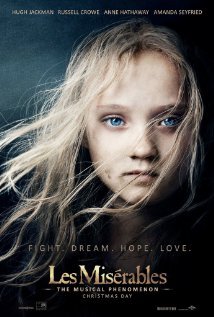
Les Misérables


Year: 2012
Director: Tom Hooper
Cast: Hugh Jackman, Russell Crowe, Anne Hathaway
Run Time: 2 hours, 37 minutes
MPAA Rating: PG-13
The December 25th release of Les Misérables made for a not so merry Christmas. Popcorn and tears covered theater floors in equal proportions.
From the beginning, this movie had several strikes against it in terms of the modern audience:
  1. It is a musical.
  2. It is a musical about the French Revolution.
  3. It is a musical about the French Revolution in which all but 10-odd lines or so are sung.
  4. It is over two hours long.
  5. It was released on a holiday.
In spite of this, Les Mis made a ludicrous amount of money. On Christmas Day alone, it earned 18.2 million dollars.
That’s 8 million more than Rent made in its first weekend.
That’s 9 times the opening gross of Chicago, 6 times more than Little Shop of Horrors, and twice as much as Sweeney Todd.
That’s twice as much money as Once made in its entire run.
The theater I work at had to open another screening room just to accommodate the influx of ticket buyers.
So the question we need to ask is, in terms of quality, did this movie truly earn its box office?
The answer is yes.
You guys, Les Misérables is friggin’ incredible.
Yes, it is over-the-top, bombastic, and occasionally full-of-itself. But you know what? It’s a musical. Those qualities might kill a normal movie, but only serve to enhance the spectacle that provides the lifeblood of this narrative.
[Warning, spoilers ahead. While the idea of “spoilers” doesn’t really apply to Les Mis, because it’s more about the performances than the narrative, if you want to remain in the dark about who lives and dies, I advise you skip past the next few paragraphs to the picture of the adorable bunny.]
For those of you who don’t know, the story (based on the Victor Hugo novel of the same name) follows ex-convict Jean Valjean (Hugh Jackman) across three decades of his life. Essentially, the movie is divided into chapters, the first of which follows him after his release from a 19-year sentence (his crime: stealing a loaf of bread). A local preacher shows him how to be an honest man, and Valjean escapes parole to become the mayor of a small French town. The police Inspector Javert (Russell Crowe) devotes himself to tracking Valjean down in the name of justice.
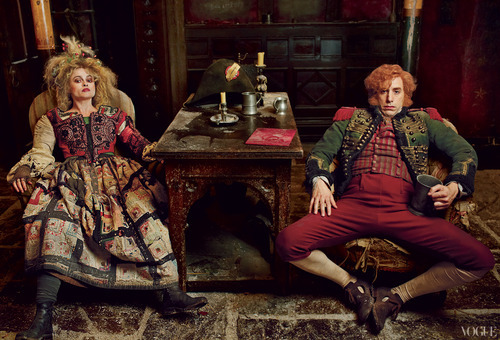
The second chapter focuses on Fantine (Anne Hathaway), a factory worker who was turned out onto the street for bearing an illegitimate child. Her daughter Cosette (Isabelle Allen) is in the care of two conniving innkeepers, Mssr. and Madame Thénardier (Sacha Baron Cohen and Helena Bonham Carter) who demand more and more money from her. To pay off her debt, Fantine turns to selling her hair and teeth and eventually turns to prostitution. Her pride broken, she eventually succumbs to a severe case of Death (It’s a musical. These things just kind of happen.). Valjean, now the mayor, vows to take care of her daughter and retrieves her from the Thénardiers (after paying quite a hefty sum). Javert discovers Valjean’s true identity and tries to stop him but he escapes and is once more on the run, little Cosette in tow.
The third chapter (which one could alternatively think of as the Second Act) revolves around the rebellion in Paris. A bunch of college-aged men, chief among which are Marius (Eddie Redmayne) and Enjolras (Aaron Tveit, a personal hero of mine), are preparing to fight against the king and the unfair justice system. Valjean has retired to a small home on the outskirts of the city with a now teenage Cosette (Amanda Seyfried). In an effort to prevent her from knowing his true identity as well as escaping capture, he has become a recluse and quite an over-protective parent. One day in the Parisian markets, Valjean is discovered by the Thénardiers as they try to scam him for money. Javert is called in, and Valjean rushes home to pack his things and skip town, much to the dismay of Cosette, who has met and instantly fallen in love with Marius. 
Marius enlists the help of his friend Éponine (Samantha Barks), the daughter of the Thénardiers, to track down Cosette. She does so, although she is madly in love with him. He abandons his rebel brothers to try and find her, but upon learning that she is being taken across the sea, he is heartbroken and returns to fight. The battle begins at a barricade blocking off a side street. Javert, dressed as a Parisian, seeks to undermine them but is discovered and tied up to be dealt with later. The rebels are joined by Éponine, dressed as a man, and Valjean, who shows Javert mercy and secretly sets him free, much to Javert’s dismay.
The battle begins and the casualties soar. Éponine sacrifices herself for Marius and dies in his arms, finally revealing her love. Marius is wounded, and his unconscious body is dragged into the sewers by Valjean, who once again encounters Javert. Javert, ever devoted to his concept of justice, attempts to capture Valjean, but is convinced to let him through, saving Marius’s life. Although he has done a good deed, he is conflicted by his duty to justice and the fact that Valjean spared his life and ends up hurling himself off a bridge.
The rebels fall, the revolution fails, and Marius and Cosette are reunited in the wake of tragedy. On their wedding day, Valjean can no longer bear to hold his secret over Cosette and runs off to a monastery. He doesn’t want Cosette to know his true identity, and has left, finally realizing it is how he can best protect her from ever being in danger. However, Marius and Cosette track him down and are there to comfort him as he dies of Being Old and finally rejoins Fantine in the afterlife as trumpets blare and the voice of the revolution lives on in the memories of all that have sacrificed themselves for it.
Now. That’s quite a lot to swallow. And that is a bare bones summary. Now you understand why this movie has such an expansive run time.
OK spoilers crew, we’re safe now.
The story of Les Misérables is tragic and beautiful (sorry to tantalize you spoiler-fearing guys) and the filmmakers mostly manage to capture the grandiosity of it all, especially in the ensemble numbers (Look DownAt the End of the DayRed and BlackOne Day More, and the Epilogue).
Now let’s talk about the Grand Experiment. Singing live in camera is something that has never been attempted on this scale before and it overwhelmingly, undeniably, works.
This method allows the actors much more freedom to emote and feel the music and produces some absolutely incomparable performances. Anne Hathaway’s I Dreamed a Dream is, and I have no doubt in my mind about saying this, the absolute best performance of that song that has ever been sung. Eddie Redmayne’s Empty Chairs At Empty Tables and Hugh Jackman’s performance of Valjean’s Soliloquy are also standouts of the craft.
My God you guys, what an absolute success.
Now I’m sure you’ve heard people deriding Russell Crowe’s voice and it’s true that he cheats on the octaves occasionally and his voice is certainly less polished than the other performers but let me tell you it totally works for the character of Javert, an overly upright servant of the law.
Personally, I was more bothered by Redmayne’s voice. While he can certainly sing and I’ve already raved about his performance of Empty Chairs at Empty Tables, overall he kind of sounded like he had a frog in his throat the entire time and it irritated me more often than  not.
Also to those of you who doubted Amanda Seyfried, she hits some spectacular high notes. And if you absolutely can’t stand her, don’t worry, she’s really not in that much of the movie.
The film also features two astoundingly well-rounded performances from child actors, which is decidedly uncommon.
I’d have to say my biggest qualm going into the film was about Baron Cohen and Bonham Carter’s presence, but they nailed it. The Thénardiers are the comic relief of Les Mis, and they are given a lot to work with. I’m normally irritated with Sacha Baron Cohen beyond all reason, but his performance was absolutely organic and natural, not at all distracting from the overall narrative.
So far, I’ve had very little negative to say about the movie, so I think it’s time to raise my biggest complaint: the camera work.
The cameraman clearly adored extreme close-ups, which have their place in a film, but they were so overwhelmingly featured that sometimes the film felt claustrophobic, and once a solo number started, the camera would fix itself in place and resolutely refused to move.
I Dreamed a Dream was this. For three minutes. I’d have loved to see more dynamic cinematography, but I suppose it’s not too much of a sin to let this performance speak for itself.
In closing, Les Misérables is a huge film with huge ambition and almost entirely across the board achieves what it sets out to do. A caveat, it’s definitely a movie that you have to be in the right mood for, and if you prefer comedies, run in the opposite direction as quickly as you can. But even if you don’t like musicals, I urge you to try this one out. It’s manly, it’s  about criminals and war. The operatic style with little dialogue and the in camera vocal work are both unique in the world of film musicals and it’s definitely worth it to see for that as well.
Odds and ends: DAT WAIST
TL;DR: Les Misérables is a film of epic proportions featuring heart-wrenching performances, stellar vocals, and a complex and subtle story about the true meaning of justice, virtue, love, and dreams.
Rating: 9/10
Side Bar: This long-winded article contains 1,704 words, which is about 0.3% of Victor Hugo’s 1,500 page novel. Try that on for size.
Word Count: 1749