Showing posts with label NES. Show all posts

Friday, September 26, 2014

Fang Time

I am stupendously excited because tonight I am volunteering at the Fangoria booth at the Days of the Dead horror convention in Los Angeles. The magazine has been a centerpiece of the fright community since its inception in 1979, featuring top notch articles about hundreds and (I haven't counted but probably) thousands of horror films and filmmakers. I'm truly honored to be able to participate in even a small slice of this legacy so today's article is

The Ten Best Fangoria Cover Films

Over the years, Fangoria has featured dozens of genre-changing films on its covers, but the beauty of the thing is that it is inextricably caught up in the time it was produced. Due to the nature of shifting trends, some films featured on the cover never achieved infamy outside of a certain year, while others have long-lasting legacies even today. It's nearly impossible to predict, especially with such left-fielder (at the time) hits like Friday the 13th or A Nightmare on Elm Street, neither of which graced the covers of the magazine during their initial runs.

But more often than not, this leading rag hit the nail right on the head and I've selected ten of my personal favorite films that have appeared on Fangoria covers through the ages.

#10 Pan's Labyrinth (Issue #259 Jan/Feb 2007)


Struggling to find words that adequately imply the enormity and scope of Guillermo del Toro's violent fantasy masterpiece would challenge even the greatest of humanity's writers. Fitzgerald would head for the hills. Dickens would disguise himself as a beggar and escape out the chimney. Kafka would- Well, maybe Kafka would get it.

Pan's Labyrinth is set in the Spanish Civil War, detailing the journey of a girl trapped in circumstances beyond her control as she explores the dark supernatural world hiding in the corners of everyday life. The special effects are exquisite, the story is heartfelt and powerful, and the gore is nightmarishly visceral. Although it's not even explicitly a horror film, Pan's Labyrinth is more likely to give you nightmares than any film on this list.

Unfortunately, I have no full review of this film up on my blog yet, but I have reviewed one of the
Cover Articles: The terrific meta slasher Behind the Mask: The Rise of Leslie Vernon.

#9 Little Shop of Horrors (Issue #60 Jan 1987)


I've watched the original Corman picture, the movie musical, and even performed it onstage five nights a week, yet I will never tire of Little Shop of Horrors. For a movie with so little reason to exist (the movie is based on a musical based on another movie), it's just so terrific. With songs by the unstoppable duo of Alan Menken and Howard Ashman and a wall-shattering performance by original Broadway cast member Ellen Greene, Little Shop has a relentless doo-wop energy that can brighten even the darkest days.

Telling the story of a poor Rick Moranis who has to feed blood to a hungry talking plant in order to make his dreams come true, this film harnesses all the B-movie energy of the 50's and synthesizes it into something totally modern and compelling, featuring Steve Martin in one of his best roles as a sadistic dentist and a gut-splitting cameo from Bill Murray.

Cover Articles: Re-Animator; From Beyond; And although I don't have a review of The Terminator, I wrote this article on it long ago.

#8 An American Werewolf in London (Issue #14 Aug 1981)


Hands down, An American Werewolf in London is my favorite lycanthropy movie of all time, although it's not like there's much competition in that department. John Landis' seminal horror film features state-of-the-art effects by make-up maestro Rick Baker that haven't aged a day (OK, maybe they've aged an hour, but they're still terrific) and a thorough sense of humor that The Howling briefly scrabbled at, but almost entirely failed to grasp.

In fact, the porno theater scene might just be one of the funniest moments in movie history. And all this in a horror film that is actually scary as well, along with providing ample thematic material (a stranger in a strange land, guilt over a friend's death, and all the mess that comes along with body transformation - take your pick). A must-see for anyone who's even remotely a fan of the genre.

Read my original review here.

#7 Hellraiser (Issue #67 Sept 1987)


Clive Barker is one of the most important modern voices of the macabre, one of the greatest horror writers alive (now that we've lost Poe, Lovecraft, and - more recently - Matheson), and his directorial debut was sure to be a whammy one way or another (it's a real gamble, as evidenced by Stephen King's Maximum Overdrive). But luckily he erred on the side of the truly fantastic.

Hellraiser is an unstoppable work of glistening cerebral horror, replete with dark sexual imagery and a tense family drama to boot. Pinhead and his Cenobites would soon become overworked stock franchise villains, but here they are representatives of something even more sinister than pure evil - the dark, secret desires of humanity.

Cover Articles: The Lost Boys; Evil Dead II.

#6 28 Days Later/28 Weeks Later (Issues #223 Jun 2003 & #263 June 2007)


I really need to jump on reviewing these bad boys before I'm 28 months too late. But regardless of the fact that 28 Days Later and its sequel 28 Weeks Later do not appear on the pages of this blog, they are essential movies for any modern genre fan. They kick-started the zombie resurgence in the early 2000's, paving the way for my single favorite film of all time, [REC].

While 28 Days Later was an intense British political allegory, 28 Weeks Later was an expanded look at the aftermath of a large scale crisis. Both are fantastic in their own unique ways (the opening scene of 28 Weeks is among the scariest film moments of all time) and both have a sharp wit that keeps them fresh, but it's up to personal preference to pick a better of the two. I'd prefer not to, myself, letting them stand together as one of the most beautiful, brief horror franchises to ever grace cinema screens.

#5 Friday the 13th: The Final Chapter (Issue #36 July 1984)


Although there are definitely Friday the 13th films that I've watched more often, Friday the 13th: The Final Chapter is almost inarguably the best in the franchise, at least in terms of what a slasher movie is supposed to be. Tom Savini is at his finest here, pulling out all the stops to destroy Jason, the monster he accidentally created. This entry has the most nudity in the entire franchise (a plus for fans of cheesy exploitation and fans of breasts - pulling in all the demographics here) and an all-star class including a pre-fame Crispin Glover and Corey Feldman.

Of course, we all know by now that this wasn't really the final chapter, but it did end an important era in Jason's career - the Crystal Lake Saga, as I named it just now. With its blood and guts and boobs and butts, as well as the John Hughes-esque slate of teen Meat, it's the perfect capper for this Golden Age of slasher cinema.

Read my original review here.

#4 From Beyond (Issue #59 Dec 1986)


From Beyond is a very recent discovery of mine, and I am deeply ashamed that I wasted so much time watching any other movies besides this one. This film is Stuart Gordon's second H. P. Lovecraft adaptation following his smash hit Re-Animator and it pitches everything that cheery, gory, naughty film did all the way up to the rafters.

The film brings back genre superstars Jeffrey Combs and Barbara Crampton, adding a dash of Dawn of the Dead's Ken Foree, and tossing them into a pool of technicolor goo and Lovecraftian horror. Its stomach-turning charms (and high volume sexual overtones) aren't for everyone, but for fans of practical effects magic, colorful 80's horror, or lamprey basement monsters, this is a veritable Mecca.

Read my original review here.

Cover Articles: Friday the 13th Part VI: Jason Lives.

#3 The Descent (Issue #254 July 2006)


There are only two films from this century that have chilled me to my bones. The first is [REC] but you don't need to hear me babble about that same old crap again. The second is The Descent, which pulls off the incredible horror movie task of having a first act that is just as scary, if not even more terrifying than the rest of the movie, shoving its characters into dark, claustrophobic, utterly real cave environments.

All the bloodshed and monsters are just a delicious afterthought in a wall-to-wall petrifying film. Those who say that horror movies just aren't made like they used to be clearly have blocked The Descent from their memory to prevent nightmares.

Read my original review here.

#2
A Nightmare on Elm Street 3: Dream Warriors/New Nightmare (Issues #62 Apr 1987 & #137 Oct 1994)


Although my heart will always lie with Jason Voorhees, it's impossible to deny the sheer volume of good sequels that A Nightmare on Elm Street got. In fact, Wes Craven's New Nightmare is just plain one of the best horror movies in the history of cinema. I don't throw my hat in the ring for a lot of movies, but I'm willing to put it to fisticuffs if anybody disagrees on that one.

Wes Craven's influence over the horror genre is incomprehensibly vast and the intelligence he brings to everything he does created one of horror's most enduring phenomena. The mystique and allure of Freddy Krueger survives far beyond his tawdry comedies and that crappy remake because in everything Freddy does, there remains that spark of inspiration that makes Craven one of the most important filmmakers in the genre.

Read my original reviews here and here. Or read my essay on Craven here. Or read my essay on the Nightmare franchise here. I got you covered.

Cover Articles: Evil Dead II; The Lost Boys; Friday the 13th Part VII: The New Blood; Interview with the Vampire.

#1 The Evil Dead (Issue #23 Nov 1982)


Evil Dead II gets all the credit because it's funnier and consolidates Sam Raimi's style of storytelling into a more mature entity, but I love the rough and ready DIY aesthetic of the original Evil Dead. It's one of the most original horror films ever made, all hung on the most tried and true framework story in the history of the known universe populated with one-dimensional characters.

The beauty of Evil Dead is the simplicity of the story - Cabin. Woods. Zombie things. This allows Raimi room to stretch his creativity in a way that sent the craft of cinema soaring years ahead of its time. I'm too dazzled by the film to make much sense at the moment, but I daresay I've been more coherent on the topic before.

Read my original review here.


So that's that.

Thanks for trucking along on this historical, fangorical tour. If you happen to be at the convention tonight, stop by and say hi!

Word Count: 1860

Wednesday, August 6, 2014

Happy Birthday To Me

Hello everybody.

Do you notice anything different about me? Perhaps it's a new haircut. Perhaps it's a different shirt. Perhaps it's the newfound maturity and poise that comes part and parcel with my inevitable crossing into adulthood. That's right folks, I'm no longer a teenager. Welcome to my 20th birthday!

Having exhausted the slate of 80's slashers with "birthday" in the title, I decided to do something a little different this year. Inspired by a post made by my friend on her blog ScaryLibrary, I decided to make a list of the best horror films (that I have seen) from every year of my existence. Love the 80's though I do, I was not alive in them. And the intervening years have had some gems that deserve more attention that they get.

Without further ado,

The Best Horror Films from Each Year of My Life


I am incredibly honored to share a birth year with the best Nightmare sequel and just plain one of the most intelligent horror movies of all time. It's my Number Seven favorite horror movie for a reason. Wes Craven utilized a high concept to drag his high concept franchise back onto the tracks and achieve the unachievable - make Freddy scary again, something which any viewer of Freddy's Dead would deem nigh on impossible.

1995: Leprechaun 3


This isn't so much a testament to Leprechaun 3's quality as it is a sad reminder of the state of horror in the mid-90's. It's easy to pick out the third Leprechaun from such miserable company as Tales from the Hood or Children of the Corn III: Urban Harvest, if only for Warwick Davis' gleeful performance and the hyperbolically low budget that transforms the glittering city of Las Vegas into a street corner and the interior of a warehouse.

1996: Scream


And here we go. The horror genre had been slowly bleeding out since the triple whammy of Friday the 13th Part VIII: Jason Takes ManhattanA Nightmare on Elm Street 5: The Dream Child, and Halloween 5: The Revenge of Michael Myers cold-cocked it in 1989. But Wes Craven jammed an adrenaline needle into the genre's heart with Scream, a postmodern slasher masterpiece and the reason I fell in love with horror. Without Scream, you wouldn't be reading this right now.

1997: Cube


I love cult film. I love Canada. Those combined make me the perfect audience member for Cube. But honestly, I think Cube is perfect for just about anyone. It's thrilling, it's gory, it's way smarter than it needs to be, and the actors' suppressed Canadian accents bubble up from time to time to say hello. It has gained more of a following in the last couple years, but still not nearly as much as it should have.

1998: Halloween H20: Twenty Years Later


I've never had a problem with sequels that retcon the films that came before. In fact, it plays into my love of unnecessarily complicated franchises. But the fact that the Halloween franchise was bringing in Jamie Lee Curtis again was worth any amount of denial. Heck, they could have gotten rid of Michael Myers and made it a drama about a lovelorn Laurie Strode running a boarding school and I would've been on board. But throw in Josh Hartnett, Michelle Williams, and LL Cool J and you've got yourself a perfectly frothy mix for a 90's nostalgia slasher.

1999: The Sixth Sense


The Sixth Sense is one of my favorite horror films of all time and no, not for the twist ending. Honestly you could snip that part off and the movie would be just as affecting, though I'm glad it's there. M. Night Shyamalan has since failed to prove himself as a director, but in this film he exudes strict control over a sumptuous colorscape and leads one of the best child performances in cinema, so for that he gets a pass. Also Toni Collete's scene in the end will never fail to make me cry. Full disclosure.

2000: Psycho Beach Party


Buffy's Nicholas Brendon in a feature length role. A transvestite cop. A young Amy Adams. A slasher parody of Gidget. This is all I've ever needed in my life. Tack on the fact that the homoerotic subplot actually pans out and you've got a camp masterpiece that allows me to overlook its many many flaws.

2001: The Devil's Backbone


One of Guillermo del Toro's lesser appreciated movies, The Devil's Backbone had a profound effect on me the first time I watched it. The "little brother" film to his masterpiece Pan's Labyrinth, this film is a delicate character piece about a little boy, murder, and ghosts set against the backdrop of the Spanish Civil War. It also features one of the best ghost designs in all of cinema in any language.

2002: Eight Legged Freaks


I would follow David Arquette to the ends of the Earth and back. Honestly, he gets a lot of flak but I'm a big fan. His performance in Scream is an exquisite piece of comedy and his return to the genre in this campy giant spider film (featuring a young Scarlett Johansson) is a treat.

2003: Final Destination 2


Perhaps even better than the terrific high concept slasher, Final Destination, this film proved that teen horror still had the power to be clever and inventive. And gory, more so than any post-Columbine slasher had really allowed itself to be.

2004: Shaun of the Dead


Everyone knows by now that Shaun of the Dead is a near-masterpiece of horror comedy, right? This group of entertainers has proved themselves time and again, but my favorite iteration of their tight brand of wry comedy is still their first. A romantic comedy with zombies? That doesn't fail at either half? And even transcends both genres to become its own thematically coherent entity? Count me in.

2005: The Descent


It's something to behold when a horror film manages to be scary 45 minutes before the villain even kicks in. But The Descent does just that with its claustrophobic exploration of an unknown cave system. Flawlessly hiding its low budget with effects and sets that never once fail to convince, this film is a masterpiece of taut scares, punctuating its sense of overwhelming dread with frights that will knock you backwards out of your seat. And with an all woman cast! A film for the ages.

2006: Behind the Mask: The Rise of Leslie Vernon


After Scream, every darn slasher movie had to be self aware. But it's really not enough to just mock the tropes you yourself are using. Scream succeeded by having meta humor woven into its very fabric, but very few films managed to achieve its artistic success until Behind the Mask, the apotheosis of the post-Scream slasher genre. A hilarious mockumentary detailing the trials and tribulation of a man trying to make a name for himself as the next big slasher villain, the story of Leslie Vernon one of the most intelligent horror comedies of the past ten years.

2007: [REC]


And here we are at my favorite movie of all time. I'm a big fan of when a film can provoke a reaction in the audience, which is one of the reasons I'm typically drawn to the horror genre. And [REC] certainly provided. I've seen many scary movies in my day, but when the closing credits rolled and I sat there shivering on the couch in the broad daylight, unable to speak or process what had just happened, I knew Cassidy and I had stumbled upon a diamond.

2008: Cold Prey 2


It is only fitting that one of the best horror sequels of the decade should follow one of the best slashers of the decade. Both from snowy Norway, these films prove that our Scandinavian friends have been keeping a close eye on American horror, proving that they can do it pretty much better than we can, hands down. Cold Prey 2 brings back the powerhouse star Ingrid Bolsø Berdal and features stunning cinematography and one of the genre's best hospital settings.

2009: Dead Snow


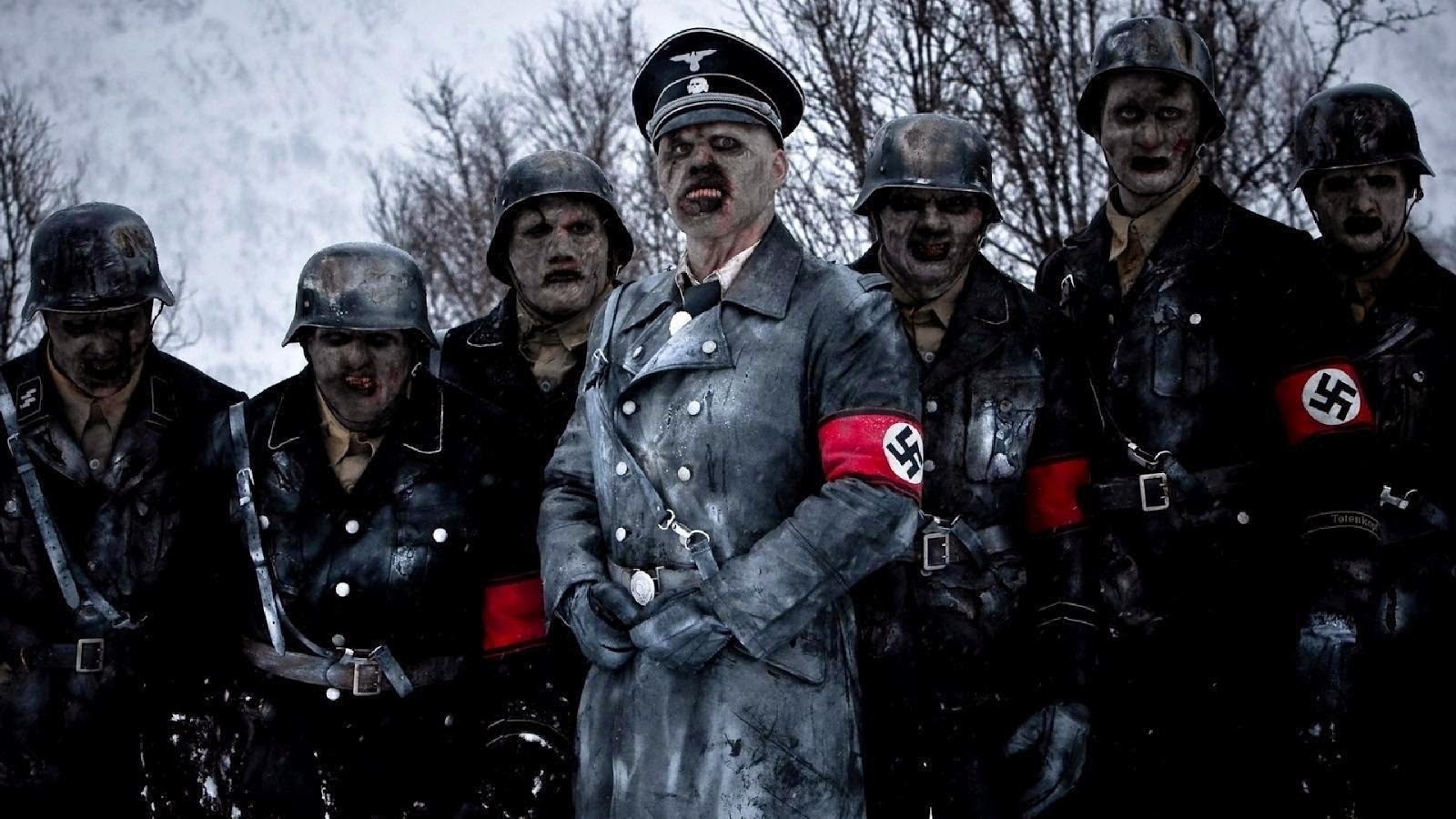
What do you know, it's Norway again. I never thought I'd say this, but Norwegian horror cinema in the 2000's was a force to be reckoned with. This time around, they've brought us a gory horror comedy featuring Nazi zombies. The film makes great use of its blindingly white snowy location to create dread, something which, again, the American horror filmmakers of today seem to have no grasp of.

2010: Frozen


In this Frozen, it's probably not a good idea to let it go. Adam Green's film is about three friends who are trapped on a ski lift after the resort closes for the week. It sounds dull but it absolutely isn't, ending up somewhere close to a one room drama with heart-stopping gore sequences. Also it features Shawn Ashmore, to whom I am pre-pre-pre-pre-engaged. The next step is to actually meet him.

2011: Fright Night


One of the best remakes of the modern age (At least, taken alone. I'm a sinner and I still need to see the original.), Fright Night is sexy, dangerous, and pretty darn funny. I still think about some of the standout moments, which is something I can honestly say I have never done about any other remake ever.

2012: The Bay


Despite Sergio's inexplicable hatred for this film, I happen to love it. The Bay is one of the best found footage films ever made (which, admittedly, is a small category). Although nothing could compare to [REC], it's up there in my esteem with the likes of Cloverfield and the Paranormal Activity movies with the sense of bringing something new to the table. This eco-horror film was chilling and made by professionals, something which overcomes its flaws.

2013: You're Next


I think I've said just about as much as I need to about You're Next, what with ranking it my Number One movie of 2013 and writing an additional article after my initial review. But it's still worth mentioning in case anybody hasn't picked up on the hint. Go see You're Next. It's funny, it's gross, and it's got a badass Australian leading lady. My kinda movie.


Only Lovers Left Alive didn't blow me away upon first watching it, but it's been settling into my brain and aging like a fine wine. Another horror release could come along this year and totally blow it out of the water, but for the moment its the top. A sophisticated look at an immortal couple, nothing happens in this movie, but it doesn't happen oh so well.


So there you have it! Feel free to leave me birthday comments below! Or send me money. I'm not picky.
Word Count: 1800

Tuesday, July 8, 2014

Surprise Cameo

It's been a while since I've featured another writer on the pages of this blog, but why be stingy? It's always nice to have a guest star. Today's very special article introduces Shannon, one of my very best friends, in her Popcorn Culture debut as she writes about her introduction to horror (I am not ashamed to admit that I appear heavily in this tale) and why scary movies make the perfect date nights, along with some personal recommendations.

Horror with your Honey: 
Why a Week of Scary Movie Dates are Beneficial to a Relationship, and Where to Start

I had never seen a single horror movie before meeting Brennan Klein. All of a sudden, by signing a contact of friendship, I was his go-to movie date for all the classics and everything in between (Literally everything, I cannot tell you the weird horror movies I have seen thanks to him— not complaining).

Luckily (or so I thought), Brennan met someone else who is now responsible for watching horror movies from Spain about someone chopping pieces of students and then piecing them back together into a monster. Initially I was slightly relieved to pass the torch to his boo, but now, in reflection, I miss him dragging me into a movie starring Lee Pace with a title I had never heard of.

[Editor's note: She is referring to Pieces and Possession, the former a great/terrible slasher movie and the latter a decent psychological ghost/possession piece.]

Why?

Because if you and another person were stranded on an island, in scary, deadly conditions, and you get rescued, only that other person can understand the trauma you went through, and thus you and that person have a magical, singular bond because of a horrific experience.

Brennan and I became best friends because we went through the mini-traumas that these horror movies are. Horror is like a roller coaster that pumps adrenaline and dopamine into our systems, and we get off the ride a little closer than before.

So, when you reach that part of your relationship when you are looking at Fandango trying to decide between a sappy romance or some indie flick with subtitles, close your browser and turn on Netflix, because nothing could be better for a relationship than a solid injection of horror.

Now whether you are a horror movie buff like Brennan, a gorehound like me, or a novice on the scary front like I was two years ago, these movies I have selected hit a multitude of the bases.

Allow me to introduce the perfect introduction-horror-movie-date-night-movies!

Movie Cluster #1 : The original trifecta of horror, and its sequel
(watch in this order for the best effect)

Day 1:
Halloween (1978, dir. John Carpenter)


Why this movie: 
Horror movies used to be about tiny budgets, shadows, and masks. John Carpenter (who I met with Brennan) knows this better than anyone else, and which is why the rather tame, theatrical Halloween is my first choice. You get an introduction to the Scream Queen (now better known for her Activia commercials) Jamie Lee Curtis, get to look evil in it’s face, and is not scary enough to make you want to give up on horror as a genre.

Day 2:
Friday the 13th (1980, dir. Sean S. Cunningham)


Why this movie (Writing about this one without spoilers is hard): 
While this movie is no Revenge of the Unhappy Campers (if you have seen that movie, email me), it is the greatest introduction, and arguably just the greatest camp-genre horror movie. One of a major aspects of the horror genre in general is the fact that people are in a contained area when the monster decides to pick off victims one-by-one, and what better buffet is there than kids at a summer camp? Plus, Kevin Bacon is in it. Just watch it.

[EN: For my lengthy review of this film, click here.]

Day 3:
A Nightmare on Elm Street (THE ORIGINAL ONE) (1984, dir. Wes Craven)


Why this movie: 
Wes Craven (who I also met with Brennan) has a really weird mind, as you will see in this movie. Unlike Halloween which is a psychological slasher and Friday which is a classic camp kid killing spree, Nightmare goes beyond the fathomable, into a world one could only dream of— or should I say nightmare. Freddy Krueger is probably the most well known of the three horror baddie front runners, maybe for his complex past or simply his use of wonderful puns. Or maybe it’s because he’s the only one of the three that actually speaks… Also, young Johnny Depp.

[EN: For my lengthy review of this film, click here.]

Day 4:
Scream (1996, dir. Wes Craven)


Why this movie: 
Kevin Williamson basically wrote fan fiction about the three original horror classics and Wes Craven made it amazing. Craven reintroduced horror in the 90s. I was one of those kids who had no idea why everyone was so obsessed with ghost face costumes (keep in mind that I didn’t see a horror film until college) and now I am so bummed because I want to own one. I guess that’s what the internet is for… But in all seriousness, Scream is a perfect watch for a couple who just watched the original three, because together you can point out the references to other horror films that this movie makes, and point out all the stars who were just kids back then, and point out most importantly the horrible 90s fashion.

[For my lengthy review of this film, click here.]

Movie Cluster #2: The other bases (watch any order, but be prepared)

Day 5:
They Live (1988, dir. John Carpenter)


Why this movie: Some of the different subgenres in horror are torture porn (sorry, not covering this one in this feature), monster, slasher, and psychological thriller. So no, I did not pick this movie simply because it is one of my all-time favorite movies, but also because this bad-ass action/thriller/monster movie has the most incredible freaky monsters ever, with an additionally creepy Carpenter commentary on the state of the country. Also you know Shepard Fairey’s “OBEY Propaganda” line? Originated from this movie. BOOM HISTORY MADE.

Day 6:
You’re Next (2013, dir. Adam Wingard)


Why this movie: 
Modern day badass Australian chick visits her boyfriend's family and they start getting killed off in their old family house. It’s essentially a great survival story up to par with classic horror but without the horrible 80s hair-dos.

[For my review of this film, click here.]

Day 7:
The Exorcist (1973, dir. William Friedkin)


Why this movie: 
In my opinion, this is the scariest of them all. This is a possession/ghost sort of horror film, and a classic one at that. For it being the oldest on the list, this movie has the most intense special effects. It is also super perfect for couples, because every time someone decides to walk up those stairs, you will need a hand to hold. And then once the credits roll, you two can both celebrate surviving the possession of Linda Blair.


This concludes the introduction to horror and the conception of a long lasting relationship.

And if things don’t work out, maybe you could use some of the skills you’ve learned from these horror films for other things… 

Thanks for reading, everybody! If you have any opinions on these picks and/or how a horror movie has changed your relationship, please sound off in the comments below. I'm sure Shannon will be patrolling the comments section like a mad hound. If any of these films have piqued your interest, I can offer further recommendations. Have a nice day!
Word Count: 1281

Sunday, April 27, 2014

Beat It, Essay: W Is For Wes

Today's Blogging From A to Z Challenge post is the one I've been leading up to all month, my essay on the illustrious Nightmare on Elm Street franchise!

The Prompt
A) Compare and contrast A Nightmare on Elm Street and Wes Craven's New Nightmare, the two films that Wes Craven wrote and directed, with the seven that he didn't direct or solely write. Which films work better and why?
B) Why is Freddy such an iconic figure? 

Wes Craven is a director who I hold in such high esteem, I immediately jumped on the chance to write this essay even though I wrote an analysis of his earlier works just one semester ago. Wes Craven is one of the most important living horror filmmakers and the Nightmare franchise is perhaps his greatest legacy.

It all started in 1984 with the release of the immediate classic A Nightmare on Elm Street, a film that took the moribund slasher genre and turned it on its ear, transforming an anemic and formulaic film style into something beautiful and ethereal. This film introduced the villainous Freddy Krueger, a notorious child killer given the power to haunt dreams who seeks revenge on the children of the lynch mob that burned him to death.

As reflected in its title, A Nightmare on Elm Street is about the dark side of suburbia and the family secrets that are hidden away behind closed doors. The children receive comeuppance for the sins of their fathers until one bright and intrepid young woman learns to face her fears head on and address them, taking away their power.

The film was a massive success both because of its elegantly conceived and cunning scare sequences that crossed the line between reality and fantasy and the storyline that resonated with disillusioned teens across the country. There comes a time in every young person's life where they begin to see through the lies that their parents tell them and realize that the world, even the safe, intimate world inside their own home, is not what it seems to be.

The suspicion that develops from this realization is similarly displayed in the film, which derives its horror from the idea that the secret your family is hiding could be potentially dangerous. The traumatic rupturing of that feeling of intimacy inside one's own home is likewise escalated in Nightmare because the teens aren't even protected in the most vulnerable and intimate location - their own heads.


The impact of the original film was enormous as was the box office revenue, so the natural next step was to rush a sequel into production, something New Line did with gusto. A Nightmare on Elm Street 2: Freddy's Revenge was a haphazard production, needlessly reshuffling the Freddy mythology with a confusing mixture of winking homoerotic licentiousness and unintentional humor.

Craven returned to course correct the franchise with Dream Warriors, the film that marked the beginning of Nightmare's descent into self parody, the only obvious route for avoiding the sequel pitfall of endlessly repeating the same basic plot line to diminishing returns. Although a different director and screenwriter watered down the material, Freddy attacks his victims using their biggest weakness, forcing them to find the internal strength to overcome them, something which again resonated with the teen audiences and sent the film's profits skyrocketing.

The Dream Master was more of the same, although Freddy had at that point fully converted from shadowy menace to a chuckling prankster. That film survived on the strength of an impressive visual vocabulary and another strong heroine in Lisa Wilcox's Alice Johnson, but its followup, The Dream Child, was an absurd mess that contented itself with sending a slate of paper-thin characters (one of whom is, at one point, literally made of paper) through a series of garish nightmare setpieces while Freddy spouts bland puns like a forlorn James Bond.

After the abject failure of the fifth film, New Line went all in on one final entry, Freddy's Dead: The Final Nightmare, which was slightly improved but equally useless and meaningless. After realizing that they had sent their biggest cash cow six feet under, New Line begged Craven to return to the franchise he created. He agreed, but couldn't manage to find a through line to pick up a sequel from, so he was forced to get creative with Wes Craven's New Nightmare.

Although two films would follow New Nightmare, Freddy vs. Jason in 2003 and the remake in 2010, both were too modernized and uniform, the sanitization of the time buffing out the inherent qualities of the franchise into a dull sheen and as such have no impact on the analysis and discussion of A Nightmare on Elm Street as a whole.


Wes Craven's New Nightmare is the only sequel to equal and perhaps even surpass the intelligence and artistry of the original film with its unique discussion of the nature of modern horror movies and the fact that it's set in reality, with the Freddy menace seeking to break from fiction into our dimension. Just like the first film, the parent and child relationship is at the forefront, although this time it is the antithesis as Heather Langenkamp (the actress who played Nancy Thompson, the heroine of A Nightmare on Elm Street) seeks to protect her son from succumbing to the dream demon as he exerts his will on our reality.

A Nightmare on Elm Street and Wes Craven's New Nightmare are the two best films in the entire franchise, and it is no coincidence that they were both written and directed by Mr. Craven. Both want to tell us more about the world and ourselves instead of merely wowing us with outré special effects, and both are bone-chilling, a quality lacking in every single film not under his influence. This is largely due to his writing talent and his understanding of important themes that resonate with viewers of all ages.

But it also stems from his awareness that well-fleshed out characters are what drives horror. Parts 3 through 6 had one-dimensional characters that only had one (or less) character trait apiece, but Craven's heroes and victims are all multi-faceted and utterly real. They may not be all likable, but they are all recognizable as human beings and thus the horrific circumstances they find themselves under have greater impact.

Dylan's attempt to reach God in New Nightmare by jumping off the top of a playground structure could easily have been shallow and silly if included in any of the other films in the franchise, but because Craven is behind the camera, the scene has a real impact because the audience cares deeply for the boy and understands his plight from both Dylan and his mother's perspective. Every character in both films has a recognizable relationship with every other character, making the universe of the films complete and settling the audience into the reality that will soon be rent apart.


These films ultimately work better than their brethren because of this fact as well as Craven's intimate understanding of the abject terror of nightmares. The anemic slate of sequels that bridges the gap between his two masterpieces don't all fare poorly in comparison, but none of them can reach the level of genius achieved by a master working his craft and pushing the boundaries of the genre.

The non-Craven films focus on Freddy as the central figure, whereas his films find their strength in an identifiable and capable female protagonist. The reason they fail to be as effective stems from this mistake. Freddy works best as a villain because his backstory is too simple to make him an adequate protagonist, even as an anti-hero. With no real story to draw from other than "he was evil in life as in death," this forced him into compromising positions, eliciting the clownish behavior which was meant to accentuate his evil but turned him into a pale parody of his old self.

The nominal protagonists and side characters of these films became increasingly insubstantial and bland (even Alice, the great heroine from The Dream Master, became just another cookie-cutter teen in its inept followup), straying far from the original intention of creating characters that held a mirror up to the youth of the day and then put them through the ringer, forcing them to see the dark reality of their protected suburban lives. The franchise became vaudeville, passing the time and managing to be entertaining without the depth and impact of Craven's work, all through one ineffable miscalculation stemming from the fact that the villain was the most obvious character to keep consistent through the endless parade of sequels.


So how did this increasingly cartoonish villain make his way into the pop culture pantheon, becoming a long-lasting icon even today? One key element to his success and that of the franchise was Robert Englund. Aside from being a talented and menacing man, Englund played Krueger consistently, all the way to the end. Englund appeared in every film until the 2010 remake and even starred in the short-lived television show Freddy's Nightmares.

Having Freddy played by the same actor throughout the sequels provided him a leg up when compared to the anonymous herd of stuntmen who would end up playing Jason Voorhees or Michael Myers in rival slasher franchises. Audiences in the 80's wanted familiarity because the world around them was already so uncertain. With the looming threat of nuclear disaster poking a hole in the lives of idyllic suburbanites everywhere and the contradictions of then-president Ronald Reagan posing larger and larger problems, audiences felt a pleasant wave of nostalgia when seeing Freddy again and again, like visiting an old friend.

Also, thanks to those same societal issues, Nightmare's themes about dark secrets and hidden dangers in even the most perfect-seeming households were something that the teens of the day could relate to with great acuity. Having a horror film that truly understood their woes from a man with his fair share of family skeletons in the closet gave them relief like no other and the lessening of terror elements as the franchise went along helped comfort viewers even more as the nation entered its next period of transition.


Another enormous benefit to the popularity of Mr. Fred Krueger was his status as an inhabitant of the dream world. The concept that makes him most terrifying is that escape is an impossibility. If Jason is chasing you, you can possibly run faster than his loping gait and escape to Australia. If the Blob is coming, you can freeze it with fire extinguishers. But if Freddy wants to kill you, he doesn't have to move a muscle.

Our nightmares might all be different, but we have one thing in common - sleep. Sleep is where we are most vulnerable and the dream world is a mysterious realm over which we have no control. We all must enter that stage of life with defenses lowered.

Sleep is Freddy's domain, a mysterious dimension that your body forces you to return to no matter how hard you might try to fight it. If you stay awake too long, you die. If you fall asleep, you're murdered. And the longer you're awake, the less mental and physical agility you will have when it finally comes time to face your attacker.

Even more problematic are the adults in the film, the people who unwittingly released this monster into the nightmares of their offspring. Their skewed perceptions of the entire affair have them believe that sleep is the one thing their children need to take them out of the stress-filled and harrowing state they are in, and sometimes the measures they take in order to protect their children are exactly what lead them to their inevitable demise.


Freddy is no mere slasher villain. He is an anthropomorphic representation of our primal fears. First and foremost is the fear of where we go when we're asleep. The world of our dreams is something we will perhaps never understand, a phantasmagoria of shadows and half-glimpsed images from deep within our subconscious that preys on our innermost thoughts and fears.

Freddy has access to this closed off part of ourselves, something we barely even register is there. It is mysterious and lurking and for him to have access is for him to invade our most intimate structures, more intimate than our bedrooms or even our bodies. Freddy can manipulate the worlds inside of us that we can never understand, and as such he is the ultimate boogeyman. He is not merely a creature of the darkness, but a creature of the darkness within ourselves.

Freddy exposes the evil hiding behind every curtain not only by being an example of that evil in his life, but also by exploiting the evil of those we trust most and using it to gain access to our innermost fears. His use of claws represents the primal nature of his existence. Back at the dawn of humankind, one of the most basic and primal fears was death at the hands of a wild creature, its sharp claws tearing our soft flesh apart. Freddy and his claws come from this place deep within, the very essential foundation of fear itself.


The wicked glee with which he wields his blades comes from a place of pure evil, no matter how clownish he becomes. That is what makes him such an effective horror villain, and that is why he is permanently glued to modern pop culture, an entity that - like it or not - is driven by what we fear, whether it is in an attempt to escape it, embrace it, or empower ourselves against it.

Even in its darkest, most disappointing depths, the Nightmare on Elm Street franchise exposes the fear and calamity that threatens to crumble our carefully structured and largely imaginary suburban society. Human history is full of darkness and our feeble attempts at hiding that fact to protect our children dooms them even further, something Freddy (and his creator, Wes Craven) knows all too well.
Word Count: 2339

Saturday, April 26, 2014

V Is For Valueless

Today's Blogging From A to Z Challenge post marks the final entry in our Nightmare marathon! After I write and publish my essay you'll never have to hear me talk about Freddy Krueger ever again! Not that I'm going to stop, but we'll definitely be taking a break from him, especially considering the sour taste this final film puts in my mouth.

Year: 2010
Director: Samuel Bayer
Cast: Jackie Earle Haley, Rooney Mara, Kyle Gallner
Run Time: 1 hour 35 minutes
MPAA Rating: R

Music video director Samuel Bayer turned down the offer to direct this film, but after receiving a long email from producer Michael Bay explaining how it could further his career, he reluctantly accepted the job. This isn't exactly the position you want the director to be in when he is tasked with recreating one of the most personal and iconic horror masterpieces of the 1980's.

Aside from making Google searches for Freddy Krueger needlessly frustrating, this film had little to no impact on society because, let's face it, Freddy Krueger is still alive. He didn't need to be reborn. The last film starring Robert Englund as the villainous dream demon came out in 2003, a mere seven years before this remake. And before that came a full two decades of playing that same character with gusto, making him an international icon.

We haven't forgotten Freddy Krueger. He's still a Halloween icon and will be that way until some new director, perhaps with the initials B. K., can come up with a new villain even half as inspired and clever. Despite Jackie Earle Haley's multiple talents, trying to impose this new icon on us so soon is just a slap in the face.

A slap in the face with sharp razor claws.

A Nightmare on Elm Street tells the story of a group of teens in Springwood who begin to have strange nightmares about being stalked by a man in a dirty red and green sweater with CGI burns on his face. Nancy Holbrook (Rooney Mara) is the protagonist because her name is Nancy, although we don't even get to see any of her dreams until near the finale of the film.

Her Meat friends are Dean (Kellan Lutz), a pretty blonde with no personality; Kris (Katie Cassidy), a pretty blonde with no personality who is smart enough to set her burglar alarm but dumb enough to leave the door unlocked and the window open; Jesse (Thomas Dekker) a pretty brunette douchebag; and Quentin (Kyle Gallner), who refuses to take off his stupid beanie and has a crush on Nancy.

Do I need to tell you the rest? You die in the dreams, you die in real life. Whatever you do, don't fall asleep. Freddy Krueger is getting revenge on the people who killed him. We've been through this. Many scenes are just shot for shot remakes of classic scenes in the original, only more boring and perfunctory.

Where Wes Craven is a master at building tension in a tactile world full of living, breathing human beings, Bayer & Co. quote his best visuals without an ounce of the craftsmanship in a world populated by characters that are essentially just pretty mannequins. The tense scene in the bathtub where Freddy's claw slowly reaches toward his unwary prey is replaced with a casual and brief flick of the wrist, like he just popped in to say hi.

It's harder for Michael Bay to not make a bathtub scene feel sleazy.

My favorite death in the original, where Tina is pulled to the ceiling against her will and rent apart in a staggeringly beautiful display of bloodletting gets a meager substitute when Kris is pinballed around her room and slashed without prelude. The elegant and simple scene where Freddy stretches through the plaster ceiling above a sleeping Nancy is replaced with this rough hewn CGI monstrosity.

Honey, I can hear orcs running around in the walls again.

All of this serves to take away the elegance and tactility and tension and everything I've ever cared about. And most (perhaps least) importantly, it's just no fun. Craven's film can be dark at times but there's always a sense of giddy horror pulsing beneath the surface. Here it's just grimy, loud, and angry.

Not that I would expect Michael Bay and his posse to understand subtlety, but the entire film operates under the philosophy that louder and faster means better, which is patently untrue. If it were, I'd be writing this essay on the Fast and Furious movies.

The film artlessly transitions from place to place, sometimes just slamming the lights off and on to transport a character into the dream world. Freddy is full of misplaced malice that jars the audience considering the extensive flashbacks that try to humanize him or at least make him mildly sympathetic. And when he drags his claws along the metal machinery of the boiler room, it lets out a Disneyland fireworks finale level of sparks.

With less Julie Andrews.

Even the little girls jump roping are fast! It's like they're training for the Playground Olympics.

Jackie Earle Haley tries his best, but his Freddy voice sounds like he spent the last week gargling with thumbtacks and he laughs like Roz the slug from Monsters Inc. Speaking of slugs, his makeup is a horrendous abomination that makes his mouth nearly impossible to dub. And his palpable anger is so far from the character as we know him, only serving to make this "gritty" remake more unnecessarily grim.

Although it's not like he's the worst performer on set. The teen actors put even Ronnee Blakley (the mother from the original) to shame with only Rooney Mara escaping with some semblance of dignity. She does a fairly good job of anchoring Nancy in a human register despite the fact that her character is just a meat puppet who is arbitrarily pulled to each new stage of the plot with no motivation whatsoever.

The remake does have a couple good ideas, like the introduction of micronaps where Nancy's tired brain shuts off for several seconds at a time, during which Freddy can appear. The film has some fun with these, and it also took the leap to make Freddy quite clearly a former child molester, something the original film only implied. Whether this is ballsy or tactless is your decision to make.

So no. It's not the worst movie ever made with a fairly strong female lead and one or two fresh ideas. But it's bogged down by its redundancy as a narrative, the embarrassingly uniconic performance of its villain, and the watering down of Craven's masterwork into a bland pop-processed piece of garbage. It's just too boring to have a leg to stand on.

The best I can say about this film is that is did make me afraid of the dark. As I walked across my ill-lit apartment floor, I felt a cold shiver of fear down my spine with the chilling dread that my TV might spontaneously turn back on and force me to watch this piece of crap again.

Killer: Freddy Krueger (Jackie Earle Haley)
Final Girl: Nancy Holbrook (Rooney Mara)
Best Kill: (SPOILERS - if you're into that sort of thing. I wouldn't be.) The one that closes out the film because it is so unexpectedly gory after a grim and dull hour and a half.


Sign of the Times: All the extras in the classroom scene sport Justin Bieber haircuts.
Weirdest Moment: Despite all the scenes that were remade shot for shot, nobody saw fit to include the classic "Fountain of Blood" sequence.
Scariest Moment: The characters drive by a gas station where a gallon cost $2.91
Champion Dialogue: "And then it says that after that, your brain will shut down, inducing a coma. Which is permanent sleep."
Body Count: 4
  1. Dean's throat is slit by a steak knife.
  2. Kristen is slashed and lifted into the air.
  3. Jesse is disembowled with the glove.
  4. [Gwen is stabbed through the eyes from the back of her head.]
TL;DR: A Nightmare on Elm Street is a pointless and rotten remake of an 80's classic.
Rating: 3/10
Word Count: 1363
Reviews In This Series
A Nightmare on Elm Street (Craven, 1984)
Freddy vs. Jason (Yu, 2003)
A Nightmare on Elm Street (Bayer, 2010)