Showing posts with label Zombies. Show all posts

Tuesday, December 13, 2016

Reviewing Jane: A Lady's Imagination Is Very Rabid

In which we review (almost) every film adapted from or inspired by the works of Jane Austen, as I read through her extended bibliography for the first time. (This is a previous review that has been retrofitted to be as such)

Year: 2016
Director: Burr Steers
Cast: Lily James, Sam Riley, Jack Huston
Run Time: 1 hour 48 minutes
MPAA Rating: PG-13

Would you believe that I’ve been waiting years for a Pride and Prejudice and Zombies movie? When I sat down to read the source material, Seth Grahame-Smith’s novelty mash-up novel, I was greatly disappointed to find that he had merely copy-pasted Jane Austen’s masterpiece and added a reference to zombies every other paragraph or so. It was a lazy cash grab, but I instantly hoped they would make it into a movie, because the concept is stellar and the visual medium would reduce its slavish devotion to the text of the novel.

I stand by that idea. A movie of Pride and Prejudice and Zombies is a great idea. Just not this movie.

Turns out, beggars CAN be choosers.

Running through the plot feels like a pointless exercise given the title of this movie, but let’s do it for the sake of tradition. Country girl Lizzy Bennet (Lily James) lives with her parents and sisters, all under pressure from their mother to get themselves married off, although she resists the idea. When Mr. Bingley (the preposterously beautiful Douglas Booth) moves into town with the sour zombie hunter Colonel Darcy (Sam Riley), Lizzys sister Jane (Bella Heathcoate) falls for Bingley while Lizzy herself catches Darcy’s eye.

Thus begins a tentative romance between two stubborn, star-crossed lovers as the British prepare for battle with the zombie hordes that threaten the London stronghold. Also, Lizzy has a brief dalliance with one Lt. George Wickham (Jack Huston, who you probably don’t recognize as the new Ben-Hur because nobody saw that movie), who shows her that the zombies may be forming an I Am Legend-esque society where they retain aspects of their humanity while the living senselessly slaughter them. But nothing comes of it because Grahame-Smith is not Richard Matheson.

Frankly, it’s insulting to even mention their names in the same sentence. Please accept my humblest apologies.

Pride and Prejudice and Zombies is in a weird place, tonally. The characters in the story must take themselves seriously in order for the absurdity of the premise to land. This is also true of the satire present in the source material. So far so good. Unfortunately the satirical elements of Austen are damped by the zombie mayhem, shifting the priorities of the characters too far from their original focus on marriage-above-all to be effective.

If the film had doubled down on its action sequences and gross zombie mutilations, it could have overcome that flaw by instilling a further sense of fun, but the gleefully grotesque potential is hampered by a PG-13 rating, leaving us with a social satire/absurdist mash-up in which neither of those halves are particularly funny. This maddeningly delicate tonal balance could still have worked, but it definitely required a lighter directorial hand than the one attached to 17 Again auteur Burr Steers.

According to IMDb, David O. Russell was originally attached to helm this movie. It probably would have still sucked, but imagine a universe where that happened. Delightful.

So, no. Pride and Prejudice and Zombies is not fun. It is not gory. It is not even a little bit campy. It’s still better than the book, but what’s the point of comparing a dumpster to a landfill? The film is mostly a desaturated, overserious slog that’s utterly dull to watch, like The Witch only with no obvious intention and not a single memorable frame. There are occasional sparks of life in the shambling corpse of a film, like the expositional opening credits presented in pop-up book form or a fun twist on the Indiana Jones map cutaway, depicting the characters’ journeys as a droplet of blood running down a map. But these genuinely delightful design elements are buried under a pile of glum, grey gunk.

It doesn’t help that the plot is a shambles. The guardrails of the Pride and Prejudice text (in which – spoilers, I guess – no major character dies) prevent anything particularly interesting or deadly from happening, and the one wholecloth addition to the plot – the zombie war and the unique way the zombies can avoid losing their human faculties – is a dreadful mess. The battlefront scenes require Gahame-Smith to use his own imagination, so they’re a nonsensical slurry. The main villain’s endgame is wholly perplexing and the film introduces a strangely supernatural element (four literal horsemen of the apocalypse) that it completely ignores. Pride and Prejudice and Zombies constantly hints that there’s a far more interesting film going on somewhere around the edges, but that just makes it all the more frustrating that we’re frogmarched through the Darcy-Lizzy romance, brought to life by two actors who have absolutely zero chemistry. (James is fine here, but Riley grumbles out his lines like he’s slowly being turned to stone).

Every addition to the source material is muddled, and their presence renders the power of the original story impotent, so there’s no particular reason for the film to exist. Jane Austen’s dialogue is still great, so at least it’s possible to sit through the film and survive the experience. And there’s one shining jewel in the film’s blasted, bloodless firmament: Matt Smith’s excellent and hilarious performance as the foppish Parson Collins. But this film stabs itself in the back at every turn, rendering it an extravagantly pointless affair.

TL;DR: Pride and Prejudice and Zombies is a boring sludge of taking itself too seriously.
Rating: 5/10
Word Count: 917
Other Films Based on Pride and Prejudice
Pride and Prejudice (Leonard, 1940)
Pride and Prejudice (miniseries - Langton, 1995)
Bridget Jones's Diary (Maguire, 2001)
Pride & Prejudice: A Latter-Day Comedy (Black, 2003)
Bride & Prejudice (Chadha, 2004)
Pride and Prejudice (Wright, 2005)
Unleashing Mr. Darcy (Winning, 2016)
Pride and Prejudice and Zombies (Steers, 2016)
Before the Fall (Geisler, 2016)
Marrying Mr. Darcy (Monroe, 2018)
Christmas at Pemberley Manor (Theys, 2018)
Pride, Prejudice, and Mistletoe (McBrearty, 2018)

Thursday, August 18, 2016

Blood On The Tracks

Year: 2016
Director: Sang-ho Yeon
Cast: Yoo Gong, Dong-seok Ma, Soo-An Kim
Run Time: 1 hour 58 minutes

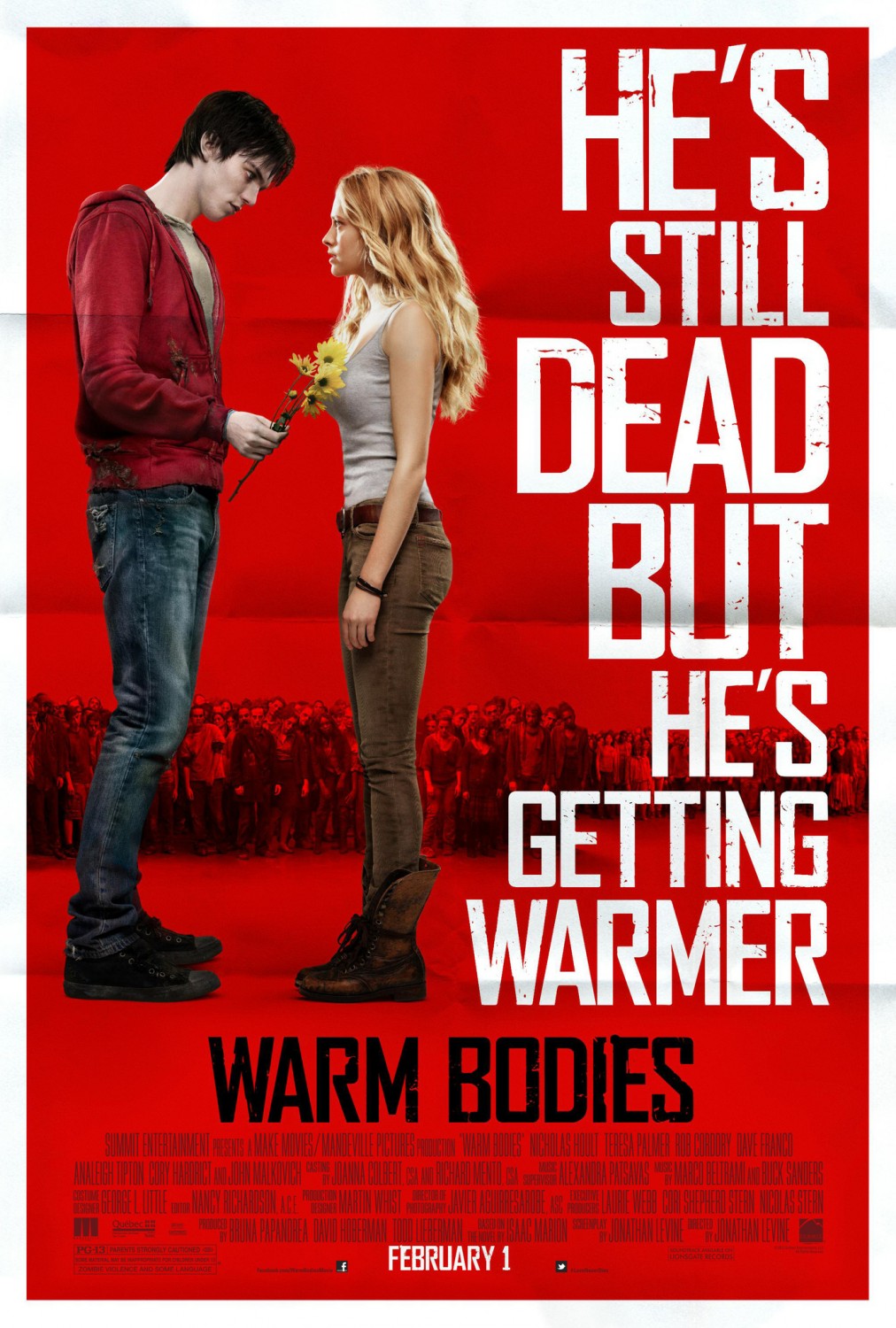
I’ve seen an assload of zombie movies, from Romero’s Dead series to Fulci’s Zombie to Warm Bodies. I’ve probably seen just as many rage zombie movies, starting with 28 Days Later, and spreading like wildfire to 28 Weeks Later, the [REC] and Quarantine franchises, World War Z, and so on. The South Korean zombie flick Train to Busan has seen all those movies too. Every character archetype and plot beat seems intensely familiar, but sometimes a genre movie is just a genre movie. And sometimes that genre movie is a triple corkscrew, anti-gravity roller coaster ride just the same.

Who knew trains could be so fun?

Stop me if you’ve heard this one before Workaholic fund manager Seok Woo (Yoo Gong) only cares about himself. When his young daughter Soo-An (Soo-An Kim) insists he take her to Busan to visit her mother (his ex-wife) on her birthday, he reluctantly agrees. Fortunately for him, that early morning train might just be the safest place that day, because pretty much the second they depart, a full-scale rage zombie apocalypse descends upon the city.

Unfortunately for the train, one of the last passengers to come aboard has been bitten. The virus quickly spreads through the train, leaving only a handful of survivors huddled in the last car, hurtling across the landscape in a cramped tube of herky jerky, B-boying zombies. These final humans include Seok Woo and Soo-An, as well as an expecting couple, a pair of elderly sisters, a fraction of a baseball team, a rattled hobo, and a self-serving corporate stooge.  Seok Woo fights to save himself while Soo-An does her best to help the others. The group desperately tries to make their way to Busan, which might just be the last safe place left.

But what kind of life are you really leading if the entrance to the bathroom is blocked?

Like I said, there ain’t nothing new under the undead sun. Any seasoned horror viewer could tell you exactly who is going to die and at what point in the story with at least 90% accuracy from frame one. But who the hell cares about plot mechanics when your heart is racing like you just chugged a gallon of Jolt?

As a close-quarters zombie thrill ride, Train to Busan has everything an adrenaline junkie could want: creative setups for new attacks that don’t just limit themselves to one car, people turning against one another, and clearly defined rules for the zombies that allow our characters to develop strategies and learn from their past mistakes.

It’s a shocker that’s constantly evolving, throwing out new challenges, new locations, and new combinations of characters in an ever-changing mass of jangled nerves. When it comes to depicting zombie mayhem, everything goes right. The slick cinematography is crisp and kinetic, with the occasional serenely gorgeous shot thrown in for flavor, the social commentary is jus the right amount of obvious, and the zombie actors manage to make the old trick of twitching and snarling seem horrifyingly, ontologically wrong. Plus, the requisite comic relief, is, to my taste, genuinely funny. I could watch a movie about these characters having a totally uneventful trip to Busan and still have a heap of fun.

The zombies are just the bloody cherry on top.

That’s not to say the movie’s perfect. Like many a Korean genre flick, it’s a wee bit overlong. There’s only so many “You go on! I’ll stay behind!” scenes I can watch without wanting to dive onto the tracks in front of the titular train. Not to mention there’s a spot right around the 90 minute mark that could, with a microscopic tweak, be a perfect ending that accomplishes the same tone. Fortunately, what follows that scene is the film’s best sequence, lending the third act an explosive second wind that obliterates all doubts about the film’s pacing. The emotional beats, especially in this segment, have a tendency to lean toward the schmaltzy, but I can forgive such a high-intensity film for winging its drama right on over the top.

This is a textbook example of how to do a horror movie right. Train to Busan takes a simple premise, a single goal, and a handful of stock characters, and works with that framework to rattle you out of your seat. It’s pure sensation, with enough intelligence to eradicate the artificial aftertaste of some popcorn thrillers. There’s a reason it has quickly risen to become the 15th highest-grossing film in Korean cinema history. Across all cultures, across all creeds, all we want is a good spook-‘em-up, and Train to Busan delivers in spades.

TL;DR: Train to Busan works within an exceedingly generic framework, but it has an undeniable sizzling energy.
Rating: 8/10
Word Count: 806

Monday, March 14, 2016

Popcorn Kernels: Dead Islands

Now that I’ve finally whittled down my backlog to nothing, I’m free to be a movie glutton once more, necessitating another set of mini reviews. These two pieces are about island-set zombie films, both screened for Zombie History Month on the Scream 101 podcast.

The Serpent and the Rainbow (Listen to the Scream 101 episode here.)

Year: 1988
Director: Wes Craven
Cast: Bill Pullman, Cathy Tyson, Zakes Mokae
Run Time: 1 hour 38 minutes
MPAA Rating: R

Dennis Alan is sent to Haiti to search for a drug that supposedly brings the dead back to life and gets himself embroiled in voodoo rituals and wicked politics along the way.

And thus continues my unstructured marathon to fill in the gaps of my Wes Craven viewing following his tragic passing. The Serpent and the Rainbow is one of the biggest titles I had not yet seen (the film community isn’t exactly clamoring to reclaim Cursed), and it’s one I missed due to a chronic disinterest in the subject matter. My first exposure to cinematic voodoo was I Walked with a Zombie, a stultifying affair that did not leave me slavering for more. However, I’m happy to say that my experience this time around was exceedingly pleasant.

Another factor that made me dubious was the fact that Craven didn’t write the script himself, something that only seemed to work with the Scream movies. That may have been the case, but this material (including the nonfiction book it was based on) is so compatible with his sensibilities that it’s no mystery why he chose to pursue it. The film was hobbled by an immensely difficult production (while the final product was a Wes Craven movie, the behind-the-scenes struggles could have made a great Hitchcock thriller), but it’s just as idiosyncratic as any of the director’s 80’s flicks.

The Serpent and the Rainbow has one of the loosest narratives in Craven’s career (remember this is the man who wrote Shocker), but this allows him to work at a level of pure style that’s undeniably effective. His obsession with nightmares continues full force here, but his “rubber reality” is far less intrusive than it had been in his non-Freddy flicks (not to throw Shocker under the bus again, but…). It arises organically from the material, steeped in mysticism and illicit drug use as it is, providing a stunningly eerie atmosphere and some of his best imagery ever. One nightmare sequence, which features Bill Pullman trapped in a coffin that’s slowly filing with blood, is a masterpiece of dream logic that’s as visually arresting and viscerally intense as anything in A Nightmare on Elm Street.

The scenes set in reality are hardly less jarring. Two violent moments are particularly stomach-churning (let’s just say Bill Pullman’s family jewels are put on display in a bad part of town), and a third act collision between the upper-crust white world of Boston and voodoo principles is a gleefully dark spectacle that calls to mind the best of Sam Raimi.

Moments like these peppers the film, making up for the near total lack of a plot with their boundlessly creative saging. You see, thanks to behind-the-scenes shenanigans, The Serpent and the Rainbow has some gaping narrative holes that are papered over with an intrusive Blade Runner Director’s Cut-esque voiceover. It’s like the missing jigsaw pieces of the film are filled in with random bits from the Maltese Falcon puzzle. There are definitely some solid themes present, including a Craven trademark – science vs. faith – but the film’s structure is less Empire State Building and more Leaning Tower of Pisa.

These plot flaws crop up especially during the rushed finale, when the truly menacing political tyranny/voodoo master morphs into a dime store Freddy Krueger and is defeated pretty much instantly by some deus ex stupida faux-mystical nonsense. As you can see, the film is far from perfect, but as a gallery for a talented cinematic mind working at full steam, it’s tremendously effective. Imagery from The Serpent and the Rainbow will stick with me forever, even as the actual story has already faded to a miniscule blip on my mind’s horizon.

Rating: 7/10

Zombie (Listen to the Scream 101 episode here.)

Year: 1979
Director: Lucio Fulci
Cast: Tisa Farrow, Ian McCulloch, Richard Johnson
Run Time: 1 hour 31 minutes
MPAA Rating: R

Anne Bowles is distraught when her father’s boat washes up in the New York harbor. She teams up with a reporter and two vacationers to find the island where he disappeared, whereupon they are attacked by a plague of zombies.

Zombie is both the second Lucio Fulci film I’ve screened for the podcast and the second I’ve seen in my life. Obviously my frame of reference is not vast, but here’s my fast and loose takeaway. The Beyond is better, but Zombie really whet my appetite for further Fulci exploration. One of the first Italian zombie flicks to burst from the gates after the massive success of Dawn of the Dead (recut in Italy by Dario Argento and titled Zombi, hence this unofficial sequel’s Italian title – Zombi 2), Zombie set the precedent for the years of gore and undead mayhem to follow.

Though Zombie doesn’t feature as much of the inimitable Fulci style as his other works, it starts off with a bang- quite literally. The very first shot mimics the end of The Great Train Robbery. A gun is pointed directly at the camera, pausing menacingly before it shoots a covered figure in the head. Before any credits, characters, dialogue, or discernible locations have been introduced, Zombie has already made an indelible mark, proving itself as a violent, jarring movie from the get-go.

Of course, it takes a long time for Zombie to regain that momentum, entering as it does the “setup” part of the first act. In a traditional movie, this is the section where we meet the characters and discover their personalities, goals, and conflicts. In a Fulci movie, it’s where we watch meatbags prepare to head to the place where they are destined to get punctured. Zombie’s setup is a particularly drawn-out one, mindlessly wasting valuable minutes on Fulci’s biggest weakness: characters. Tisa Farrow may have a Mia in her bloodline, but her go-to trick of bulging her eyes and pretending her head is slowly filling with helium does little to offset the stolid blandness of the obviously-too-old male lead Ian McCulloch, whom the movie strains to pretend is a strapping hero type.

However, once the engine revs up after a couple sputtering stalls (including a scene where a zombie fights a shark that defies the laws of movie physics by somehow being kinda boring), Zombie kicks into high gear. The red tempera paint flows freely as the undead rise for a solid half hour of zombie carnage. A siege on a hospital gets a little repetitive, but if there’s one thing you can’t say about Fulci, it’s that he lacks diversity in his violence. We get neck biting, arm ripping, head splitting, and the iconic “splinter through the eye” sequence, which has the weakest effects in the whole film, but by the point they arrive, you have already been sold by the tension and that dazzling shot of the eye in alarmingly close proximity to impalement.

The gore isn’t the vast smorgasbord that The Beyond presents, but if anything the film is even more Italian. The movie literally stops in its tracks for some topless scuba diving, and a showering woman is thoughtfully reflected at all angles by a thoughtfully placed vanity. This is a crass, over-the-top, exploitative husk of a film that occasionally slips into a sort of feverish artistry (a scene where the characters realize they’re camped in a graveyard is a deliciously slow-drip spine tingle, and certain shots –a vertical angle through a boat’s sails, a shaft of light on a wall widening as a door creaks open… - are undeniably suave), and that’s the perfect evocation of the Fulci cinematic philosophy.


Rating: 6/10
Word Count: 1335

Saturday, February 1, 2014

London Underground

Year: 2012
Director: Matthias Hoene
Cast: Rasmus Hardiker, Harry Treadaway, Michelle Ryan
Run Time: 1 hour 28 minutes
MPAA Rating: N/A

Way back when when I first saw the trailer for Cockneys vs. Zombies before 100 Bloody Acres, I knew it was my destiny to see this film. An indie British zombie comedy with a funny title? And it came out on my birthday? How perfect is that?

It turns out I never got around to it. My birthday weekend was far too busy to drive all the way down to L.A. multiple times (I was already down there to watch my beloved In A World...) and it slipped through the cracks. Thank goodness it did, because it's a pretty crappy movie. I really should learn to stop trusting the Brits with low budget zombie mayhem.

Sure this is the country that brought us the classics 28 Days Later and Shaun of the Dead, but their indie scene is that which brought us such cinematic defecation as Zombie Diaries and its illegitimate brother Zombie Diaries 2: World of the Dead, one of the top ten worst movies I've ever seen, and not in the fun way.

I know I've said this before, but come on! A seven minute rape scene that aims at ribald comedy rather than hard-hitting body horror? That could only work (and at that barely) under the hand of an exquisitely talented director, something which the film patently did not have.

What was I talking about?

Oh yeah.

Cockneys vs. Zombies takes place in London's East End during a zombie outbreak caused by a construction crew's discovery of an underground cave network filled with Cryptkeepers. Or... something. It's not really explained, but with a genre film of this caliber, does it really need to be? At least there's not as much exposition to sit through before half of London is emptied of living inhabitants.

The film opens strong with a gross jaw-ripping scene and some great retro credits, but quickly peters out after a lively introduction to Terry (Rasmus Hardiker) and Andy (Harry Treadaway), two argumentative brothers who are trying to keep their Granddad (Alan Ford)'s old folks home from being torn down.

Although the first five minutes are packed with wry British comic moments that absolutely land, one gets the sense that the filmmakers decided to make a movie on the strength of five great scene ideas, but could never quite figure out what to do with the remaining 70 minutes. Although the bulk of the first act has a smattering of humor, the next discernible joke won't occur for a good third of the film.

Anyway, Andy is the hot one (well, hot for this budget) and always gets his brother into trouble. This time around the trouble is a bank robbery to attain enough funds to save the elderly home. 

Not that they need help.

Once the outbreak hits, we cut between two intriguing setups. There's the potential zombie movie drama of a bank heist crew with hostages dealing with interpersonal tensions and misplaced post apocalyptic priorities. And there's the grand possibilities for camp humor with the boarded up Cockney octogenarians fighting the undead.

Between these two disparate situations, the film makes rapid shifts in tone that seem lively and slick at first but it ends up getting dizzy, toppling over, and lying gasping in a pool of its own sick. The conflict of horror and humor proves too much for the film and for the bulk of the middle third it ends up having neither at all.

The gore budget is wasted in the first scene, leaving us with dry and humorless gore for the rest of the time. The ending manages to pick up a lot of slack but goes a good ten minutes longer than it should with two false endings, each capped with the exact same dull joke.

Sam Raimi this ain't.

Not to disparage the humor entirely. This is a British production, after all. But the humor is of a contextless sort that I'd rather find on YouTube in short bursts than have to sit through this entire movie to get at. Honestly, if you want to have a good laugh, just watch the trailer. Apparently we Yanks aren't the only ones who put all the good bits in the previews.

Anyway, it's alright. I wouldn't mind if nobody ever saw it, but it doesn't make me regret the hour and a half I spent hanging out with Sergio watching a dumb zombie movie. Also it was my revenge for him making me sit through the entirety of The Help. Not that it wasn't good or anything, I just have an aversion to movies longer than 105 minutes on principle.

So at least it was short. And hey, there were no rape scenes.

TL;DR: Cockneys vs. Zombies has a few beads of hilarious comedy sequences strung together with a weak string of shallow events.
Rating: 5/10
Word Count: 829

Saturday, January 4, 2014

Everything You Know Is Wrong

As somebody in my line of work, I spend a lot of time reading, writing, and thinking about horror movies. I've spent so much time around them that even some of the most obscure bits of trivia seem like blisteringly obvious facts to me.

"Of course Stuart Gordon didn't direct The Howling, that's the film that inspired him to make Re-Animator, duh!"

But skewed as I am, there are a few ideas people have about my favorite genre that are both unshakeable and completely incorrect. It's weird how pop culture does this - it can be everywhere, the talk of every dinner table, but people can have totally incorrect cultural memories.

You know Darth Vader doesn't actually say "Luke... I am your father."? Yeah, neither does anybody you ask on the street and you know they've all seen Star Wars. These things happen and there's no earthly explanation.

I said no earthly explanation.

So sometimes people remember even super obvious things incorrectly despite hard evidence to the contrary. Thanks to my area of expertise, I see now that it is my destiny to return order to the community, at least horror-wise, and correct some of the more persistent myths. 

Now I know some of these are based on a lot of technicality, but suck it up, I wanted an even ten. Here goes nothing...

Ten Common Horror Misconceptions Debunked

MYTH #1: Frankenstein Terrorizes The Villagers


We'll start with an easy one. Most of us have learned at this point that the hideous creation portrayed by Boris Karloff is Frankenstein's Monster. Frankenstein is merely the man that created him. Nevertheless, this won't stop the world (including myself sometimes) from calling him Frankenstein. Even movie titles got in on the fun eventually.

How exciting! I can't wait to watch this classic comedy duo converse with the famed Baron.

Although it's perhaps an incurable one at this point, it's still wrong. We're all wrong. I'm sorry. That's just the way life is sometimes.

MYTH #2: Freddy Krueger Is Funny


OK, OK, OK. Freddy is a hilarious prankster. He spouts off puns as he kills teens by slamming them into TVs, turning them into living cartoons or video games, and other silly crap like that. But did you know that didn't actually start until A Nightmare on Elm Street 3: Dream Warriors?

For the first two films, the Kruegster was still a menacing presence. Sure, he took unusual delight in his craft but it was with the wicked sneer of a cat playing with its mouse, not the merry chuckle of a court jester. And in the second one, he was just a little gay, not actively funny.

If you think this is funny, you have a much weirder sense of humor than I do. Text me.

Some people find the original Nightmare unscary because all the 80's stuff is a little cheesy, but that doesn't mean it's humor. At least any more than legwarmers and jelly bracelets.

MYTH #3: That "Cabin In The Woods" Stuff Is Such A Cliché


God, I know, right? Those partying teens have really got to pick a better spot for their vacations. It was the entire premise Joss Whedon's great The Cabin in the Woods and the subject of a long conversation in the also great Dead Snow. But let's take a step back.

In Dead Snow a character asks how many movies are set in a cabin in the woods and the resident horror nerd starts rattling off "Evil Dead, Friday the 13th, April Fool's Day..." But hold the phone. Friday the 13th takes place at a summer camp. And April Fool's Day is a mansion on an island.

That seems a little weird. Wouldn't it be better just to use other cabin movies so people couldn't do a quick Google search and disprove the dialogue? I mean, Bloody Disgusting has a whole Top Ten list of... No, wait. That list includes an RV in the Desert movie, a Tent in the Woods, three Summer Camp movies, the aforementioned satires Cabin in the Woods and Dead Snow, and a movie that isn't even horror at all.

Basically it's just the Evil Dead trilogy and not much else.

But wait, there's more!

What's this? Only two of those movies actually take place in a cabin? Aw, screw it.

MYTH #4: The Texas Chain Saw Massacre Is A Gory Bloodbath


Come on! It's right there in the title! A girl gets hung on a meathook, a wheelchair kid is disemboweled, not to mention there's an entire house furnished with body parts.

It's all pretty intense. So intense, in fact, that everyone was too busy cringing and squinting their eyes to notice that there's scarcely even a drop of blood in the entire film. Sure, there's a hitchhiker that cuts his hand and some miscellaneous spatter on the Final Girl, but that's about it. The rest is all implication.

Tobe Hooper has such mastery of the cinematic form that TCM is so brutal and nihilistic that you feel like it's gory and disgusting. But the fact remains that this was a low budget movie and stage blood is just another expense. Leatherface isn't made of gold.

Well, he wasn't at that point.

This scene was basically their entire blood budget.

This doesn't mean you should't watch Texas Chainsaw. No not at all. It's a superb movie that beats at your nerves like a cannibalistic manbeast with a meat tenderizer. Just don't expect too much of the red red krovvy to satisfy your appetite.

MYTH #5: Night of the Living Dead Is A Zombie Movie


OK, this one is a little technical. But think about it. George Romero's seminal classic came out in 1968 and started the zombie movement, leading all the way to today's Walking Dead. So why did Romero call his flesh-eating revenants "ghouls?"

Because the zombie title was already taken, yo.

All the zombie films before NotLD were based on the voodoo idea of reanimated corpses that were servants to the priestess. They didn't eat flesh, they didn't turn unsuspecting victims into them. They just did junk that their mistress ordered them to do, including such horrific acts as *gasp* tending the fields.

Zombies before Romero. Pretty dull.

So be careful when you're renting a zombie film made before the 70's. Unless you need a good nap, that is.

MYTH #6: The Blair Witch Project Is The First Found Footage Horror Film


[REC], Quarantine, Paranormal Activity, Cloverfield. None of these films could have existed without the low budget innovation of The Blair Witch Project. That film ate up the media with the conceit that three documentary filmmakers vanished in the woods and left their tapes behind. Most of the audience had no idea the footage wasn't real, which made it all the more terrifying.

What they didn't know is that, in 1980, a gory little Italian film about a documentary crew's retrieved footage of an excursion to the Amazon was disgusting Europeans everywhere. That's right. Cannibal Holocaust came out a full 19 years before Blair Witch, but was deemed too immoral and distasteful to deserve the proper title of Papa Found Footage.

Providing a strong counterargument to the idea that cannibal films always hit it big at the box office.

It makes sense that nobody remembers it. It wasn't a hit anywhere but in cult cinemas. But still. First.

MYTH #7: Remakes Suck


Ah, the rallying cry of horror fans of the Millennium. And it's not far from the truth. One look at the odious Nightmare, Prom Night, and Halloween reboots would tell you as much.

But remakes have long been a thriving part of the horror community, updating old but resonant ideas with the changing times. If there was a button that could erase all remakes from the world, few horror fans would hesitate to press it. But doing so would rid the world of John Carpenter's The Thing and David Cronenberg's The Fly. The Blob would vanish in a puff of smoke.

The Hammer remakes of classic Universal monsters would be gone, destroying the careers of genre A-listers Peter Cushing and Christopher Lee. Jekyll and Hyde. The Ring. The Grudge. All gone.

And did you know Wes Craven's The Last House on the Left was essentially a remake of an Ingmar Bergman film called The Virgin Spring?

Ah, yes. I see the resemblance.

And not even all remakes of the past decade are terrible. The Wizard of Gore was unsteady but unspooled a marvelously modern and convoluted story from a pretty tedious Herschell Gordon Lewis gore flick. Fright Night and Evil Dead were pretty great. And I have it on good authority that Black Christmas, Texas Chainsaw, House of Wax, and The Hills Have Eyes aren't too shabby either. So for every One Missed Call (a bland and thoughtless affair) you get a Sorority Row (a lovingly cheesy splatter picture with Bruce Willis' daughter) and that's alright with me.

MYTH #8: Jason Voorhees Terrorizes Crystal Lake Counselors In A Hockey Mask


What am I talking about? This is the plot of every single one of them, right?

...You know where I'm going with this. Let's take a look: As of today, there's 12 Friday the 13th films, counting the remake and Freddy vs. Jason. FvJ, Part V, Part VIII, Jason Goes to Hell, and Jason X don't even take place at Crystal Lake so they're all out - there's no counselors anywhere to be found anyway.

So that narrows us down to 7. Only three of which feature counselors as victims: the original, Part 2, and Part VI. And as we should all know by now, Jason's mother is the killer in the first one so that one's gone. And Part VI takes place at the newly renamed Camp Forest Green which is a technicality, but hey. No Crystal Lake.

So that just leaves us with Part 2. Jason mows down a crop of camp counselors! Surely that counts for something in the saga of this hockey masked buffoon!

Hockey... Wha?

That's Baghead Jason up there. The killer from Part 2. Everything is a lie. All of it.

MYTH #9: Drew Barrymore Is The First Victim In Scream


No! That has to be right! I've seen that movie twenty gosh darn times!

I'm sorry. That's the wrong answer.

Although she dies in the first scene of the film, her boyfriend Steve is eviscerated in front of her before she bites the dust.

Poor kid only got one word out before he kicked it.

Now you have some great info to pull out on some unsuspecting competitors next Halloween on Trivia Night. Or, you know, if a playful madman calls you.

MYTH #10: Escape From Tomorrow Looks Like It Could Be Cool


It's not. Don't go see it. Thank me later.
Word Count: 1804

Sunday, November 17, 2013

They're Coming To Get You, Barbara!

Year: 1968
Director: George A. Romero
Cast: Duane Jones, Judith O'Dea, Karl Hardman
Run Time: 1 hour 36 minutes
MPAA Rating: N/A

For some strange unfathomable reason, my horror professor has taken to screening films that are tentpoles of the horror genre, so I'd feel absolutely blasphemous just sticking them into a Splatter University series of mini-reviews. Fortunately for you, this means you get my valued opinion on a variety of the most important horror movies of all time in full review format!

I have admitted before that I am less fond of George Romero's output than most, but it's impossible to deny that the world as we know it could not exist without Night of the Living Dead. It's hard to imagine a society that doesn't live under the constant threat of undead revenants what with the massive popularity of The Walking Dead and the rise of what I like to call "zombie chic."

But before 1968, the zombie as we know it was nothing more than a collection of electrical charges in the imagination banks of Romero's delicious delicious brain. The word "zombie" had been slung around for some time, but always in reference to the undead voodoo slaves of the tropical islands. Which were exactly as boring as they sounded, as evidenced by Val Lewton's dire I Walked With a Zombie.

The entire concept of the flesh-eating, disease-spreading, undead-shuffling zombies was introduced in a fairly innocuous low budget B-movie monster flick that nobody really expected to succeed. But the film captivated audiences with its unprecedented gore, unique reimagining of a classic (and pretty dull, even for the time) movie monster, and unrelenting pace. The film opens with a girl (Barbara, played by Judith O'Dea) being chased through a cemetery by a bizarre old man and doesn't quit until the credits roll.

Pictured: Barbara

Now, the pace has slowed down somewhat in the wake of Dawn of the Dead, The Evil Dead, and the 907 million zombie flicks that have come and gone in the succeeding years, but at the time, man. At the time.

Unfortunately for NotLD, this is 2013 and we do have access to at least 12 better movies about zombies just on the first page of Netflix. But it's important to remember this film's contributions to the genre (ie. the entire fact that it exists at all) and it's still a fairly solid movie on it's own.

Filmed in black and white to keep the chocolate syrup gore as realistic as possible (and because it's cheaper - it's not all artistry up in here), Night of the Living Dead is a clever monster movie that twists the tropes of the genre in order to provide keen social commentary. 

No, not the racism thing. That's bunk and everybody needs to get over themselves. The protagonist is black because he was a good actor and happened to be black, there's no huge statement about race relations. What there is is a flawed hero, a villain who kind of has a point, and a crafty heroine who completely falls to pieces within about 3.5 seconds.

TBH Barbara is the worst. Screw trope reversal.

Night of the Living Dead takes place in a small Pennsylvania farm town. When Barbara and her brother Johnny (an uncredited Russell Streiner) are visiting their father's grave, they are attacked by an ugly old man in a cemetery. The man takes Johnny down and runs after Barbara (Yes. Runs. These original zombies aren't quite the cliché that developed over the years. They also notably use tools to smash out car lights and to break down a door), who ends up pulling the emergency brake on their stalled car, rolling down the hill, and taking refuge in a remote farmhouse along the side of the road.

That's about it for Barbara. Apparently having worn herself out from her adventure, she proceeds into a state of vapid catatonia that lasts for the rest of the film. Some praise Barbara for accurately reflecting the realities of post traumatic shock, but who wants that in their zombie movie? Having the main female protagonist lay there muttering for 80 minutes isn't exactly my idea of a party. Bring on the chainsaws!

Barbara mopes around like Lana Del Rey until Ben (Duane Jones) comes barging in, taking refuge after being chased by a horde of those "ghouls." Against the background of Barb's pathetic whimpers, Ben gets proactive and barricades the doors and windows, right before smashing the skull of a zombie that Barbara failed to notice had gotten inside. I'm sorry, but when sobbing into a chair is higher up on your To Do list than keeping an eye out for lethal monsters, I have no sympathy for you.

Barbara's the worst.

Luckily, it turns out that there's more people in the house, who had been hiding in the basement this whole time. There's Harry (Karl Hardman), a rude middle-aged man, and his wife Helen (Marilyn Eastman), who's pretty and kind and why are they married again? They're holed up in there with their daughter Karen (Kyra Schon), who was bitten by one of those... things and is languishing on a makeshift bed. Remember, this was before this sort of thing had any meaning in the genre. It would soon gain it.

Accompanying them is a young All-American couple, Tom (Keith Wayne) and Judy (Judith Ridley) whose presence more than anything cements in the tropes of the B-monster genre even further.

Or boarded them in. That works too.

The whole thing is marred by jumpy editing that took a while to figure out was actually done on purpose. At first it seemed like a fluke, but it solidified as time goes on, so I can say with some authority that the unsettling effect it has is absolutely intentional. Go filmmakers!

So back to the trope reversal thing. First of all, making the characters all equally flawed was evidence of George Romero sharpening his teeth on standard character archetypes, allowing him to explore for the first time that favorite platitude of his: "people are the real monsters." And by putting his film into the basic framework of a movie audiences expected to see, he put them in exactly the right mindset to be utterly shocked and terrified by the unprecedented amount of gore he put onscreen.

Again, the Chocolate Syrup Massacre can't compare to the movie (or even TV) gore of today, but in 1968 this was quite literally breathtaking.

And occasionally heartbreaking.

Although his keen eye for satire and commentary wouldn't be developed fully until Dawn of the Dead in 1978, this movie planted the seeds for everything the sequel does right. Although in a different way than most people would have it.

I won't give away the ending here, but I've stated before that many people see this whole film as a treatise on the way society treated black people in the 60's. This is absolute garbage and anybody who has seen the entire film knows it. What people don't notice is the satirical eye aims itself toward redneck culture (the enthusiastic bloodlust of the farm natives) and a TV-run society (characters decide to abandon their refuge because "the TV said it was the right thing to do.").

There may also be some symbolism in the idea of the two groups splitting up between the upper and lower floors but I don't think it's fair to read that far into a movie that includes a voluptuous naked lady zombie just cuz.

Not pictured. Sorry.

Night of the Living Dead was a stroke of low budget brilliance, but much like any Adam Sandler film, it simply doesn't manage to be as entertaining when viewed in 2013. That doesn't mean that it was never a pinnacle of the genre and a great film, but the relatively slow pacing, the less than outrageous gore effects, and the unbelievably irritating heroine mean it's not a movie I'd jump to recommend to a beginner zombie fan.

So shuffle along, sweet chariot, there's so much greatness down the road.

TL;DR: Night of the Living Dead is certainly a well-made and sharply satirical film, but ended up buried under the weight of the genre it single-handedly created.
Rating: 6/10
Word Count: 1378

Wednesday, September 25, 2013

Splatter University

As some of you may know, I'm currently enrolled in a class called "American Film Genres" that, by some sinister twist of fate, is focused on horror movies this semester. Hopefully this class will help me be able to enhance my blog by teaching me a lot more about the context in which classic films were made and ways to analyze horror's relevance to society.

Because it is relevant.

More than any other genre, horror reflects the tensions and mores of the society in which it was developed. Afraid of the implications of going nuclear? We got Godzilla. Afraid of the noblemen having too much power? We got the sinister Count Orlok in Nosferatu and the mad asylum director in Dr. Caligari.

Horror is catharsis that allows us to face our fears in a safe environment while at the same time receiving the thrills and chills that keep our adrenaline pumping (and our endorphine levels high). In this class, we're working chronologically through the development of the genre from German Expressionism in the 1920s all the way up to current Postmodernism.

I'll release a series of mini reviews as I go along, so you can catch up with the same horror classics I'm learning about in class! Here's what I've got for my first three weeks in this beautiful beautiful class.

The Cabinet of Dr. Caligari


Year: 1920
Director: Robert Wiene
Cast: Werner Krauss, Conrad Veidt, Friedrich Feher
Run Time: 1 hour 7 minutes
MPAA Rating: N/A

In the 1920s film was so new that you couldn't turn on a camera without doing at least three things for the first time. The Cabinet of Dr. Caligari. Widely regarded as one of the first horror films, it also featured one of the first cinematic twist endings. This was a studio mandated ending to avoid the "people in power are psychos" theme that I mentioned earlier, so this is probably one of the first examples of studio meddling too for that matter.

Perhaps the most notable feature of Dr. Caligari is the visuals. This film and the same year's Nosferatu ignited the period of German Expressionism in which the setting and costumes don't reflect reality, rather the emotions behind the characters. Caligari is filled to the brim with twisted, spiky scenery that instantly places the viewer in the mind of its less than sane protagonist.

The story really doesn't matter, it's all just in support of the lavish (and outrageously cheap - they were mostly painted backdrops) and surreal sets. So much so that the IMDb description of the plot can hardly  even be considered a sentence (and certainly not a coherent one).

"Dr. Caligari's somnambulist, Cesare, and his deadly predictions."
At 67 minutes, the time doesn't exactly fly by but it mostly avoids the dangers of watching silent films in the modern era by being too short to be reasonably considered boring. Yes, it is slow, but that is more than made up for by its intense design and astoundingly creepy characters in Dr. Caligari and his somnambulist. It's hard to be scared by a film from this era, but there's a layer of chilliness that settles over the film that's quite unsettling.

Rating: 7/10


The Bride of Frankenstein


Year: 1935
Director: James Whale
Cast: Boris Karloff, Elsa Lanchester, Colin Clive
Run Time: 1 hour 15 minutes
MPAA Rating: N/A

This one here is a load of firsts for me personally. I love all aspects of horror wholeheartedly, but frankly I've been very distracted by slasher movies and slacked on some of the classics (I've never seen Alien, eep!). That's one of the reasons I took this class. It's not "slasher class" so I'll have a more in depth knowledge of some of the genres I've been neglecting.

Anyway, this is both my first Boris Karloff movie and my first Universal monster movie! I know, I know. I deserve to be stoned to death in the parking lot of a Walmart for not having seen any of these. 

Anyway, not that I have a frame of reference, but Bride of Frankenstein was an excellent place to begin. Yes, it's a sequel but I know enough about the original Frankenstein and the novel to piece together what happened. Baron Henry Frankenstein (Colin Clive - My first surprise. he's not named Victor. Who knew?) is alive but barely. He's being nursed back to health by his fiancée Elizabeth (Valerie Hobson) but ends up on the wrong end of Dr. Pretorious' (Ernest Thesiger) mad attempts to harness his discovery of manmade life.

Furthering the "man playing god" idea from the first film, this one extends even further, drawing heavily from the story of Adam and Eve.

The film draws heavy influence from German Expressionism and the sets are unbelievably evocative and gothic. My professor likes to say that sets are characters in the film and this one more than any other proves him right. From Frankenstein's sumptuous mansion to the baroque arches of the prison interiors, the sets draw more on a sense of old time majesty than realism.

The most stunning example of expressionism at work (perhaps in any film ever) is when Frankenstein's Monster is freed from his fiery tomb and left to wander the forest on his own. Birds are chirping, flowers are blooming, and the brook is babbling. Unfortunately happiness is always transient for the Monster and he is discovered by the villagers who chase him back through the same forest, now filled with dead trees, twisted and black.

Man oh man, what a great scene. This is why film historians should really pay more attention to the horror genre instead of treating it like a sideshow.

Not that the film is ever scary. It's a tragedy through and through, enhanced by Karloff's forlorn performance as the friendless Monster who tries so hard to be good, but nobody can see past his appearance. I think we all have felt like that at one time or another. Whenever he smiles, full of naïve hope and plaintive loneliness, I swear it will break your heart.

Bride of Frankenstein survives a sluggish first act to deliver a staggering tale of longing, heartbreak, and loss as told by a Monster.

Rating: 8/10


I Walked With a Zombie


Year: 1943
Director: Jacques Tourneur
Cast: Frances Dee, Tom Conway, James Ellison
Run Time: 1 hour 9 minutes
MPAA Rating: N/A

Let me set the record straight. This was 1943. The idea of "zombies" didn't exist yet. The flesh-eating, virus-having, shambling corpse variety wouldn't come into play until George Romero's Night of the Living Dead in 1968. Back then zombies referred only to undead voodoo slaves. Yeah, they're dead, but they won't hurt you. They just do whatever the voodoo priestess commands. 

Does that sound pretty boring?

It was.

Betsy (Frances Dee), a nurse, comes to a lonely island in the West Indies to take care of Wesley Rand's (James Ellison) sickly wife (Edith Barrett). She's bedridden and comatose, only able to follow simple commands but not able to speak or interact with people. Can you guess what she is? Did you guess zombie? Congratulations! You did in 12 seconds what Betsy did in 45 minutes.

At a brief hour and ten, I thought the film would slip by, no matter how slow the plot was. I was wrong. Time passed like molasses to the point where I thought my watch was lying to me.

This film was produced by Val Lewton, one of the few successful horror filmmakers in the 40's, but it certainly does not feel like the best the decade has to offer. 

I really don't have much else to say about this film, considering that I sat there slack-jawed for an hour struggling to stay alert and not slip across into the tantalizing realm of unconsciousness. I will say this though - I hate Betsy. She falls in love with Wesley with absolutely zero provocation despite having no chemistry and him being a huge douche to her the whole time. 

She fell in love because she was in his proximity and this was the 40's.

Betsy is the worst.

Rating: 3/10

Word Count: 1366
Reviews In This Series
Splatter University: Part 1 (September 25, 2013)
Splatter University: Part 2 (October 5, 2013)
Splatter University: Part 3 (October 23, 2013)