Showing posts with label Eugene Levy. Show all posts

Wednesday, February 27, 2019

Some Of It Is Just Really Dumb


Year: 2009
Director: John Putch
Cast: Bug Hall, Kevin M. Horton, Eugene Levy
Run Time: 1 hour 33 minutes
MPAA Rating: R

Have I fallen behind on my American Pie Presents marathon? Yes, absolutely. Did I do this because I got distracted by other, better marathons? Certainly. Do I still feel an urgent obligation to finish what I started, because I am a mad completist? Of course, have you met me?

My sincerest apologies to women everywhere.

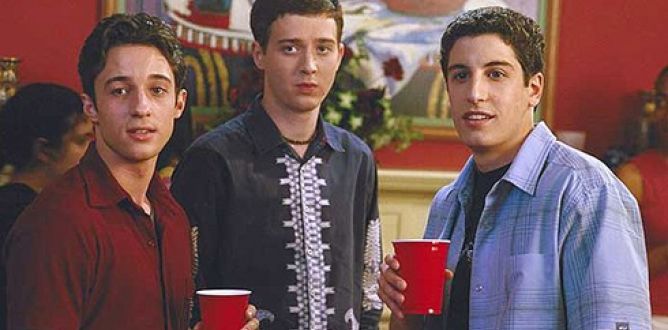
American Pie Presents: The Book of Love, which is at the time of writing the final spinoff on our roster, is essentially as much of a remake of the original American Pie as its possible to be. We follow best friends Rob (Bug Hall), Nathan (Kevin M. Horton), and Marshall "Lube" Lubetsky (Brandon Hardesty) - of course that nickname had to appear at some point in this franchise, and naturally he's the only character with a foregrounded last name in order to facilitate this - as they navigate tricky high school relationships. Also floating around them is another Stifler they pulled out of a hat. This one is called Scott (John Patrick Jordan).

They discover the fabled Book of Love in the school library, but only after it's severely damaged by a flood. They have a lot of sexy hijinks trying to interpret what it says, but eventually they decide to reconstruct it with the help of its original creator. And guess just who that might be...

If they had made any more of these, we'd be learning that Eugene Levy was the inventor of the pie, or the first person in history to masturbate, or something.

The Book of Love is neither the worst or the best of these four movies. Of course, the whole spinoff quadrilogy exists in the very narrow strait between 3/10 and 4/10, so these rankings are entirely relative. It benefits from being stretched across the structure of the original film, which has the built-in finale of the young men discovering how abhorrent their behavior up till now had been. Naturally this is a pale imitation with even more questionable content, but that inevitable end point drags it up a point by the skin of its teeth.

Unfortunately, the hijinks this time around - when they're not being hideously offensive and perpetuating the idea that women need to be tricked or cajoled into sex - are just plain boring. This entire film is a snoozefest, which is perhaps exemplified by that obligatory Eugene Levy cameo. His stuff in these spinoffs hasn't been funny, but the previous entries at least had the decency to include him in something that wasn't just an endless montage that eats up what feels like a quarter of the run time and is chockablock with the best, most dated cameos a direct-to-video sequel could pull in the late 2000's (see: Bret Michaels, Dustin Diamond, and... C. Thomas Howell?).

Also K-Fed plays a Canadian border agent, so their casting level is somewhere between Dancing with the Stars and Celebrity Rehab.

Honestly the only casting decision that implies they had any idea at all what they were doing is the fact that software schlock director (and auteur of Chopping Mall) Jim Wynorski plays a small role. This is an implicit stamp of approval for the film like John Waters appearing in Seed of Chucky, though the Wynorski brand is on a tier waaaaaaay lower than Waters, for obvious reasons.

As for the non-famouses we see here (there's also a lesser Arquette rattling around), they're all pretty damn crummy. The three leads are blander than vanilla-essenced white bread, and John Patrick Jordan's Stifler impression is the worst of the franchise - he just chatters flatly and loudly, punctuating his speech with hyena screeches of laughter. It doesn't help that this is by far the worst written member of the Stifler clan, with dialogue toward women that is actively evil and an eventual comeuppance that is both deeply upsetting and terribly rendered (*trigger warning* he's raped by a CGI caribou that looks like an escapee from Zoo Tycoon - why anybody thought this should be a scene in a high school sex comedy I'll never know).

The only times where the film seems to actually be aware it's attempting to be entertaining are in the rich fantasy world of one of the three characters (if you think I remember which, your faith in my attention span after four of these things is much too high). He has Scrubs-esque flashes of imagination that are usually gross but at least provide something visually distinct every now and again.

So, yes. Definitely a waste of time. Don't see any of these movies, but especially don't waste your time getting all the way to the end, because you will not be rewarded.

TL;DR: American Pie Presents: The Book of Love is a pale imitation of American Pie, but American Pie was a pretty good movie to be a pale imitation of.
Rating: 3/10
Word Count: 829
Reviews In This Series
American Pie (Weitz, 1999)
American Pie 2 (Rogers, 2001)
American Wedding (Dylan, 2003)
American Pie Presents: Band Camp (Rash, 2005)
American Pie Presents: The Naked Mile (Nussbaum, 2006)
American Pie Presents: Beta House (Waller, 2007)
American Pie Presents: The Book of Love (Putch, 2009)
American Reunion (Hurwitz & Schlossberg, 2012)

Tuesday, February 5, 2019

What A Rush

Year: 2007
Director: Andrew Waller
Cast: John White, Christopher McDonald, Eugene Levy
Run Time: 1 hour 25 minutes
MPAA Rating: R

Yup, they kept making these and I'm gonna keep reviewing em. This is the circle of hell I have designed for myself. American Pie Presents: Beta House, which came just a year after The Naked Mile is the only one of the Pie spinoff movies to be a direct sequel, so at least there's that. And it's a sequel to the only film to show even a glimmer of potential, so I'm glad they recognized what they had for that oh so brief time.

Plus, the intervening year at least gave everyone a chance to become just that much hotter.

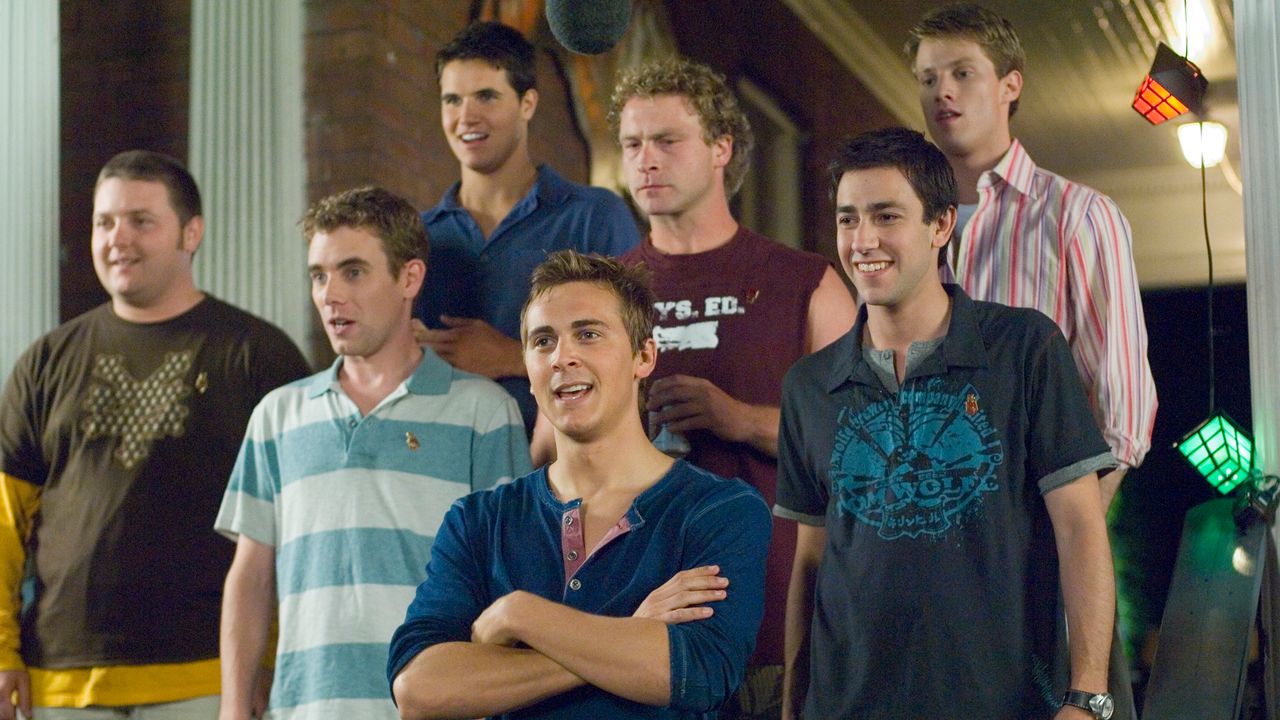
So, here returns Erik Stifler (John White) and his friend Cooze (Jake Siegel), now at Generic College and ready to rush Beta, the frat run by Erik's cousin Dwight (Steve Talley), his right-hand-man Bull (Dan Petronijevic), and previously unseen party boy Wesley (Jonathan Keltz). We follow their romantic travails with a variety of sorority babes (Erik's girlfriend Tracy, around whom the entire previous film revolved, has dumped him unceremoniously offscreen), but meanwhile things start to heat up with a nerdy rival frat run by tech geek Edgar (Tyrone Savage), who want to see those dumb jocks kicked off campus.

I can't say I blame them.

One thing Beta House benefits from is the fact that almost all the previous cast members have returned. I wouldn't say this is because any of them were particularly good, but we already have a relationship with these characters. Even if that relationship is "they didn't really make an impression on me," it's still easier to jump into this movie without having to meet a whole new slate of bland frat boys.

Of course, this being the same cast of characters also exposes us to their innumerable flaws. Beta House has a fearsomely long run of transphobic jokes to replace (most of) the jokes at the expense of little people that defined The Naked Mile, and there continues to be absolutely no reason that anybody should want to hang out with or engage in sexual congress with Dwight Stifler.

Unfortunately, beyond basic recognition of the people involved, the plot is radically un-engaging. The frat rivalry forms the central spine of the narrative, but the movie must have severe scoliosis, because that plot thread swerves out of reach in favor of a bunch of pointless romantic (read: "sexy") vignettes about all the boys and their raunchy escapades. When the plot finally kicks in with half an hour to go, it's not much better, using a frat Olympic games as an excuse to insert a chain of (admittedly decent) gross-out gags rather than gather actual narrative momentum.

And I think I just liked the beautiful pool more than the challenges themselves.

The gags here were never going to be good, but most of them are built on foundations that make zero sense, and anybody with lived experience beyond high school graduation will instantly clock about a thousand tiny problems with the premise. Fortunately, that excludes the entire demographic of this movie's audience. But seriously, there is an entire scene about how easy it is to make a grown man ejaculate in his pants (spoiler alert: these men clearly have a medical problem), and also a lot of gags revolve around a co-ed bathroom, which just wouldn't happen. It's not a thing, I promise.

And Eugene Levy is really just in this movie, isn't he? I always expect him to show up for a scene and then peace out, but he keeps coming back again and again and again, in further degradation of his established character (apparently now he's a frat legend with a wild sexual history). To be fair, he certainly only spent maybe two days on set, but they really milk every second out of him that they can, and it just resolutely refuses to work.

Beta House is exactly in line with this entire franchise: just watchable enough to be a meaningless diversion, but not worth a single lick of your time. But on the bright side, there's only one of these left! Why am I doing this! Dear Lord, tell me why!

TL;DR: American Pie Presents: Beta House is a pointless, aimless, vulgar movie.
Rating: 3/10
Word Count: 725
Reviews In This Series
American Pie (Weitz, 1999)
American Pie 2 (Rogers, 2001)
American Wedding (Dylan, 2003)
American Pie Presents: Band Camp (Rash, 2005)
American Pie Presents: The Naked Mile (Nussbaum, 2006)
American Pie Presents: Beta House (Waller, 2007)
American Pie Presents: The Book of Love (Putch, 2009)
American Reunion (Hurwitz & Schlossberg, 2012)
Monday, January 28, 2019

Beer Run

Year: 2006
Director: Joe Nussbaum
Cast: John White, Eugene Levy, Maria Ricossa
Run Time: 1 hour 37 minutes
MPAA Rating: R

Now I know I just started my most ambitious marathon of the year with Tears for Fears, but you didn't think I'd just up and forget about my American Pie spinoff marathon did you? No, we've still got three of those left unfortunately. This time we're hitting up The Naked Mile, from the director of Sydney White, a college frat movie that I actually liked quite a bit as a kid. Let's see if that goodwill carries over, shall we?

I'll give you one guess.

I suppose it's good that canonically the Stifler family is a bunch of f**k monsters, because the way these movies introduce relatives we've never heard of before is alarming and unsustainable. Erik Stifler (John White) is the cousin of Matt and Steve Stifler (the former of which appeared in Band Camp, the latter of which refused to appear in any of these), and has failed to live up to the family name because he's still a virgin. His girlfriend Tracy (Jessy Schram) wants to satisfy his desire to lose his virginity, but isn't quite ready to do it herself yet, so she gives him a free pass for the weekend, a choice she instantly regrets. 

Because nobody communicates in movies, Erik has no idea about this and heads off with visions of sugarplums in his head to visit his cousin Dwight Stifler (Steve Talley) - what branch of the Stifler family tree he has plummeted from is entirely unclear - at his fraternity. Along with his horny friends Cooze (Jake Siegel) and Ryan (Ross Thomas), he gets into all kinds of fraternity hijinks, facing lots of opportunities for sex and not being entirely sure he can handle them.

The parade of nameless women wait in the wings, their divine purpose to aid a man on his sexual journey sated for the time being.

For about ten minutes, The Naked Mile looks like it might just be an actual good movie, landing somewhere between the heights of the first two original films and the mediocrity of an American Wedding. There is a deep commitment to an extravagant gross-out gag that might not be to your taste, but shows a valuable fearlessness on the part of the screenwriters, and the conversations between Erik and Tracy set up a movie with an almost To Do List-esque progressive view on the double standards about men's and women's virginities, with the added bonus of a boy conflicted about being put into a box he doesn't really identify with simply because of the way his family is. And it does come back to it at least a little bit in the final five minutes. But oh, all that chaff in between the wheat...

The instant this film sets foot on a college campus, every ounce of narrative momentum, thoughtful character-building, or whiffs of progressive sensitivity are tossed out the window and left shattered on the side of the road, much like Erik Stifler's phone when his friend casually tosses it out the window so he won't see a message from his girlfriend revoking his free pass. There's so much wrong with this scene that I can't even begin to unpack it (let's hope phones were less expensive then, for one thing), but then again there's so much wrong with the movie proper too.

I reeeally don't want to get into the reprehensible representation of the rival frat as a house of little people, save to say that it's odious and that we need to make a little people remake of Citizen Kane or something to make up for what Hollywood has done to them since the beginning of the medium, or at least The Wizard of Oz on.

Not that I'd trust these guys with... well, any type of film honestly.

Not only is the college material nasty and dim-witted, it's obscenely boring. There is a football sequence that feels like it was shot by Béla Tarr, resolutely refusing to end under any circumstances. And the party scenes are much the same, forcing you through a never-ending gauntlet of mediocre actors adopting rictus grins of good cheer while performing irritating frat antics. It not only doesn't live up the promise of the opening ten minutes, it actively spits on that sequence and poops in its shoe.

And now for the requisite discussion of Eugene Levy. This is where his cameos really start to go downhill. The thin excuse for him being at the camp at least was a tenuously believable excuse, but The Naked Mile is where things actively start to break down his character as established by three movies that actually mattered. For one thing, he seems to know way too many teenagers who are at least six years younger than his own kid, but for another he is positioned as some kind of frat legend, which sacrifices a lot of character continuity just for the joke of a prudish parent being in charge of The Naked Mile. Spoiler alert, I guess, but who could possibly care.

TL;DR: American Pie Presents: The Naked Mile is even more disappointing because it almost seems like it's going to be a good movie until an abrupt heel turn.
Rating: 4/10
Word Count: 888
Reviews In This Series
American Pie (Weitz, 1999)
American Pie 2 (Rogers, 2001)
American Wedding (Dylan, 2003)
American Pie Presents: Band Camp (Rash, 2005)
American Pie Presents: The Naked Mile (Nussbaum, 2006)
American Pie Presents: Beta House (Waller, 2007)
American Pie Presents: The Book of Love (Putch, 2009)
American Reunion (Hurwitz & Schlossberg, 2012)

Monday, January 21, 2019

The Levy Was Dry

Year: 2005
Director: Steve Rash
Cast: Eugene Levy, Tad Hilgenbrink, Arielle Kebbel
Run Time: 1 hour 27 minutes
MPAA Rating: R

After running my marathon of the American Pie quadrilogy, a franchise I have no small amount of slightly abashed love for, it was inevitable that I'd have to run through the franchise's other quadrilogy: the series of direct-to-video spinoffs under the banner American Pie Presents. Why did it take me two years to decide to do this?

Well, see for yourself...

For one thing, the first spinoff is American Pie Presents: Band Camp, released just two short years after American Wedding, and it covers the exact same setting/regurgitated joke that we already saw in American Pie 2. When Stifler's little brother Matt (Tad Hilgenbrinck) pulls a prank on the high school band during the graduation ceremony, his punishment is to attend band camp for... reasons. Look, we needed a premise, OK?

Anyway, at band camp he vows to make the most of his time by secretly taping the geeks mid-coitus (ah the beforetimes, when sex crimes were oh so funny according to Hollywood screenwriters). But a wrench is thrown in his plan by senior student Elyse (Arielle Kebbel), on whom he has a massive crush. He is split by a decision: should he be a nice guy and help out the band he is slowly bonding with in their competition against the requisite rich snob team of campers? Or should he live up to his Stifler instincts and continue to be an insufferable asshole?

And also Mr. Levenstein is there, because Eugene Levy could use the paycheck and we need a better connection to the franchise than a cameo by the Shermanator and the song "Laid" by James, which is ALL over these spinoffs.

There is a lot of odious material in Band Camp, probably the worst - other than the rampant misogyny present in pretty much every sex comedy - being a grotesque racial slur that is dropped in out of absolutely nowhere. But the first thing to get to me was the scene where Matt purchases his snooping cameras online, shelling out at least $3,000 in one fell swoop. That's a truly obnoxious amount of money for any high school student to have, and it reeks of suburban white privilege that immediately puts you on the bad side of a character who barely even has a good side.

The reason Stifler was a standout character is because Seann William Scott is an actually good actor, and Tad Hilgenbrinck's watered-down impression of him only serves to highlight how we're not going to spend a single moment with this character that could possibly be enjoyable. At least he nails the Stifler laugh, so it feels like they could actually be related in some way, but his practical joking tends toward the straight-up evil, and his need to outdo the antics of his brother makes spending time with him absolutely exhausting.

It's hard to fall for a protagonist wearing that hat.

And the comedy that actually has the capacity to be funny without being hideously offensive is just as outdated. Steve Irwin jokes were old even in 2005, but in 2019 there is absolutely no place for them. At least the fourteen year gap is one thing that isn't the movie's fault, though it probably should never have defaulted to such lazy zeitgeist humor anyway. It's not a Scary Movie spinoff or anything. And we should at least thank whatever deity you put your faith in for that.

One thing that's unequivocally positive about the movie (finally!) is that it has a bangin' soundtrack. I think the bands that agreed to be featured assumed incorrectly that it was an actual American Pie movie, but for whatever dubious reason we got it, we have Jimmy Eat World, Matt Nathanson, Snow Patrol, Good Charlotte, and Breaking Benjamin all over this movie. And whatever your mileage is with those various artists, they are bands that you've heard of and it creates a beautiful time warp back to the sonic landscape of the mid-2000's.

And I guess here's the part where we should talk about Eugene Levy, who is the only person you've heard of in any of these movies, and who will be our constant companion through the next three entries (that's right, they made four of these). He was pretty well cemented into his character's schtick at this point, so nobody could expect him to add anything to it, but it's at least consistent with the work he put in throughout the rest of the series. The script is not, so he blunders with the expected half-prudish, half-supportive awkwardness through situations that don't really make sense with people he has no real reason to interact with, but at least he's doing something. Right?

Right?!

Look, I just need a reason to justify why I'm doing this, because the movies themselves don't seem to be giving me that quite yet. Band Camp is a wholly unremarkable, sometimes toxic movie that at least has a basic narrative thrust and structure. It's recognizable as a movie, even if it's not a good one, and that's something I'm going to hold onto as we dive even deeper into the pit.

TL;DR: American Pie Presents: Band Camp is offensive and stupid, which I guess is exactly on brand.
Rating: 3/10
Word Count: 894
Reviews In This Series
American Pie (Weitz, 1999)
American Pie 2 (Rogers, 2001)
American Wedding (Dylan, 2003)
American Pie Presents: Band Camp (Rash, 2005)
American Pie Presents: The Naked Mile (Nussbaum, 2006)
American Pie Presents: Beta House (Waller, 2007)
American Pie Presents: The Book of Love (Putch, 2009)
American Reunion (Hurwitz & Schlossberg, 2012)

Tuesday, December 27, 2016

This'll Be The Day That I Pie

Year: 2012
Director: Jon Hurwitz & Hayden Schlossberg
Cast: Jason Biggs, Alyson Hannigan, Seann William Scott 
Run Time: 1 hour 53 minutes
MPAA Rating: R

Well, here we are. I may have skipped way ahead in our Seann William Scott marathon, but of course that was only a pretense to allow me to watch the American Pie movies again. So that brings us to American Reunion, the fourth and probably final film in the franchise, coming a long 9 years after American Wedding. Let’s see if this Pie has gotten stale.

Pro-tip: if a pie has been sitting on a windowsill for a decade, maybe don’t eat it.

In American Reunion, the denizens of East Great Falls return home for their not-quite ten year high school reunion. Jim (Jason Biggs) and Michelle (Alyson Hannigan) now have a two-year-old son; Oz (Chris Klein) is back from the dead and a B-list sportscaster/celebrity dance show contestant who’s dating sexy nymphette Mia (Katrina Bowden); Finch (Eddie Kaye Thomas) has arrived with an array of globetrotting tales; and Kevin (Thomas Ian Nicholas) is just happy to be included. They plan to spend a nice, quiet weekend catching up before the reunion. Enter Stifler (Seann William Scott). Frustrated by his job as a temp, he wants to have a wild, crazy weekend just like they did back in high school.

Thus our aged foursome is tempted away from their wives and boring jobs by various women and the rekindling of old flames. Oz and Kevin run into their exes Heather (Mena Suvari) and Terrible Vickie (Tara Reid), who is terrible, Finch woos band geek-cum-sexy barmaid Selena (Dania Ramirez), and Jim must resist the advances of Kara (Ali Cobrin), the lithe now-eighteen-year-old he used to babysit.

And thus they continue to act like they’ve never seen boobs before in their entire lives.

Remember that thing I said about the first American Pie where the women were actually fleshed-out, sexually autonomous characters? Well, apparently the law of diminishing returns also applies to quasi-feminism in raunchy movie franchises. The rule of thumb still holds true in that an American Pie film’s quality is directly proportional to the screentime of Alyson Hannigan’s Michelle, and Reunion takes after American Wedding in the misuse of that iconic character. Once again she is crammed into the role of “Wife,” the woman who must be kept unaware of the boys’ sexual misadventures, as if she wouldn’t have been right in there with them.

And frankly, most of the other female characters don’t even make sense. I get it when Terrible Vickie is terrible, because she’s terrible, but why the hell would Heather get mad upon seeing Oz macking on his live-in girlfriend? Why would Kara have any sexual interest in Jim (no offense, but c’mon), especially with such rapacious determination? And why does Michelle threaten to pack up and move in with her grandmother the second Jim commits a sexual misunderstanding, something that has become – like – a full time career for him at this point? I think this all boils down to the biggest problem with the later films in this franchise: These adults are still written like teenagers.

Obviously adults can get into sexual hijinks, probably even more so than your average high school student. But the motivations here are so childish and crudely motivated, they make way less sense when transplanted from the locker-filled halls of Long Beach Poly to a family cul de sac.

Yeah, I’m still not convinced that we’re in Michigan. Better luck next time, fellas. Oh wait…

At least American Reunion has reassembled its core cast (including cameos from Natasha Lyonne, Shannon Elizabeth, Chris Owen, and a slightly expanded part for a finally famous John Cho, who appeared in all 3 American Pies before hitting it big with Harold & Kumar), so it feels more like a legitimate continuation than the stunted Wedding. And you can rarely go wrong with Seann William Scott’s Stifler, the only character whose actions make any sense as he yearns for the glory days of his teen years. His mugging overreactions and faux charm still hold some juice, once again bringing most of the best laughs by the bucketful.

And American Reunion is funny. At least enough to justify its own existence. The bright colorful characters of the original film have become shabby and patched (especially Eugene Levy as Jim’s Dad, who they can not find a use for here, shoving him into a shopworn dress-up montage that stops the movie cold), but the situations they find themselves in are still reasonably diverting. And this is the first film in the entire dick-obsessed franchise to actually show a penis – if only for a second – so I applaud its audacity at the very least.

Unfortunately though, for the most part American Reunion is just a retread of the lackluster American Wedding (although there are fewer gay jokes, thank heavens), only with Neon Trees on the soundtrack instead of Sum 41. This one-two punch is good enough not to totally sink my esteem for the franchise (those first two are just too good), but I don’t think I’d mind if this was the last slice of Pie. There’s no reason to revisit these characters in their current, destitute state.

TL;DR: American Reunion is a decent years-later followup, though it copies the problems of its immediate predecessor.
Rating: 6/10
Word Count: 898
Reviews In This Series
American Pie (Weitz, 1999)
American Pie 2 (Rogers, 2001)
American Wedding (Dylan, 2003)
American Pie Presents: Band Camp (Rash, 2005)
American Pie Presents: The Naked Mile (Nussbaum, 2006)
American Pie Presents: Beta House (Waller, 2007)
American Pie Presents: The Book of Love (Putch, 2009)
American Reunion (Hurwitz & Schlossberg, 2012)

Friday, December 16, 2016

Them Good Ole Boys

Year: 2003
Director: Jesse Dylan
Cast: Jason Biggs, Alyson Hannigan, Seann William Scott 
Run Time: 1 hour 36 minutes
MPAA Rating: R

After the bigger, better, jam-packed magnum opus that was American Pie 2, the franchise had no place to go but down. Reducing the cast by at least half and hanging its hat on the hoariest of “waning sitcom” tropes, thus was American Wedding born unto the world in 2003, four years after the world was first exposed to the sexual appeal of baked goods.

I’m surprised it took us so long to notice.

In American Wedding, hapless everyteen Jim Levenstein (Jason Biggs) has now become a hapless everycollegegraduate and is engaged to his girlfriend, the nymphomaniac band geek Michelle Flaherty (Alyson Hannigan). To help give her the perfect wedding, Jim enlists the help of his friends, Finch (Eddie Kaye Thomas), the high culture weirdo, and Kevin (Thomas Ian Nicholas), who settles comfortably into his destined role as the wallpaper, appearing only to offer vague platitudes and advice, then blandly keen about an offscreen girlfriend. Where’s Oz, you may ask, on this most important of occasions? Well apparently Oz is a figment of your imagination or possibly was a ghost the whole time, because this movie presents not a single scrap of evidence he ever existed.

So, hijinks. Michelle doesn’t want to invite Stifler (Seann William Scott) to the wedding, but Jim is coerced into it. All of Jim’s attempts to impress Michelle’s parents (Fred Willard and Deborah Rush) go hilariously awry. Stifler pretends to be a nice guy and Finch pretends to be a douche in a desperate war for the affections of Michelle’s hot sister Cadence (January Jons). Everything comes to a head as they arrive at the preposterously expensive venue that is described as “up North” from Michigan but is somehow adjacent to an ocean.

Pretty sure you’re not gonna get this view within driving distance.

A trio of rowdy bros get in the way of their earnest friend’s wedding preparations while an anxious fiancée waits in the wings… now, where have I heard that one before? Well, most recently in The Hangover, but this plot trope has been endlessly repeated in comedies since the beginning of linear time. It is trite yet pleasant, overfamiliar yet with the potential for more, but there is one thing it is not: an American Pie plot.

Sure, it provides plenty of opportunities for the old foursome (R.I.P. Oz) to engage in some sexy shenanigans, but the reckless spirit of the franchise is shackled to a set of schmaltzy plot beats and character archetypes that fit with the franchise like square genitals into a round pie. Nevermind the fact that all these characters are far too young and poor to afford the extravagant nuptials the format requires (the only one of them who obviously has a job is f**king Stifler) it yanked away Michelle, the best character in the franchise, cramming her into the role of the disappointed high society fiancée and hobbling her potential to provide the kind of shocking, anarchistic humor she’s known for.

Jim doesn’t fare much better. Although his character’s history is a much better fit for the “dopey schlub who constantly disappoints the prudish parents through a variety of wacky misunderstanding” role, he ceases to be interesting with all his googoo monologues about romance. The only indication that this movie was actually aware of its characters is the personality swap between Finch and Stifler, a joke which relies on the viewer’s knowledge and appreciation of the previous two films.

Luckily, I possess those things in spades.

As a result of this wildly keeling narrative, American Wedding becomes, almost by default, Stifler’s movie. He’s the only character not locked into position, so he’s free to have an arc, and it’s on the strength of Seann William Scott that this movie survives at all. Although his early scenes are overwritten and he flounders as the character has to force his way into a narrative that actively rejects him, he quickly gets the hang of things and delivers a set of solid gags that are some of the most disgusting and ribald in Pie history, all while handling his character’s first real emotional breakthrough. This is where he really proves his worth to the franchise, progressing beyond a one-note characterization into an actual protagonist.

Stifler is by far the funniest character here, for the first time ever, thanks to some sharp line deliveries, and it’s good he’s around because the movie flatlines whenever he’s offscreen. There is a great deal of bloat to American Wedding, with too many scenes spilling over the sides as Jim struggles to win the affections of easily suggestible idiots. These antics are far from interesting, and the faint homophobia that ran through all early-2000’s raunchy comedies bores directly into the core of the humor and spreads through the movie like a poison.

It is redeemed by some solid dialogue and the surprisingly buoyant farce that arises when Jim must attempt to hide evidence of his bachelor party, but for the most part the film is just gross and forgettable, which is something I would never have said about the first two films no matter how wild they got.

Maybe the franchise was fatigued three films in, or maybe it’s not as funny to watch actual adults hyperventilate about the possibility of seeing boobs. At any rate, American Wedding is a totally fine comedy, but it has certainly lost that sparkle that made the originals so damn iconic.

TL;DR: American Wedding is a reduced-fat reiteration that's fun enough but doesn't capture the lightning in a bottle of the first two films.
Rating: 6/10
Word Count: 949
Reviews In This Series
American Pie (Weitz, 1999)
American Pie 2 (Rogers, 2001)
American Wedding (Dylan, 2003)
American Pie Presents: Band Camp (Rash, 2005)
American Pie Presents: The Naked Mile (Nussbaum, 2006)
American Pie Presents: Beta House (Waller, 2007)
American Pie Presents: The Book of Love (Putch, 2009)
American Reunion (Hurwitz & Schlossberg, 2012)

Thursday, December 15, 2016

The Levy Wasn't Dry

Year: 2001
Director: J. B. Rogers
Cast: Jason Biggs, Seann William Scott, Shannon Elizabeth
Run Time: 1 hour 48 minutes 
MPAA Rating: R

1999’s American Pie was a box office smash, making stars of (to varying degrees) Jason Biggs, Seann William Scott, and Shannon Elizabeth, and giving Eugene Levy his Leslie Nielsen-esque career realignment. It’s no surprise that it got a sequel with triple the budget, but it is a surprise that American Pie 2 turned out to be the Terminator 2 of teen sex comedies, taking a low budget surprise hit original and ramping it up even bigger and better.

Quick sidebar: Not to get TOO neurotic about a solid comparison, but I do have my doubts that T2 is, as consensus suggests, a better film than The Terminator. I have a soft spot in my heart for he scrappy little sci-fi thriller, but this is all moot considering that both those films are masterpieces and any relative quality is higher or lower by a fraction of a percent. OK. We now return to the review already in progress.

In American Pie 2, everyone’s favorite horny quintet is back from college for the summer! The police are actually doing their job and shutting down house parties, so the boys rent a mansion by the lake for the summer which they can afford by getting jobs as house painters because life was great before the housing market collapsed. Anyway, they all have different goals for their summer, which will come to a head with a huge party at the end of break, although it would be mighty generous to refer to this collection of sex-up daydreams as a “plot.”

Jim (Jason Biggs) wants to hook up with hot exchange student Nadia (Shannon Elizabeth) who is returning at the end of summer, but he still has only had sex once – and terribly, by all accounts – so he enlists band geek Michelle (Alyson Hannigan) – a counselor at a nearby camp – to give him some tips. Finch (Eddie Kaye Thomas) wants to learn the art of tantra so he can experience a new universe of pleasure when he is reunited with Stifler’s Mom (Jennifer Coolidge). Oz (Chris Klein) just wants a minute alone so he can have phone sex with his girlfriend Heather (Mena Suvari), who is studying abroad. Kevin (Thomas Ian Nicholas) continues to be as exciting as a bowl of cold oatmeal, trying to figure out how to be Just Friends with his terrible ex Vickie (Tara Reid). And Stifler (Seann William Scott) just wants to get drunk, have sex, and let the good times roll.

And the filmmakers want to convince us that this is Michigan and not Long Beach, but I ain’t buying it.

I said this movie was the T2 of the franchise and I’m sticking to it. Although it’s even more of a hang-out movie than the meandering original, its sexual hijinks are of a higher caliber, and the one solid throughline (thanks to Jim once again) is the most emotionally satisfying in a franchise with oddly tender wrap-ups, furthering the relationship between Jim and Michelle in an organic, natural way that still allows for wackily shocking sexual misconduct.

And that’s the thing about American Pie 2. Where the original showed naturalistic high school characters, the sequel does the exact same thing, just transplanting them a year into the future. The non-Alyson Hannigan women are much more underserved this time around (Nadia is still just a stick figure with boobs drawn on, Vickie is still terrible, and Heather is piped in occasionally from what I assume is the set of The Musketeer – making stars of your cast makes it difficult to keep them around, so they’re very slightly forgiven) and the gender politics are shakier (though, just like in Dude, Where’s My Car?, the vague undercurrent of homophobia somehow leads Seann William Scott directly into a gay kiss scene, so you won’t catch me complaining – it’s also far less prevalent and aggressive here), but they’re believable college freshmen, trying to act like adults because they’re not in high school anymore, but realizing they still don’t really understand what that entails.

The summer after freshman year was exactly when I started this blog, and I think any rereading of my 2013 material would tell you I can definitely relate.

Where American Pie 2 shows its most massive improvement is the comedy itself, which is much more confident and willing to take risks. The sexual scenarios are turned up to 11, like any good sequel, but they also take the opportunity to diversify the humor, stirring in some equally sophomoric but well-realized slapstick, a couple jokes that arise from sharp dialogue rather than just spoken punchlines to visual gags, and a handful of hijinks that aren’t sex-related at all, making the sexy ones carry an extra punch because the movie has time to breathe.

Also, an American Pie movie’s success is directly proportional to Alyson Hannigan’s screentime, and this iteration of Michelle is the best the franchise would ever see. She’s allowed to develop an actually human angle to the character, keeping the shock gags (which are even brassier –figuratively and literally) but grounding them in something genuine and layered.

The score itself is also much better, descending into spy movie pastiche, noir slinkiness, and cannibalizing any great genre it can to further service the comedy. It’s an unrelentingly fun movie that even survives a grotesquely bloated run time that could sink many a lesser film. Could it do with fewer montages set to Michelle Branch songs? Sure. But in my eyes, American Pie 2 is the perfect evocation of the franchise’s ethos and spirit.

TL;DR: American Pie 2 is an improvement on what was already a raunchy masterwork.
Rating: 9/10
Word Count: 968
Reviews In This Series
American Pie (Weitz, 1999)
American Pie 2 (Rogers, 2001)
American Wedding (Dylan, 2003)
American Reunion (Hurwitz & Schlossberg, 2012)

Monday, December 5, 2016

Drove My Chevy To The Levy

Year: 1999
Director: Paul Weitz
Cast: Jason Biggs, Chris Klein, Thomas Ian Nicholas
Run Time: 1 hour 35 minutes
MPAA Rating: R

Howdy, folks! Now that Harry Potter and Halloween are safely out of the way, it’s time to begin yet another vaguely defined Popcorn Culture marathon! That’s right, we’re pulling another topic out of left field and embarking on a mostly chronological journey through the cinematic oeuvre of one Seann William Scott, a comic actor who I actually really like and who deserves a closer look.

Mostly, I just want to see what the hell Bulletproof Monk is all about.

Today, we’ll join our dear SWS where his path first crossed with Hollywood: his feature film debut in 1999’s American Pie. The ne plus ultra of high school sex comedies, American Pie follows the exploits of hapless everyteen Jim (Jason Biggs) and his best buddies Kevin (Thomas Ian Nicholas), the blandest human being this side of Topher Grace, Finch (Eddie Kaye Thomas), a weirdo who fancies himself mature and sophisticated, and Oz(Chris Klein), a loveable lacrosse player/gentle giant.

After a raucous party in the home of their douchetastic friend Stifler (Sean W. Scott, as he is credited for the first and only time), they make a pact to lose their virginities by prom night, which is in three weeks’ time. Raunchy hijinks ensue as the boys set their sights on the girls who will hopefully help them become men: Jim on the naughty Eastern European exchange student Nadia (Shannon Elizabeth), Kevin on his terrible girlfriend Vickie (Tara Reid), Oz on lovely choir girl heather (Mena Suvari), and Finch on the school’s entire female population.

Get in line, ladies…

American Pie is The Odyssey for horny young men. Four high schoolers embark on a grand journey, have many incredible adventures, and arrive at their destination only to find that things have changes irrevocably, in their world and within themselves. Only instead of retrieving golden fleeces, they’re having sex with pies and live-streaming girls changing on a late-90’s webcam that really isn’t that much worse than Skype today. But I digress. What I’m saying is that American Pie has a vignette-driven plot that all services the higher throughline of young men realizing that the vaginas they so desperately want to have sex with are attached to women, and maybe those women are more valuable and interesting than they’re giving them credit for.

Now, I’m not saying American Pie is a feminist tract. The character of Nadia is a soulless automaton/breast dispensary that obliterates that idea like an A-bomb.

Although it’s more like a double-D bomb, am I right fellas? High five!

The story is only ever in service to the thoughts and desires of the young men at the center, but it must be said that a lot of the female characters are uncommonly fleshed-out for this kind of film, especially Heather, Vickie, and Vickie’s BFF Jessica (Natasha Lyonne). They’re not depicted as Rubik’s cubes that need to be solved in order to unlock access to boobs, they’re actual characters, even if they still mostly fit into teen movie archetypes. And Alyson Hannigan’s band geek Michelle’s rapacious sexuality is used as a shock gag here, but it eventually becomes a part of a layered, fairly realistic female high school character as the franchise goes on.

And that’s one of the things about American Pie that makes it so remarkable. Its characters are actually recognizable high schoolers. They’re not fast-talking, hyperintelligent Kevin Williamson creations. And they’re not airbrushed 90210 studs and vixens. They’re awkward, sweaty horndogs that quote nerdy kung fu movies and who want to be adults, but aren’t quite sure exactly what that means. Even Oz, as a jock, is a fumbling, insecure young man still growing into his body and his athleticism. These characters feel like real people you’d see in the halls by your locker, and that’s why their exploits are so captivating. They’re grounded in reality so they’re allowed to go absolutely bugnuts with the sexual misadventures.

Also, Michelle is possibly the best character in cinema history.

But I’ve spent so long diving deep into analysis, I bet you’ve almost forgotten this is a movie about dick jokes. Very good dick jokes, but still. American Pie is a movie that has a comical reaction shot from a monkey, so it’s not exactly Kurosawa. Another reason the jokes and situations land so well is that they’re delivered by some truly committed actors (other than Thomas Ian Nicholas, who seems to be in a perpetual daze, pretty much everybody else is bringing their A-game) like Eugene Levy, who is superb as Jim’s awkward father who attempts to appear sexually open while simultaneously maintaining his buttoned-up Ward Cleaver image.

And I suppose I would be remiss if I didn’t mention Seann William Scott in this marathon dedicated to him. Stifler is only ever a one-note character, but his sideline status allows SWS to go cartoonishly big and have a lot of fun. This was his first feature film outing, so the performance is a little rough around the edges, but you can already feel his confidence and charisma bursting through the screen.

Bottom line, I like American Pie a lot. But on this viewing, I couldn’t help but notice the seams of its low budget. First off, the movie’s title looks like it was slapped on in Windows Movie Maker, but there are also a handful of scenes that are a little underlit or otherwise technically flawed. But beyond that, it’s just a delightful teen comedy that I adore from the bottom of my heart.

TL;DR: American Pie is a delightful, reasonably realistic, raunchy teen comedy.
Rating: 8/10
Word Count: 948
Reviews In This Series
American Pie (Weitz, 1999)
American Pie 2 (Rogers, 2001)
American Wedding (Dylan, 2003)
American Reunion (Hurwitz & Schlossberg, 2012)

Monday, June 20, 2016

Just Keep Swimming

Year: 2016
Director: Andrew Stanton & Angus MacLane
Cast: Ellen DeGeneres, Albert Brooks, Ed O'Neill
Run Time: 1 hour 37 minutes
MPAA Rating: PG

So, Pixar. Not something that has been talked about frequently on Popcorn Culture despite its prominence in the blogger’s childhood. Let’s get into it, shall we? The groundbreaking studio that combines digital animation with humor and heart has been in a very weird creative space lately. As every animation studio and their mother have hopped on the computer-generated train (including Pixar’s literal parent, the Disney company), Pixar has been having a harder and harder time keeping their heads above the creative water.

Obviously, with films like Up and Toy Story 3 in their recent repertoire, Pixar hasn’t exactly fallen behind the curve, but for every glittering gem they produce they’ve also been bogged down by patently anonymous entries like Brave and (god help us) The Good Dinosaur, or lesser franchise fare like Cars 2 or Monsters University. Their most recent feature Inside Out has definitely boosted their credibility once more (seriously, let’s just pretend The Good Dinosaur doesn’t exist – it’s easy because I guarantee you haven’t seen it), but in the buildup to Finding Dory it was hard not to be a little nervous.

A thirteen-years-later sequel to one of their most beloved films that also acts as a  spin-off about an endearing sidekick with a one-note personality? That’s like mixing a bowl of plastic explosives using a stick of dynamite. It’s a recipe for disaster. But here we are. It has arrived. It’s in theaters, ripping through the box office like a money-devouring golem. So… How is it?

You’ll find out after this word from our sponsors.

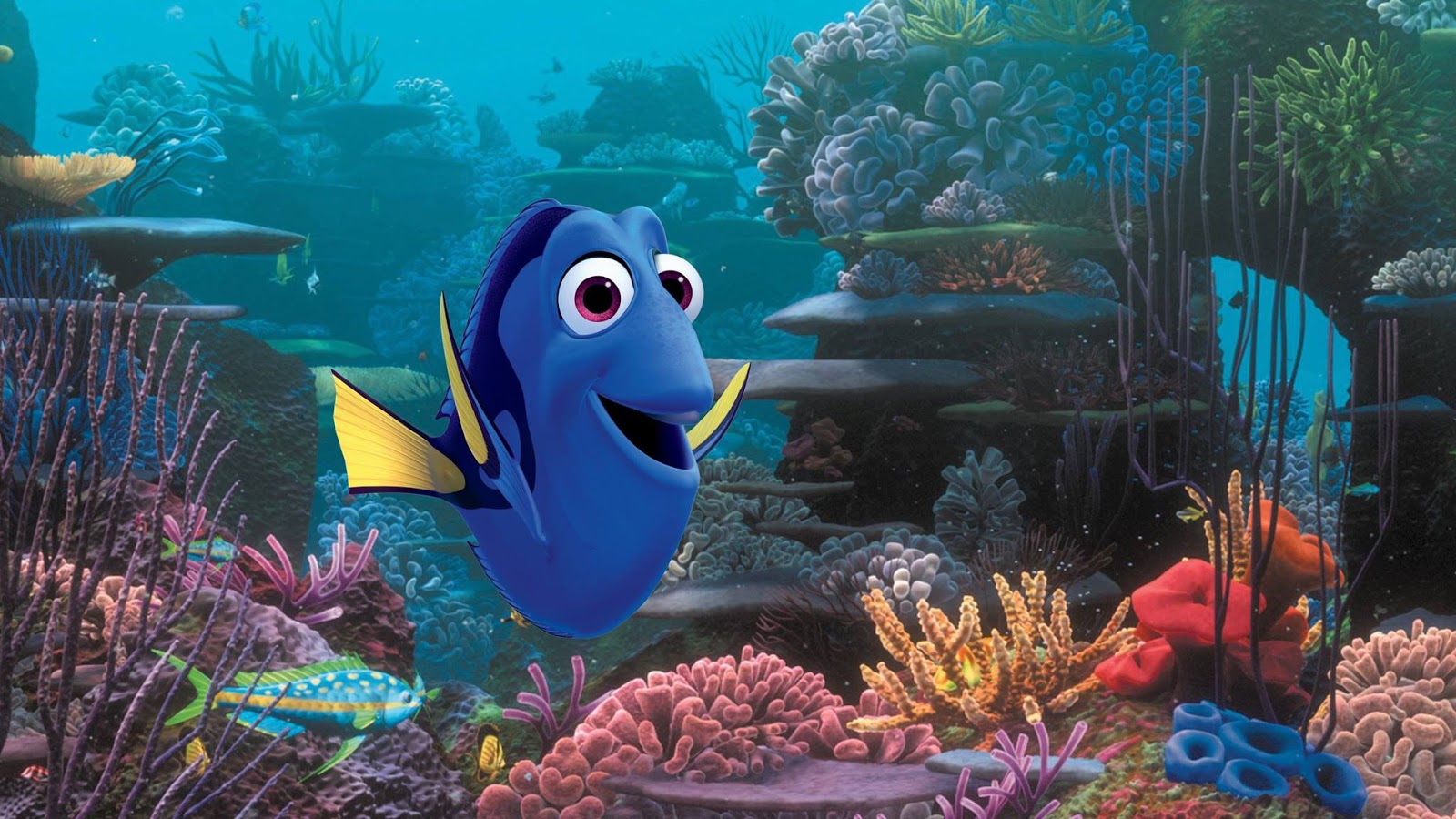
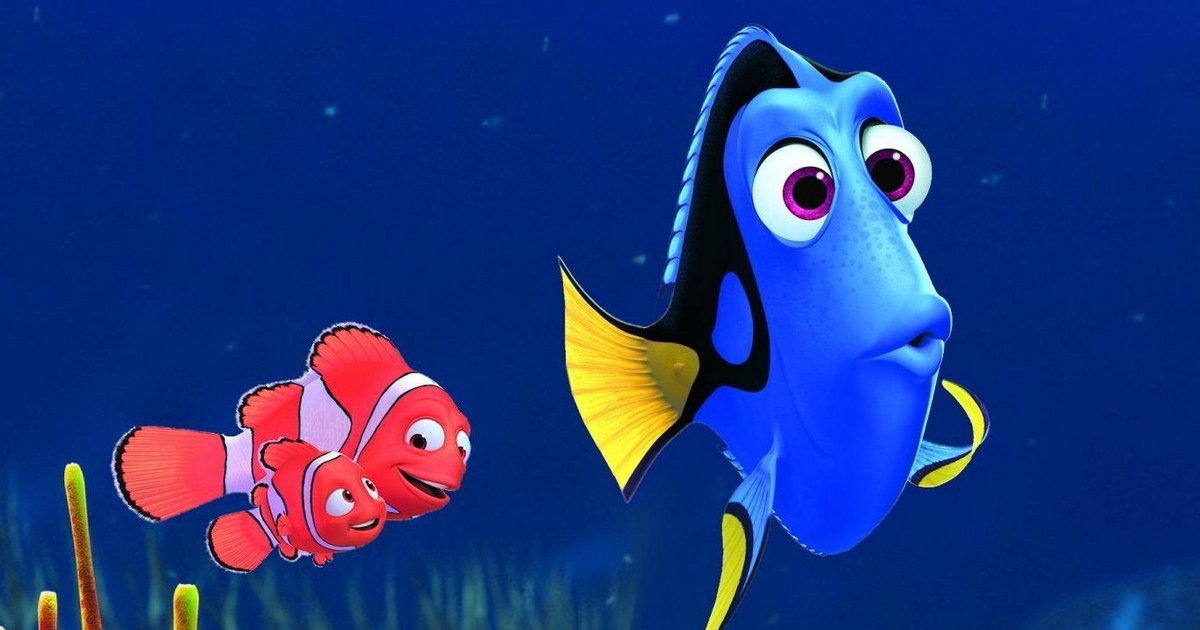
In Finding Dory, Dory (Ellen DeGeneres) is a blue tang suffering from short-term memory loss. After helping the clownfish Marlin (Albert Brooks) find his son Nemo (Hayden Rolence, replacing the original actor, who is like 80 years old by this point), memories begin to surface of her own parents (Diane Keaton & Eugene Levy, who at this point has been an onscreen father to pretty much every living actor). She sets out to find them, but her slippery memory provides a mounting challenge. She, Marlin, and Nemo end up at a marine research institute, a  rehabilitation center/aquarium where Dory was born. The adventure might not be as large-scale as the cross-country trek of Finding Nemo, but travelling between he exhibits is tougher than it sounds when you’re just a lil fish with a spotty memory.

When Dory and the clownfish get separated, she must rely on new and old friends like Destiny (Kaitlin Olson), a nearsighted whale shark, Hank (Ed O’Neill), a grumpy octopus, and – eventually – herself.

There might be other fish in the sea, but none of them are quite like Dory.

As with any review of a Pixar feature, we must begin with a slight interruption to discuss The Short. This short in particular, “Piper,” is such a vast improvement upon last year’s treacly mess “Lava” that just the first frame is enough to bring tears to one’s eyes. Set at a beach, where a baby sand piper is learning how to hunt for food while facing its fear of the ocean, it’s a stunning piece of work. The story is lean, simple, and charming, but the animation is the true standout, an unparalleled achievement in photorealistic digital imaging that consigns all competitors into oblivion. The ocean… The feathering on the birds… The sand! Oh, I could rhapsodize about that perfectly replicated sand for hours. It’s a beautiful piece, capturing the look and feel of reality while delicately blending it with the rounded edges and welcoming cuteness of a cartoon. It’s brilliant and I won’t hear a word against it.

Now, about that pesky movie it’s attached to. Honestly, it’s pretty good. Pixar isn’t knocking on the door of a second Golden Age, but they’re at least not coasting anymore. Finding Dory is playing in the shallows, but it’s having a lot of fun. With its small-scale setting comes small-scale themes (plenty of family movie standbys: the power of friendship and/or family, believing in oneself, all that good stuff) and small-scale characters (the only new character given any depth whatsoever is the surly Hank, who is welded onto an Odd Couple arc older than cinema itself), but it’s still bursting with energy like a 5-year-old who figured out the child locks on the Oreo cupboard.

Perhaps the most significant thing about Finding Dory is that it’s practically immune to sequelitis. Although there are a handful of intensely pandering moments (we get an origin story for the “Just Keep Swimming” song, which is about as patently useless as finding out how Professor X went bald), this movie isn’t just a Finding Nemo greatest hits collection. Returning characters are integrated fairly well into the new story in places where they organically belong. OK, a cameo by the surfer turtles is a little unpleasant, but justified. And the movie never really figures out what to do with Marlin and Nemo until the third act. But we’re thankfully not forced through a gauntlet of grotesqueries, with doppelgänger scenes visiting the vegetarian sharks, the aquarium escapees, the dentist’s daughter, and so on. Finding Dory is well aware of its history and its universe, but it rarely feels the need to repeat itself.

Which is ironic, considering that’s pretty much Dory’s M.O.

So much of Finding Dory is new, and while none of it is quite on the level of the original plot and characters, could it ever be? The new side characters here are bright and fun even if they’re not so engaging, and a pair of lounging sea lions are an excellent substitute for the much-beloved seagulls. And everything that isn’t new is classic Pixar, which ain’t a bad place to be. There’s plenty of humor derived from the anthropomorphic nature of our inhuman leads, depicting in increasingly wacky ways how one might reasonably travel through the various sectors of an aquarium when one isn’t exactly inclined to breathing air.

And then of course, there’s the obligatory part that takes a machete to the heartstrings. The emotional moments in the climax feel a wee bit rote, but any time you’re treated to a flashback of young Dory with her parents, you’re going to wish you had gills, because otherwise you’re going to down in saltwater tears. Baby Dory is so devastatingly adorable and her separation from her parents is so straight-up brutal that the combined cuteness and sadness will overload our system.

I’m pretty sure renting your kid a Pixar movie qualifies as child abuse.

All in all, it’s a cleverly organized, silly movie about overcoming your disabilities and discovering your inner strength. The title Finding Dory isn’t just a franchise tie-in it’s a thematic manifesto. Whether or not it’s a truly great Pixar movie is beside the point. It’s a very good one, and we should be happy it’s around.

TL;DR: Finding Dory is a fun, energetic sequel that stays true to its story even if it's dealing with shallower material than its predecessor.
Rating: 7/10
Word Count: 1190